

Best Types of Desks for Small Office Spaces: Smart, Space-Saving Designs for Productivity

Small office spaces need careful planning to optimize productivity and comfort. A well-chosen desk can make a big difference, offering a functional workspace in a limited space. Wall-mounted foldable and corner desks are great options for small offices, promoting organization and focus. Choosing the right desk can enhance efficiency, morale, and success in your small office.
What are the best types of office desks for small office spaces?
The best types of office desks for small spaces are wall-mounted desks, corner desks, L-shaped desks, floating desks, and standing desks are ideal for small offices. These desks help maximize space by utilizing unused areas and offering compact designs. Here are the 11 types of best desks for small spaces:
1. Triangle Style Desk / Corner Desk
Triangle Style Desks, or Corner Desks, effectively utilize limited space while offering a dedicated work area. They maximize space in compact rooms like apartments, studies, or offices. Their triangular design allows placement in room corners, minimizing clutter and making the desk appear smaller. These desks often come with additional storage, ensuring an organized and productive workspace. Many Corner Desks come with a storage drawer and shelves. Their rugged and durable structures guarantee longevity and sturdiness. These factors make Triangle Style Desks ideal for small office spaces.
2. Foldable Desks
Foldable desks are the best option for small office spaces because they save space. They are flexible, adaptable, and cost-effective. The foldable design allows for easy storage, creating extra space when not in use. Foldable desks are ideal for small rooms and apartments, as they offer a versatile solution for those working from home or in a limited space.
3. Floating Desk
Floating desks are one of the best options for small spaces because they free up valuable floor space by mounting directly onto the wall, eliminating the need for legs. However, note that they should be used to place something other than larger or heavier work equipment. But for office laptops, you should not worry. Lastly, floating desks are relatively inexpensive, especially when purchasing a full home office setup.
4. Adjustable Standing Desk
Adjustable standing desks are one of the best types of desks for small office spaces because they are space-saving and promote better health. Adjustable standing desks offer a healthy alternative by promoting better posture, reducing back pain, and encouraging more movement throughout the day. They also allow you to switch between sitting and standing, which can help to improve your energy levels and focus.
5. L-Shaped Desk
L-shaped desks are one of the best types of desks for small office spaces because they maximize space utilization and provide a large work surface. L-shaped desks are positioned against a corner, saving space while offering a large area for effective work. This configuration is ideal for small spaces, as it allows for a larger work surface while taking up less floor area than a traditional rectangular desk.
While L-shaped desks are similar to corner desks, there are some differences. Corner desks are typically cheaper because of their smaller size. L-shaped desks provide more space to work and are usually more expensive because of their larger size.
6. Ladder Shelf Wall Desk
Ladder shelf wall desks are one of the best for small spaces because they utilize vertical space rather than horizontal space. These desks are often wall-mounted, and they have shelves that can be used to store items like books, plants, and decor. This makes them a great space-saving solution for small offices.
7. Credenza Desk
Credenza desks are great for small offices because they combine a desk and storage space, allowing you to maximize the use of limited space. The cabinets and drawers on a credenza provide ample storage for files, office supplies, and equipment, keeping your workspace organized and clutter-free. This means you can have a dedicated work surface without sacrificing valuable storage space.
8. Lectern Desk
Lectern desks are ideal for small office spaces because of their small footprint and excellent storage space. Lectern desks have a slanted top that facilitates reading and is perfect for giving speeches. The small footprint makes it easy to fit in tight spaces, and the storage spaces are perfect for keeping books, stationery, and other essential items organized.
9. Carrel Desk
Carrel desks are a good choice for small office spaces because they provide privacy and minimize space usage. Carrel desks have partitions at the back and sides, which helps to create a more private and focused working environment. This is especially beneficial in small spaces where you may need to share an office with others. They also have a compact design that helps to maximize the use of limited floor space.
10. Small Rolling Desk
Small rolling desks are ideal for small office spaces because they are easy to move and adaptable, enabling quick configuration of workstations. This type of desk allows for flexible office layouts, saving space and maximizing functionality. They are also great for small spaces because they can be easily moved out of the way when not in use, providing more space for other activities.
11. Secretary Desk
Secretary desks are perfect for small spaces because they offer ample storage in a compact design. These desks have many drawers and nooks, making them ideal for people who manage a lot of paperwork. Secretary desks are also great for people who need to write and complete paperwork by hand.
What To Consider When Buying A Desk For A Small Space?
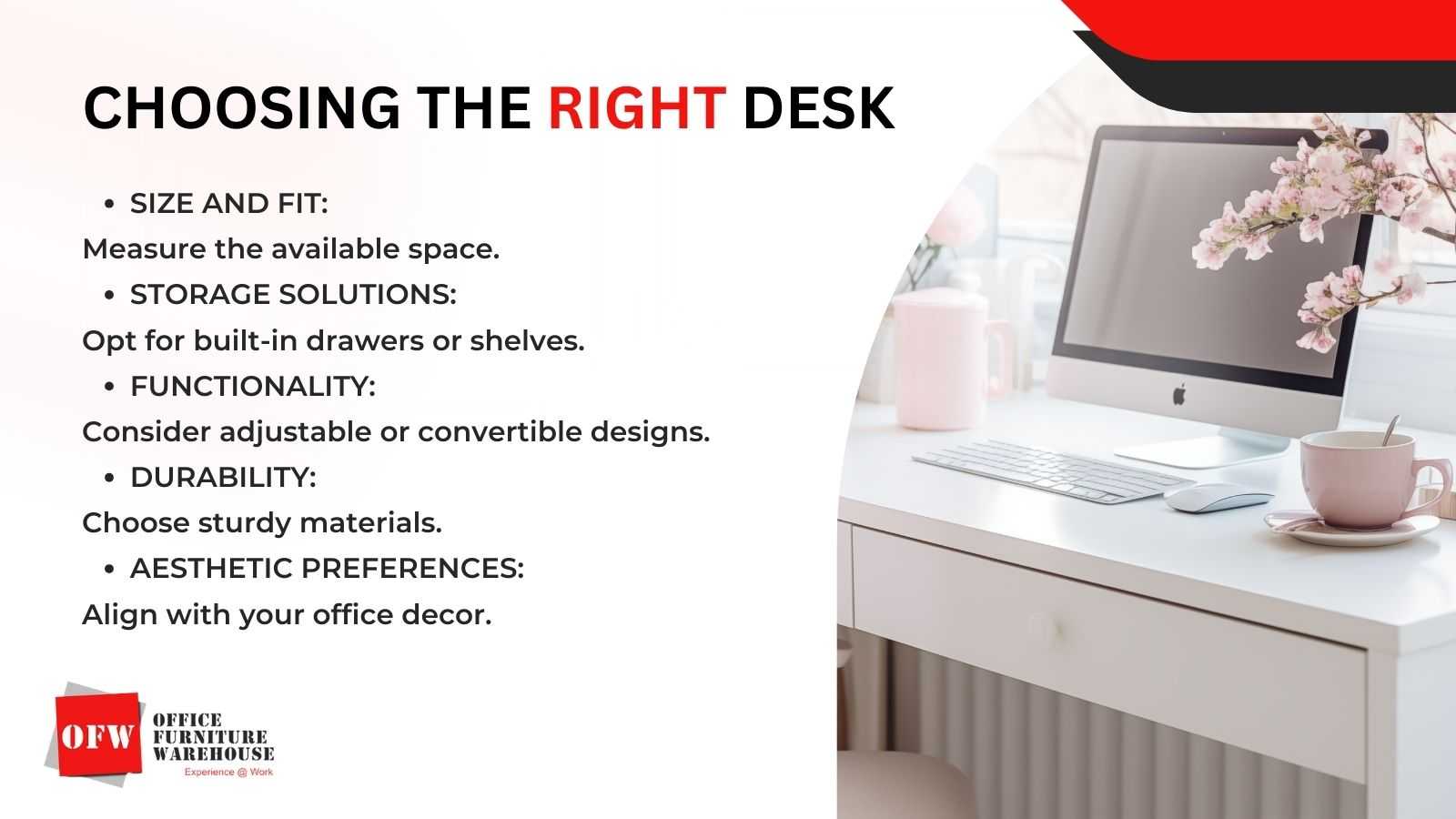
You should consider the size of the desk, the storage space it offers, and the functionality of the desk. A desk should fit comfortably in your space without obstructing walkways. Consider a desk with drawers or shelves for storage to maximize your small space. You should also consider features like adjustable height or a built-in monitor stand to optimize your workspace.
Here are the 8 key considerations when buying a desk for a small space, based on the provided instructions:
- Measure the Available Space: Ensure the desk fits comfortably in the designated area, leaving at least 1 foot of clearance between the back of the desk and any walls or furniture.
- Prioritize Compact Dimensions: Choose a desk with a small footprint, such as a corner desk, floating desk, or folding desk, to maximize the usable floor space.
- Evaluate the Tabletop Size: Determine the required surface area based on your needs, whether you primarily use a laptop or require additional space for paperwork and other materials.
- Consider Adjustable or Convertible Designs: Look for standing desks or desks with height-adjustable features to allow for both sitting and standing work postures.
- Prioritize Storage Solutions: Opt for desks with built-in drawers, shelves, or other storage options to keep your workspace organized and decluttered.
- Prioritize Lightweight and Mobile Designs: Choose a desk that is easy to move or reposition, such as one with casters, to accommodate changes in your workspace layout.
- Ensure Stable and Durable Construction: Select a desk made from sturdy materials, such as metal or solid hardwood, with well-designed joints to provide a stable and long-lasting work surface.
- Align with Your Aesthetic Preferences: Choose a desk that complements the overall style and decor of your small space, ensuring it integrates seamlessly into the environment.
How do I fit more desks in a small office?
Transforming a cramped office into a functional workspace is possible with creative furniture arrangements and smart storage solutions. Here are 13 actionable tips to maximize space and accommodate more desks in your small office.
- Position the desks against three walls, forming a U shape with the open side facing inwards.
- Explore alternative desk shapes and sizes. Consider L-shaped or corner desks to optimize space.
- Maximize Vertical Space by using shelves and cabinets.
- Utilize Multifunctional Furniture. Choose furniture with built-in storage, or that can serve multiple purposes.
- Optimize Desk Placement to ensure adequate legroom and workspace for all users.
- Prioritize Essential Items by eliminating clutter and unnecessary items.
- Incorporate a Standing Desk to offer alternative work positions and create a more dynamic workspace.
- Employ Color and Lighting to create an illusion of spaciousness. Light colors and natural light can make a small space appear larger.
- Maximize Natural Light by positioning desks near windows or utilizing light-reflecting materials.
- Consider a Hot Desking System. This allows for flexible workspace sharing.
- Utilize Mobile Storage Units to move items around as needed.
- Incorporate Mirrors to reflect light and create a more spacious feel.
- Implement a Flexible Work Schedule to reduce the number of people needing a dedicated desk at any given time.
How do I maximize my desk space in a small office?
With smart organization, you can maximize your desk space and create a functional, inspiring workspace. This list offers 6 tips for making the most of your small office desk space, from utilizing vertical space to using wall-mounted organizers and more.
- Utilize Vertical Spaces: Items that lay flat on your desk consume significant space. Consider utilizing vertical space by installing shelves, installing monitors on the wall, wall-mounted file holders, and more.
- Utilize Under-desk Spaces: Similar to vertical space, capitalize on the unused space below your desk. Maximize under-desk space with rolling storage carts, drawers on a pedestal base, or a tiered shelf system. These options offer easy access to frequently used items, keeping your desk clear and your workflow efficient. Invest in space-saving solutions like a keyboard tray or a monitor stand to further elevate your desk space.
- Opt for Wall-mount or Clamp-on Accessories: Wall-mount or clamp-on accessories are ideal for small spaces. They provide additional storage while maximizing often-unused corners.
- Use L-Shaped Layouts: L-shaped layouts offer a spacious worktop, allowing you to spread out and work comfortably.
- Declutter and Designate Spaces: A clean-desk policy is effective for a reason. Minimal clutter allows for a streamlined workflow and reduced distractions.
- Choose Desk Accessories Based on Needs: Desk accessories should be chosen based on budget, desk space, and work needs.
Where do you put a desk in a small office?
A desk should be placed near a natural light source in a small office. The desk should be positioned perpendicular to the window if facing the window is too distracting. Placing the desk with a solid wall behind it and a view of the door is also ideal.
How do you arrange furniture in a small office?
Arranging furniture in a small office requires optimizing space and functionality. Prioritize a clear entryway, minimizing furniture near the entrance. Create visual balance by distributing furniture throughout the room. Avoid filling all wall space, allowing for a sense of openness. Finally, be conscious of traffic flow, ensuring easy movement within the office.