

10 Best Conference Room Furniture Ideas

A well-designed conference room is more than just a meeting space. It is the heart of collaboration, innovation, and decision-making. The right furniture plays a vital role in shaping productivity, comfort, and communication flow. In today’s modern workplaces, where hybrid meetings and flexible setups have become the norm, furniture must be both ergonomic and tech-ready. This type of furniture supports seamless interaction between in-person and remote participants.
From adjustable seating and smart tables to acoustic panels and modular layouts, every element contributes to a more engaging and efficient workspace. In this article, we’ll explore the 10 best conference room furniture ideas that blend style, functionality, and adaptability. This will help you create a meeting environment that’s not only visually impressive but also future-proof and designed for optimal performance.
What are the 10 Best Conference Room Furniture Ideas?
The 10 best conference room furniture ideas focus on creating a balanced blend of comfort, functionality, and modern design. From ergonomic chairs to modular tables and tech-integrated solutions, these ideas ensure productive, engaging meetings. Each element is crafted to enhance collaboration while maintaining a professional and stylish environment.

Here are the 10 best conference room furniture ideas;
1. Invest in a Functional and Stylish Conference Table
The conference table serves as the centerpiece of any meeting room, combining style with practicality. Choose from shapes like rectangular, oval, round, or modular to suit different types of meetings. Modern tables feature built-in power outlets and cable management for tech convenience. Durable materials such as veneer, laminate, or solid wood ensure longevity while maintaining a polished look.
2. Prioritize Ergonomic Seating for Comfort and Focus
High-quality, adjustable chairs are vital for long meetings, providing comfort and support throughout. Look for ergonomic features like lumbar support, tilt tension, and seat height adjustment. Comfortable seating reduces fatigue and improves concentration, enhancing overall productivity. Materials like breathable mesh or fabric upholstery keep participants cool and comfortable.
3. Use Modular Furniture for Flexible Meeting Layouts
Modular furniture includes movable tables and chairs that are easily reconfigured. This flexibility allows quick transitions between presentations, workshops, or hybrid meetings. It adapts to evolving office needs and promotes collaboration in a dynamic environment. Modular setups help future-proof your conference space for varied uses.
4. Incorporate Smart Storage Solutions
Keeping the conference room clutter-free is key to maintaining a professional atmosphere. Credenzas, cabinets, and wall-mounted shelves provide practical storage options. Hidden compartments neatly organize cables, remotes, and office supplies. Smart storage solutions improve workflow efficiency while preserving a clean, organized look.
5. Choose Furniture with Integrated Technology
Tech-enabled furniture simplifies hybrid meetings with built-in USB ports, wireless charging pads, and cable channels. AV integration for cameras, monitors, and microphones ensures smooth communication. Smart furniture minimizes clutter and enhances connectivity. Investing in these solutions keeps your conference room modern and future-ready.
6. Improve Acoustics with Sound-Absorbing Furniture
Poor acoustics disrupt communication and reduce meeting effectiveness. Upholstered chairs, carpeted floors, and acoustic wall panels help absorb sound. Decorative sound baffles or acoustic furniture add style while improving clarity. Proper acoustic planning aligns with WELL or LEED standards for healthier meeting spaces.
7. Add Biophilic and Sustainable Design Elements
Biophilic design connects people with nature, enhancing well-being and productivity. Incorporate natural materials like bamboo or wood, indoor plants, and eco-certified finishes. Greenery and organic textures create a calming, inviting environment. Sustainable, low-VOC furniture meets the growing demand for environmentally conscious workplaces.
8. Use Color and Finishes Strategically
Colors influence mood and productivity, neutrals encourage focus, while bold accents spark creativity. Align furniture colors with your company’s brand identity for a cohesive look. Matte finishes reduce glare and provide a professional aesthetic. Consider accent walls, fabric tones, or furniture trim details to enhance visual appeal.
9. Optimize Small Conference Rooms with Space-Saving Furniture
Compact, multi-functional furniture maximizes smaller spaces effectively. Nesting chairs, folding tables, and wall-mounted screens save room while maintaining usability. Glass surfaces and light colors make spaces feel larger and more open. Keep circulation areas clear for accessibility and smooth movement.
10. Include Custom or Branded Furniture Pieces
Personalized furniture reinforces corporate identity through logos, brand colors, or unique finishes. Subtle branding appears in chair stitching, tabletops, or integrated artwork. Custom pieces balance professionalism with personality, creating a memorable yet functional space. Thoughtful branding adds a distinctive touch without overwhelming the room.
What are the Expert Tips for a Productive Meeting Environment?
The expert tips for a productive meeting environment include thoughtful planning of space, furniture, and technology to create a comfortable, efficient, and engaging setting. A well-organized room supports focus, collaboration, and smooth hybrid interactions.
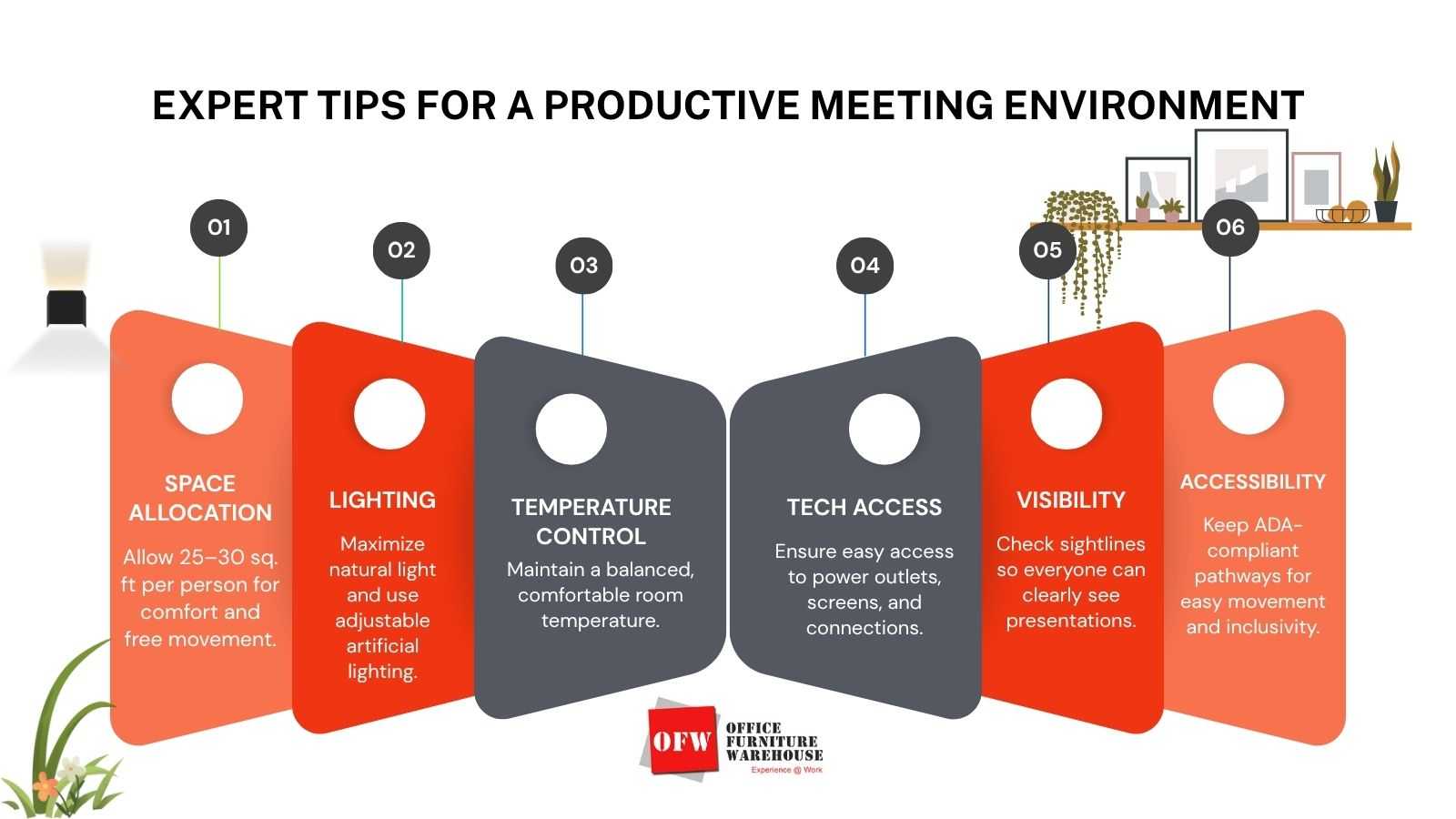
Here are some key tips to optimize your conference space:
- Allocate 25–30 sq. ft per person to ensure comfort and movement.
- Ensure good lighting, preferably natural light supplemented with adjustable artificial lighting.
- Maintain temperature balance for a comfortable environment.
- Provide easy access to technology, including power outlets, screens, and connectivity.
- Test sightlines for presentations to make sure all participants have clear visibility.
- Keep ADA-compliant pathways for accessibility and smooth circulation.
- Use digital room planners or AR visualization tools to preview layouts before purchasing furniture.
This setup promotes productivity, engagement, and a professional atmosphere for every meeting.
What’s the most important piece of furniture in a conference room?
The most important piece of furniture in a conference room is the table. It anchors the layout, defines interaction, and determines seating flow. This makes the table central to both functionality and the overall aesthetic of the space.
How can I make a conference room more comfortable?
You can make a conference room more comfortable by combining ergonomic chairs, temperature control, acoustic panels, and natural light. These elements reduce fatigue, improve focus, and create a welcoming environment that keeps participants engaged throughout meetings.
Which materials are best for long-lasting conference furniture?
Laminate, veneer, and powder-coated metal are best for long-lasting conference furniture. They are durable, easy to clean, and maintain a professional appearance, making them ideal for high-use meeting spaces.