

Ergonomic Office Furniture Benefits That Make Them Worth Buying

Last Updated on May 7, 2025 by Bob Collins
Ergonomic office furniture refers to furniture designed to support the body’s natural posture during work. Unlike standard furniture, it helps reduce strain on the spine, neck, and wrists.
Common types of ergonomic furniture include chairs with adjustable support, sit-stand desks, monitor risers, footrests, keyboard trays, and laptop stands. These tools promote better alignment and flexibility in the workplace..
The key benefits of ergonomic furniture include reduced fatigue, improved posture, and a lower incidence of issues such as back pain or wrist strain. Supporting the body correctly boosts energy levels and focus, enabling you to stay productive for longer.
What Is Ergonomic Office Furniture?
Ergonomic office furniture includes desks, chairs, and accessories specifically designed to support the natural posture and movements of the human body during work.
Unlike standard furniture, ergonomic designs focus on minimizing physical stress and repetitive strain. These pieces adjust to the user’s body, helping to reduce issues such as back pain, neck stiffness, and wrist discomfort that result from extended sitting or improper desk setups.
What Are the Different Types of Ergonomic Office Furniture?
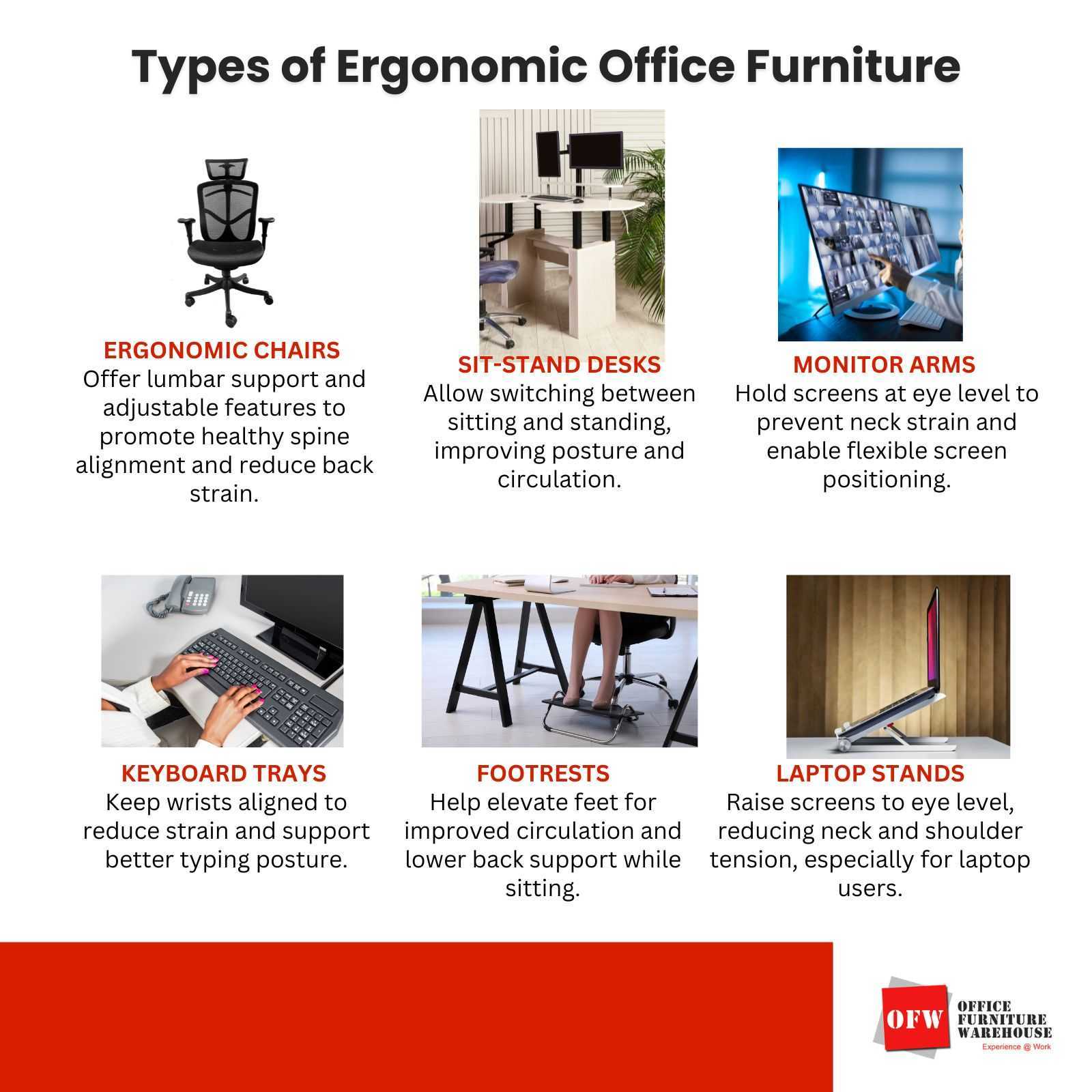
The different types of Ergonomic office furniture are ergonomic chairs, sit-stand desks, monitor arms, keyboard trays, and laptop stands. It is designed to support the body’s natural posture, reduce physical strain, and improve comfort during work.
The Different Types of Ergonomic Office Furniture are:
- Ergonomic Chairs: These chairs provide lumbar support, adjustable seat height, and tilt mechanisms to maintain proper spinal alignment. They help reduce pressure on the lower back and support a natural sitting position. A quality ergonomic chair minimizes discomfort and supports prolonged periods of focused work.
- Sit-Stand Desks: Sit-stand desks enable you to alternate between sitting and standing, which helps improve circulation and maintain good posture. Many models are height-adjustable and compact, making them ideal for both home and office setups. Using these desks reduces the risks associated with prolonged sitting.
- Monitor Arms: Monitor arms position your screen at eye level, preventing neck strain from looking up or down too high or too low. They allow for flexible positioning, so you can adjust your monitor forward, backward, or sideways as needed. This helps create a cleaner, more comfortable visual line while working.
- Keyboard Trays: Ergonomic keyboard trays help keep your wrists aligned with your elbows, reducing wrist strain and fatigue. They can slide in and out, allowing a more relaxed typing angle. Many trays are adjustable for tilt and height to suit different body types.
- Footrests: Footrests elevate your feet to reduce pressure on your legs and lower back while seated. They promote better circulation and help maintain a neutral body posture. Adjustable models enable users to find the most comfortable position for extended periods of sitting.
- Laptop Stands: Laptop stands raise your screen to eye level, which helps reduce neck bending and shoulder tension. They’re especially useful for remote workers using compact setups. When paired with an external keyboard and mouse, they greatly improve ergonomics.
What Are the Key Benefits of Ergonomic Office Furniture?
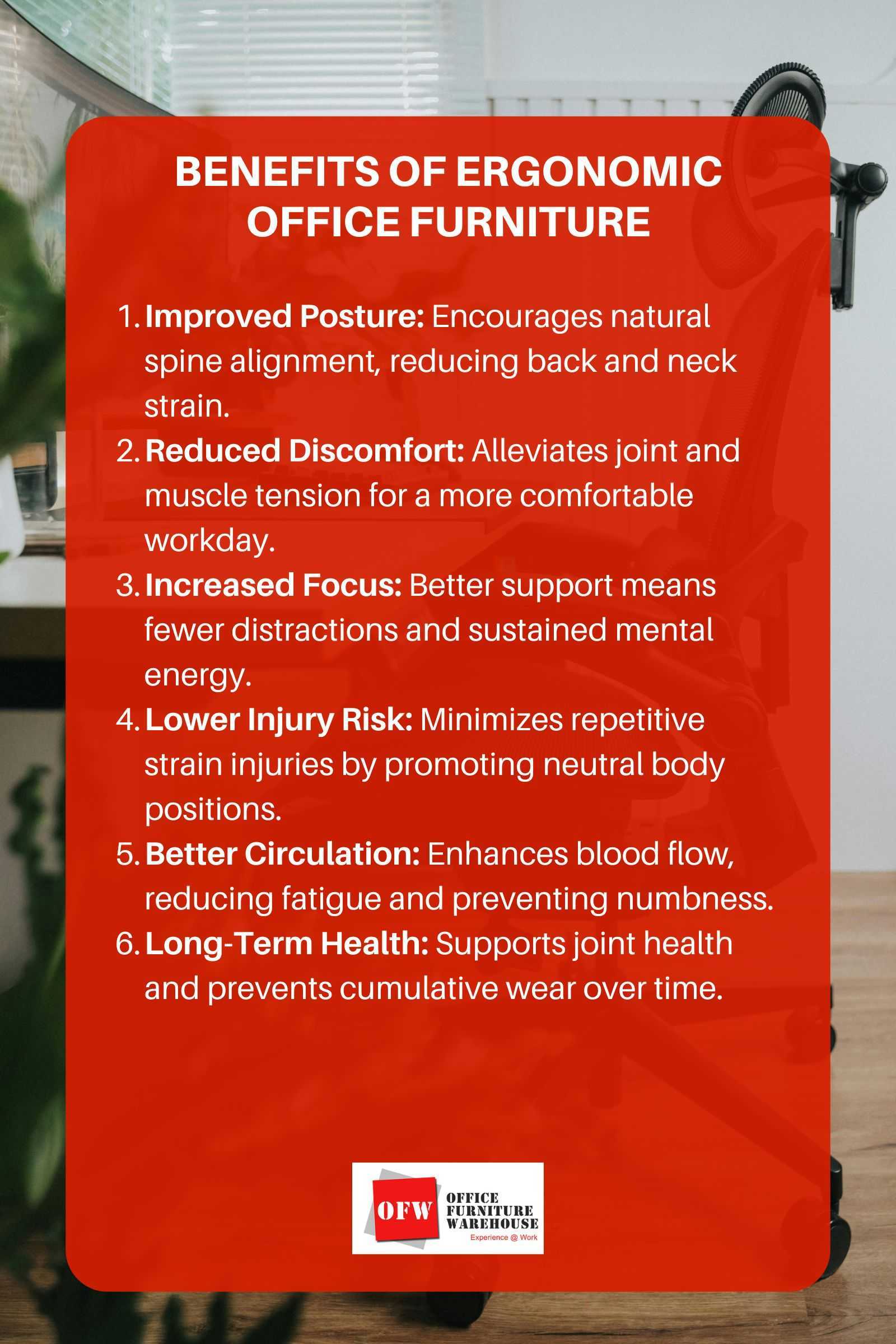
The key benefits of ergonomic office furniture include improved posture, reduced physical discomfort, increased energy and focus, a lower risk of work-related injuries, and long-term health benefits. If you work long hours at a desk, the right ergonomic setup makes a noticeable difference in how you feel and perform.
The key benefits of ergonomic office furniture are:
1. Improved Posture
Ergonomic furniture supports the natural curve of your spine, encouraging proper alignment. Adjustable features, such as lumbar support and seat height, reduce the need to slouch or hunch. This helps prevent long-term back and neck issues.
2. Reduced Physical Discomfort
Padded armrests, wrist-friendly keyboard trays, and supportive chairs ease pressure on joints and muscles. These features minimize tension in the shoulders, wrists, and lower back. The result is a more relaxed and comfortable work experience.
3. Increased Energy and Focus
When your body is supported properly, your energy lasts longer throughout the day. Reduced discomfort means fewer distractions and less need for frequent breaks. This helps maintain consistent focus and mental clarity.
4. Lower Risk of Work-Related Injuries
Repetitive strain injuries like carpal tunnel syndrome and neck pain are common in desk jobs. Ergonomic setups reduce these risks by promoting healthy movement and neutral positioning. Prevention through better posture is more effective than treatment after injury.
5. Better Circulation and Reduced Fatigue
Ergonomic furniture encourages proper leg positioning and movement, improving blood flow. Features like footrests and sit-stand desks prevent numbness and fatigue. Improved circulation means more comfort and less exhaustion during long work hours.
6. Long-Term Health Benefits
Using ergonomic furniture daily supports joint health and reduces cumulative wear on the body. Over time, this leads to fewer medical issues related to poor posture and strain. It’s an investment in both comfort and long-term wellness.
Does Ergonomic Office Furniture Boost Productivity and Efficiency?
Yes, ergonomic office furniture boosts productivity and efficiency by minimizing distractions from discomfort, encouraging movement and flexibility, and enhancing workflow efficiency.
It has a direct impact on both the quality and duration of your work. Reducing pain and physical stress allows your mind to stay focused. The right setup helps you work smarter, not harder.
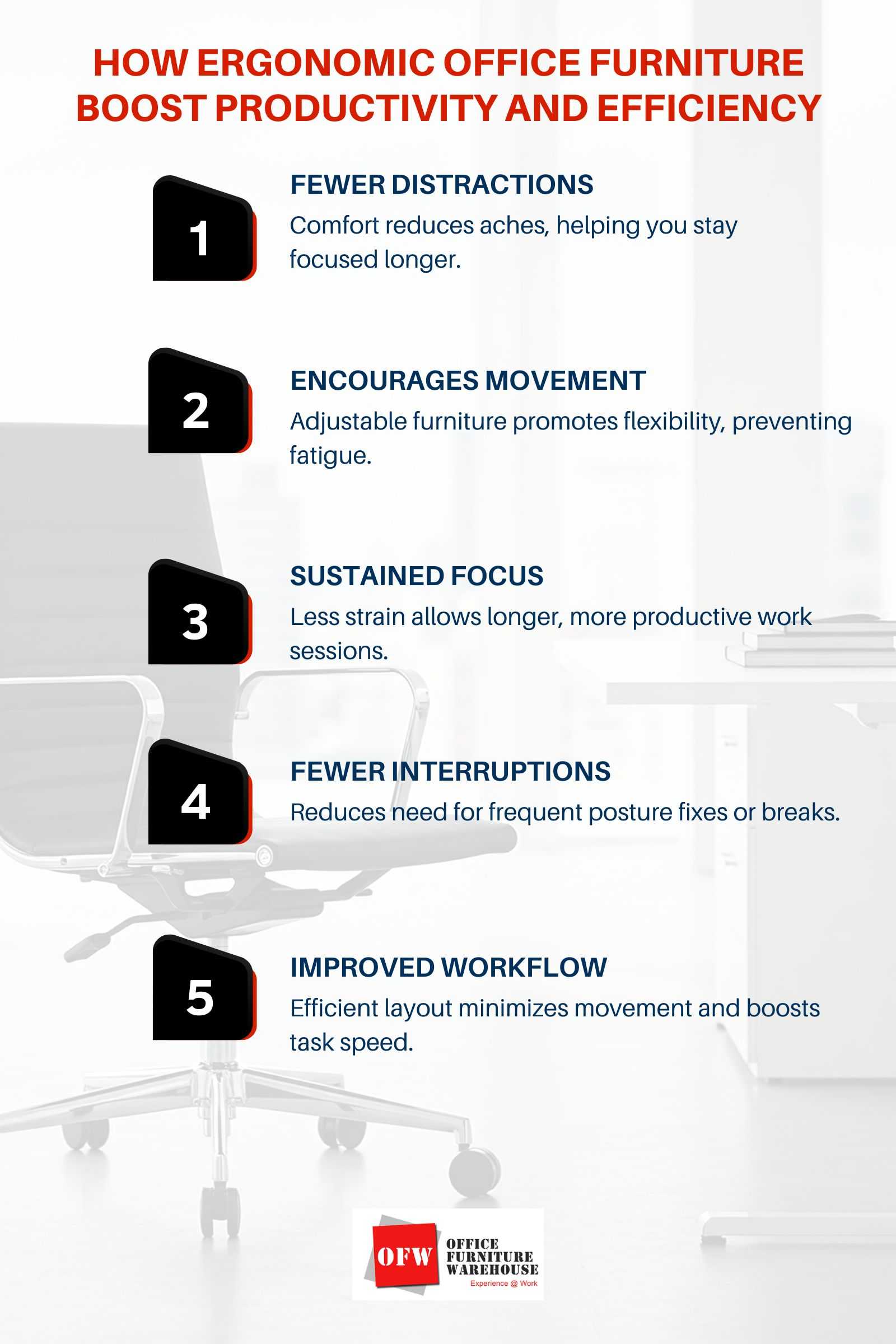
Here’s how ergonomic furniture boosts productivity and efficiency:
- Minimizes Distractions from Discomfort: When your body is uncomfortable, your focus constantly shifts to aches or tension. Ergonomic furniture eliminates these distractions by supporting proper posture. With fewer physical complaints, you stay in the zone longer.
- Encourages Movement and Flexibility: Sit-stand desks and adjustable chairs encourage regular movement, helping to prevent stiffness and fatigue. This helps maintain steady energy levels throughout the day. More movement means fewer performance slumps.
- Supports Longer Focus Sessions: Proper alignment reduces eye strain, wrist fatigue, and back pain, all of which break concentration. Ergonomic setups help you stay comfortable during long tasks or meetings. That comfort leads to deeper focus and higher-quality output.
- Reduces Time Spent on Breaks or Adjustments: With non-ergonomic setups, users often need to stretch, adjust their posture, or take breaks to feel more comfortable. Ergonomic furniture reduces that need by keeping your body in a relaxed position. The less you stop, the more you get done.
- Enhances Workflow Efficiency: Monitor arms, keyboard trays, and other ergonomic tools keep everything within easy reach. This minimizes wasted motion and speeds up task execution. A well-arranged ergonomic workspace is built for flow.
Is Investing in Ergonomic Furniture Cost-Effective in the Long Run?
Yes, investing in ergonomic furniture is cost-effective in the long run. It reduces medical and healthcare costs, lowers absenteeism, and improves health and work performance. Whether you’re an individual or a business, the investment pays off.
Here’s why ergonomic furniture is cost-effective in the long run:
- Reduces Medical and Healthcare Costs: Poor posture and repetitive strain lead to chronic pain and costly doctor visits. Ergonomic setups help prevent these conditions before they start. Fewer medical issues mean fewer bills and less time off work.
- Lowers Absenteeism and Sick Days: Discomfort and work-related pain are leading causes of employee absences. Comfortable, supportive furniture leads to fewer complaints and more consistent attendance. Healthier workers stay on the job.
- Improves Employee Retention and Satisfaction: Workers who feel physically supported are more likely to stay with their company. Ergonomic setups show that a business values its team’s well-being. Such investments build loyalty and reduce hiring costs.
- Increases Productivity and Performance: Comfortable workers get more done in less time. Less pain means better focus, more energy, and fewer breaks. Over time, higher productivity leads to a better bottom line.
- Extends Equipment Lifespan: Ergonomic furniture is built with durable, high-quality materials. It holds up better under daily use compared to cheaper, non-ergonomic options. That longevity saves money on replacements and repairs.
How Do You Choose the Best Ergonomic Furniture for Your Office?
You choose the best ergonomic furniture for your office by prioritizing adjustability, matching furniture to your work habits, considering space and layout, and testing for comfort whenever possible.
Not all products labeled “ergonomic” offer the same value. Customization is key. Focus on function, comfort, and how well each piece integrates with your workflow.
Here’s how to choose the best ergonomic furniture for your office:
- Prioritize adjustability: Look for chairs and desks with adjustable seat height, armrests, lumbar support, and tilt options. The more adjustable it is, the better it can adapt to your body.
- Match furniture to your work habits: If you sit for long hours, a high-support chair is essential. If your tasks vary, a sit-stand desk might be more effective.
- Consider space and layout: Measure your office and opt for compact or multi-functional furniture if needed. Choose pieces that support movement without cluttering your space.
- Evaluate build quality and materials: Opt for durable materials such as breathable mesh, high-density foam, and sturdy frames. These last longer and maintain support over time.
Test for comfort whenever possible: Sit, adjust, and move around with the furniture before buying, if possible. When ordering online, check the return policies and customer reviews to make an informed decision.