

Flexible Furniture Solutions: Benefits, Challenges, Ideas
Last Updated on October 15, 2025 by Bob Collins
Flexible office furniture includes adaptable, reconfigurable pieces supporting multiple work styles and changing business needs. This furniture improves productivity, supports hybrid work models, reduces costs, and enhances collaboration. Challenges include privacy issues, initial investment, and employee adaptation. Ideas for flexible furniture include modular workstations, mobile pieces, and acoustic solutions.
This furniture benefits growing businesses, hybrid organizations, and creative firms. Choosing the right furniture involves assessing needs, prioritizing ergonomics, and considering compatibility. Flexible furniture helps future-proof offices by adapting to evolving requirements.
What is Flexible Office Furniture?
Flexible office furniture refers to adaptable, reconfigurable pieces designed to support multiple work styles and changing business needs. This furniture includes modular desks, mobile storage units, acoustic pods, and multi-functional pieces that reconfigure easily to accommodate different tasks.
Unlike traditional fixed furniture, flexible solutions adapt to support various activities:
- Modular systems: Desks and storage units that connect and rearrange in different configurations
- Mobile furniture: Pieces with wheels or lightweight designs for easy repositioning
- Multi-functional items: Furniture serving multiple purposes, such as benches with built-in storage or tables that convert to standing desks
What Are The Benefits of Flexibility in Workplace Design?
The benefits of flexibility in workplace design include enhanced productivity, cost-effectiveness, and improved collaboration. These advantages allow companies to adapt to evolving work models and create a more dynamic environment for their employees.
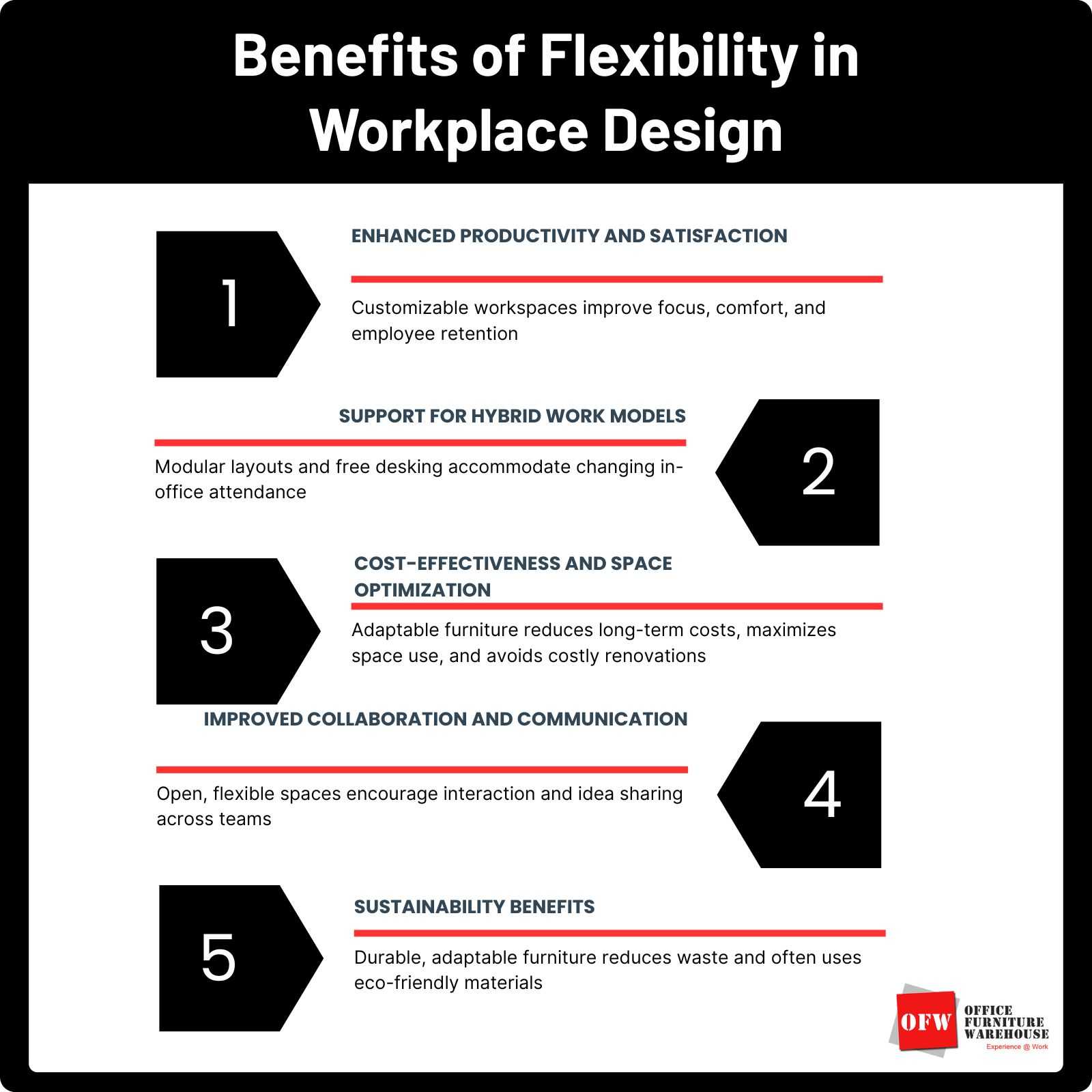
Here are the benefits of a flexible furniture solution in detail below:
Enhanced Productivity and Employee Satisfaction in the Workspace
Flexible furniture allows employees to customize their workspace according to their tasks and preferences, leading to increased focus and efficiency. This personalization contributes to higher job satisfaction and improved employee retention.
Support for Dynamic and Hybrid Work Models
With fewer people in the office at any given time, businesses optimize their layout using modular systems and space-saving solutions. Free desking gives employees freedom to choose where they work, supporting the evolving hybrid workforce.
Cost-Effectiveness and Office Space Plan Optimization
Flexible furniture significantly enhances cost-effectiveness by reducing replacement costs through its ability to adapt to evolving needs, leading to fewer purchases over time. This approach maximizes space utilization, ensuring that every square foot is effectively utilized. Moreover, it allows for a more efficient office space plan, as layout adjustments can be made without the need for costly construction. Additionally, this type of furniture future-proofs investments, allowing for seamless adjustments as organizational requirements change.
Improved Collaboration and Communication
Flexible spaces foster collaboration by providing open areas for interaction and breaking down physical barriers. Employees approach each other easily regardless of hierarchical positions, promoting open communication and idea exchange.
Sustainability Benefits
Investing in high-quality, adaptable furniture means fewer replacements and less waste. Many flexible pieces use recyclable or eco-conscious materials, supporting environmental responsibility.
What Challenges Come With Incorporating Flexible Furniture in Workspaces?
The challenges of incorporating flexible furniture in workspaces are privacy concerns, initial investment, and employee adaptation. These issues can be managed with careful planning and communication.
Here are the key challenges of incorporating flexible furniture in workspaces:
Privacy and Noise Concerns
Open flexible environments sometimes compromise privacy and increase noise levels. Solutions include:
- Dedicated quiet areas with acoustic panels
- Flexible partitions for temporary privacy
- Strategic placement of collaborative zones
- Clear guidelines for noise etiquette
Initial Investment and Planning Complexity
Higher upfront costs for quality modular systems and the need for comprehensive planning to ensure pieces work together effectively across different configurations.
Employee Adaptation and Training
Staff require time to adapt to new furniture systems and understand how to reconfigure spaces effectively. Change management becomes crucial for successful implementation.
Storage and Organization Challenges
Mobile and modular furniture requires adequate storage solutions when not in use, and organizations must develop systems for tracking and maintaining movable components.
What Are Some Flexible Furniture Ideas for Offices?
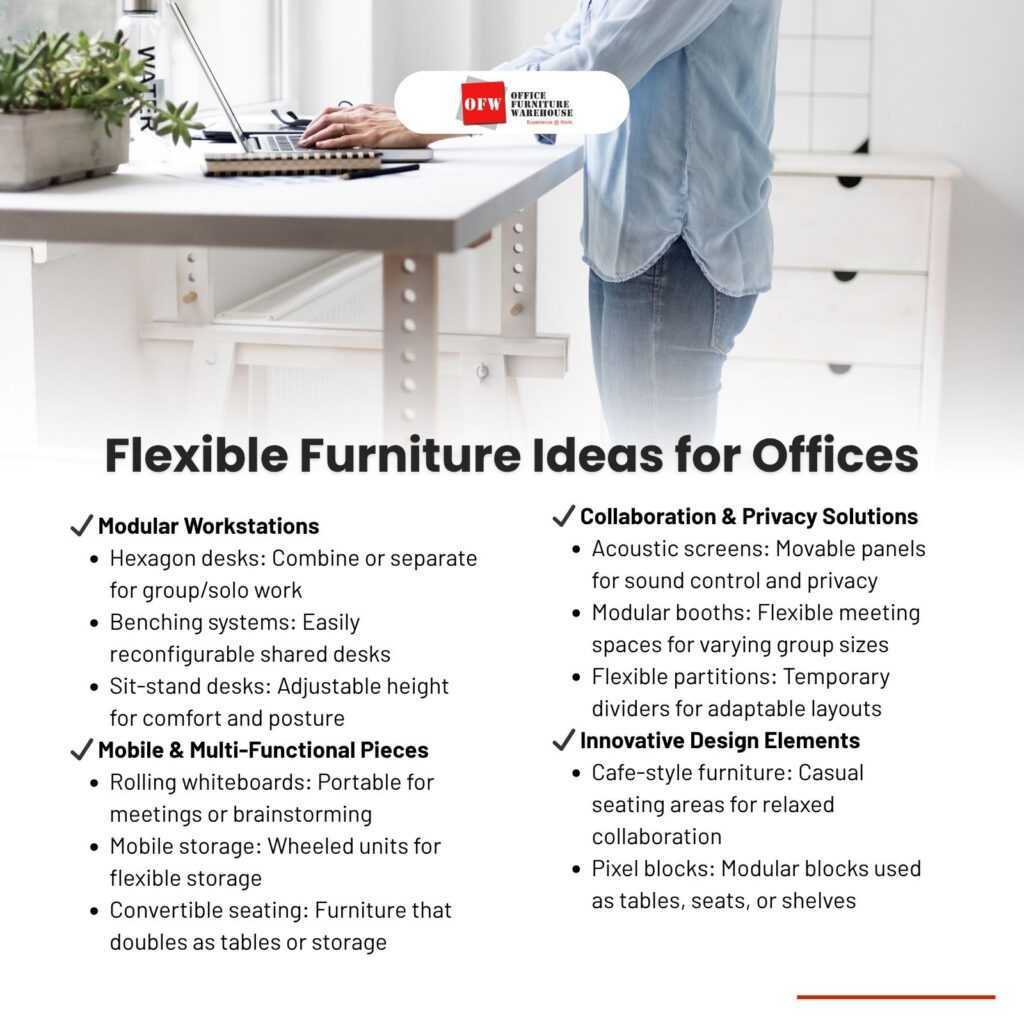
Common flexible furniture ideas for offices include modular workstations, multi-functional pieces, and innovative design elements. These furniture solutions are designed to adapt to the evolving needs of modern workplaces, promoting a dynamic and collaborative environment.
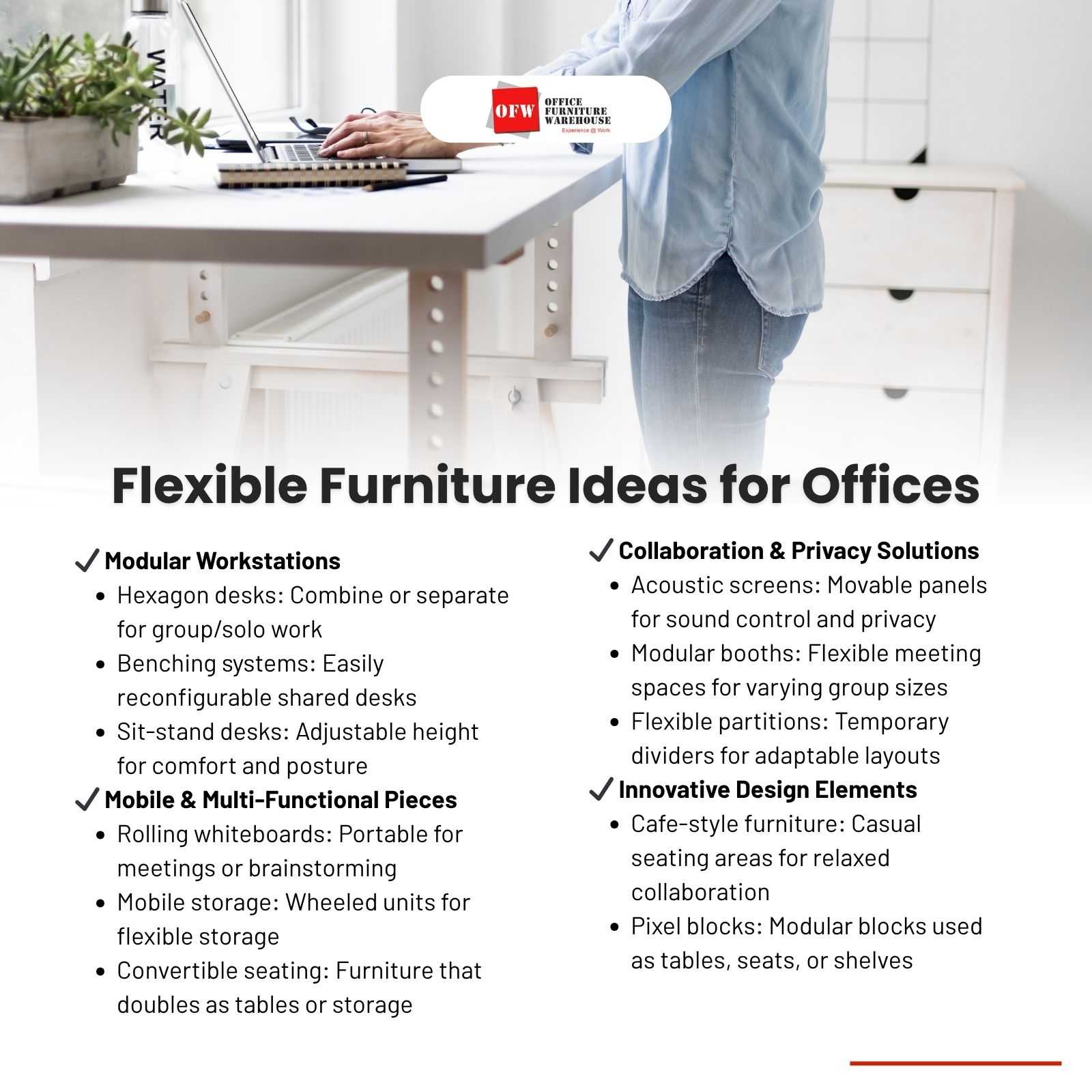
Here are the common flexible furniture ideas for modern offices in detail:
Modular Workstation Solutions
- Hexagon desks: Six-sided work surfaces that group together for collaboration or separate for individual work
- Benching systems: Connected desks accommodating multiple users with easy reconfiguration
- Sit-stand workstations: Height-adjustable surfaces supporting different working postures
Mobile and Multi-Functional Pieces
- Rolling whiteboards: Portable presentation surfaces that move between spaces
- Mobile storage units: Wheeled cabinets providing storage where needed
- Convertible seating: Benches doubling as tables or storage solutions
Collaboration and Privacy Solutions
- Acoustic screens: Moveable panels providing privacy and noise reduction
- Modular booths: Reconfigurable meeting spaces for different group sizes
- Flexible partitions: Room dividers creating instant privacy or opening collaborative areas
Innovative Design Elements
- Cafe-inspired furniture: Bistro tables and comfortable seating create relaxed collaboration zones
- Pixel blocks: Modular pieces functioning as tables, benches, platforms, or shelves.
What Offices Will Benefit From Flexible Furniture Solutions?
Offices that will benefit the most from flexible furniture solutions are growing businesses, hybrid organizations, and project-based firms. These companies often have dynamic needs that require their workspaces to be adaptable and efficient.
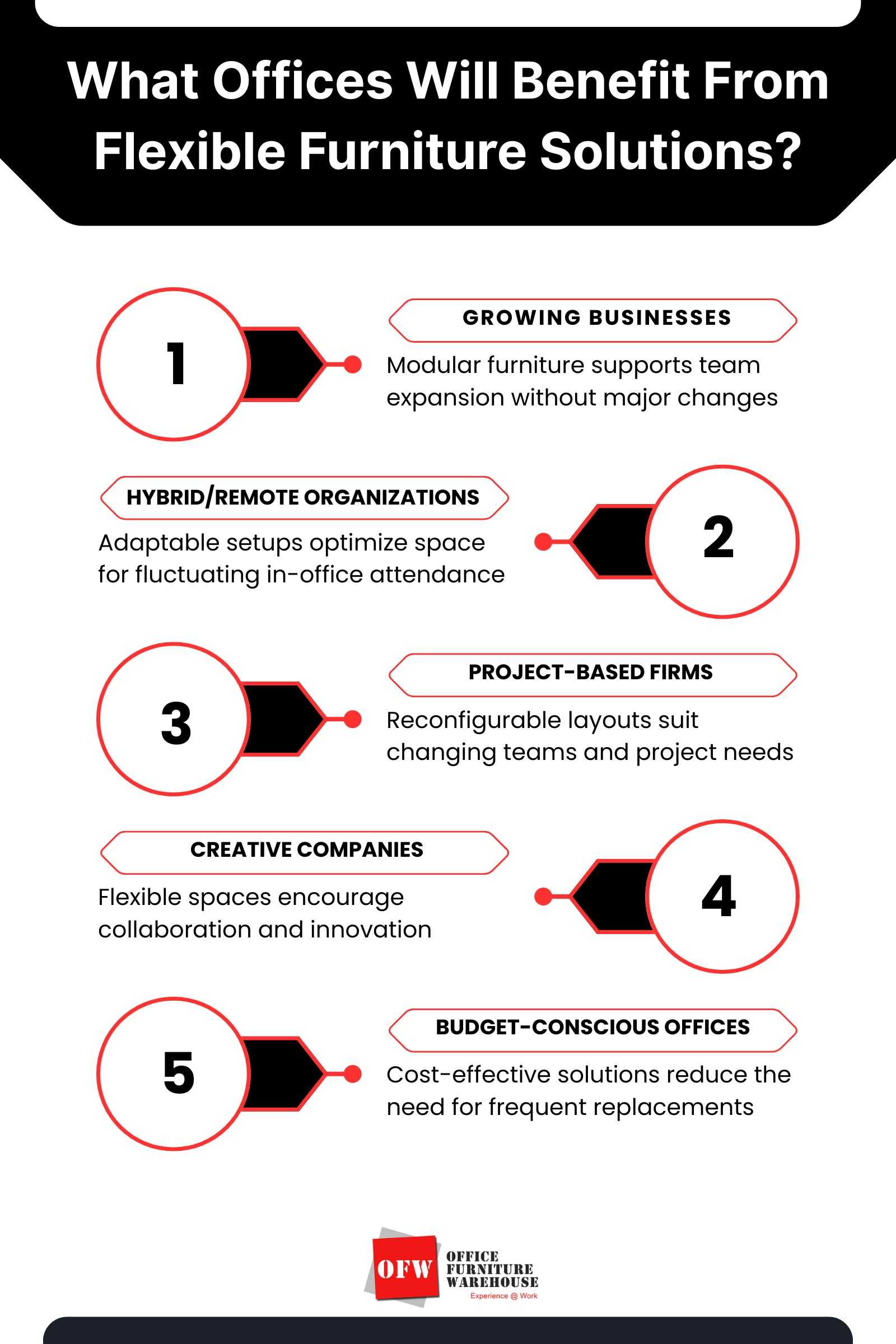
Here are the common offices that will benefit from flexible furniture solutions:
- Growing and Scaling Businesses: Companies experiencing rapid growth benefit from furniture that adapts without requiring complete office overhauls. Modular systems accommodate team expansion and contraction seamlessly.
- Hybrid and Remote-First Organizations: Businesses supporting flexible work arrangements need spaces that optimize usage when fewer employees are present. Hot-desking and shared spaces become more efficient with adaptable furniture.
- Project-Based and Consulting Firms: Organizations where team compositions change frequently benefit from reconfigurable spaces that support different project requirements and group sizes.
- Creative and Innovation-Focused Companies: Businesses prioritizing collaboration and creative thinking benefit from spaces that reconfigure for brainstorming, presentation, and ideation activities.
- Budget-Conscious Organizations: Companies seeking cost-effective solutions appreciate furniture that adapts to changing needs without requiring frequent replacements or renovations.
How Do You Choose the Right Flexible Furniture for Your Office Space?
Choose the right flexible furniture for your space by assessing your specific needs, prioritizing ergonomics, and considering compatibility. These factors help ensure your furniture supports your team’s work styles and adapts to future changes.
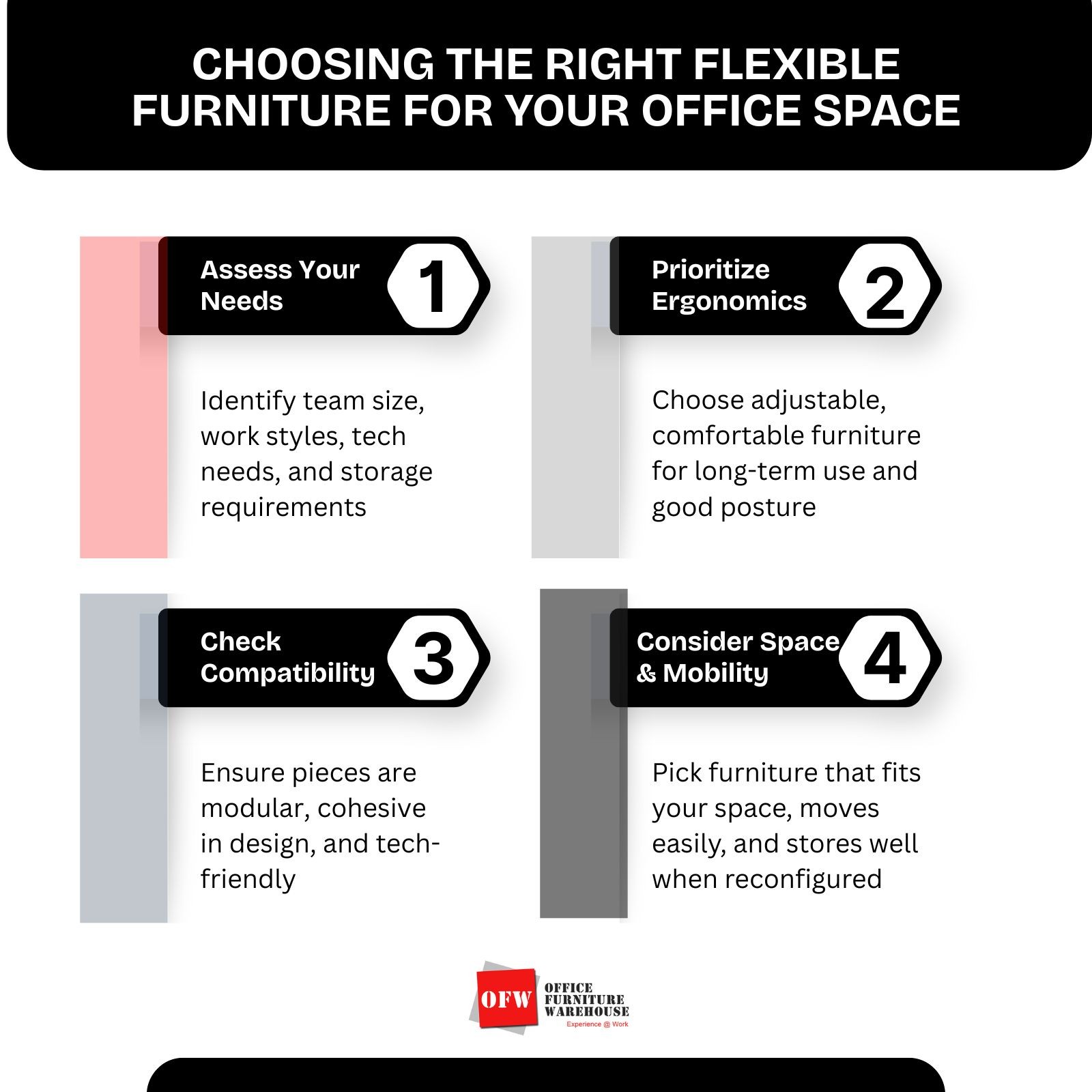
Here is how to choose the right flexible furniture for your office space:
Assess Your Specific Needs
Start by identifying team requirements, work styles, and frequency of in-office presence. Consider:
- Types of work performed (individual focus vs. collaboration)
- Team sizes and meeting frequency
- Technology integration requirements
- Storage and organizational needs
Prioritize Ergonomics and Comfort
Select adjustable, supportive pieces that accommodate extended use:
- Ergonomic seating: Adjustable chairs supporting proper posture
- Height-adjustable surfaces: Accommodating different users and work preferences
- Quality materials: Durable construction for frequent reconfiguration
Consider Integration and Compatibility
Ensure pieces work together effectively:
- Modular compatibility: Components that connect and reconfigure seamlessly
- Consistent design language: Cohesive aesthetic across different pieces
- Technology integration: Built-in power solutions and device accommodation
Evaluate Space Constraints and Mobility
Choose furniture appropriate for your space:
- Size flexibility: Pieces that work in both large and small configurations
- Mobility features: Wheels or lightweight construction for easy movement
- Storage requirements: Adequate space for components when reconfigured
Does Flexible Furniture Solutions Help Future-proof Your Office?
Yes, flexible furniture solutions help future-proof your office by adapting to changing business needs without requiring complete redesigns. These systems grow with your organization, accommodate different work styles, and extend furniture lifespan through reconfiguration rather than replacement. By investing in adaptable pieces like modular desks and mobile storage, businesses reduce long-term costs while maintaining functionality for hybrid work models, team expansion, and evolving workspace requirements.
Ready to Transform Your Office Space?
Every great idea, every pivotal decision, and every impactful presentation starts somewhere. Let it start in an office space that embodies your company’s spirit and ambition. At Office Furniture Warehouse, we’re not just offering furniture; we’re offering a foundation for your next big breakthrough.
As exciting as it is challenging to navigate a new work world, making our spaces flexible, adaptable, and caring is what’s called for in a post-pandemic world. So, as you think of heading back to the office, remember: flexibility is your best ally. It’s not just about furniture; it’s about forging ahead. Ready to reshape your workspace? Dive in, experiment, and don’t forget to enjoy the journey!
Visit our store or explore our website to discover a range of conference tables that cater to every style, need, and budget. Let’s shape the future of your meetings together.