

How to Choose The Best Business Furniture

Last Updated on July 17, 2025 by Bob Collins
To choose the best business furniture, establish a budget and accurately measure your space. Prioritize functional and comfortable ergonomic designs like adjustable desks and chairs to boost productivity. Ensure aesthetics align with your brand, and select durable, high-quality materials for longevity. Consider eco-friendly options and review maintenance and warranty terms. The desk is crucial, serving as the central work hub. Assess workspace needs by analyzing tasks and employee numbers. Avoid mistakes like neglecting space, ergonomics, durability, or brand alignment.
Here are key ways to choose the best business furniture:
Budget and Cost
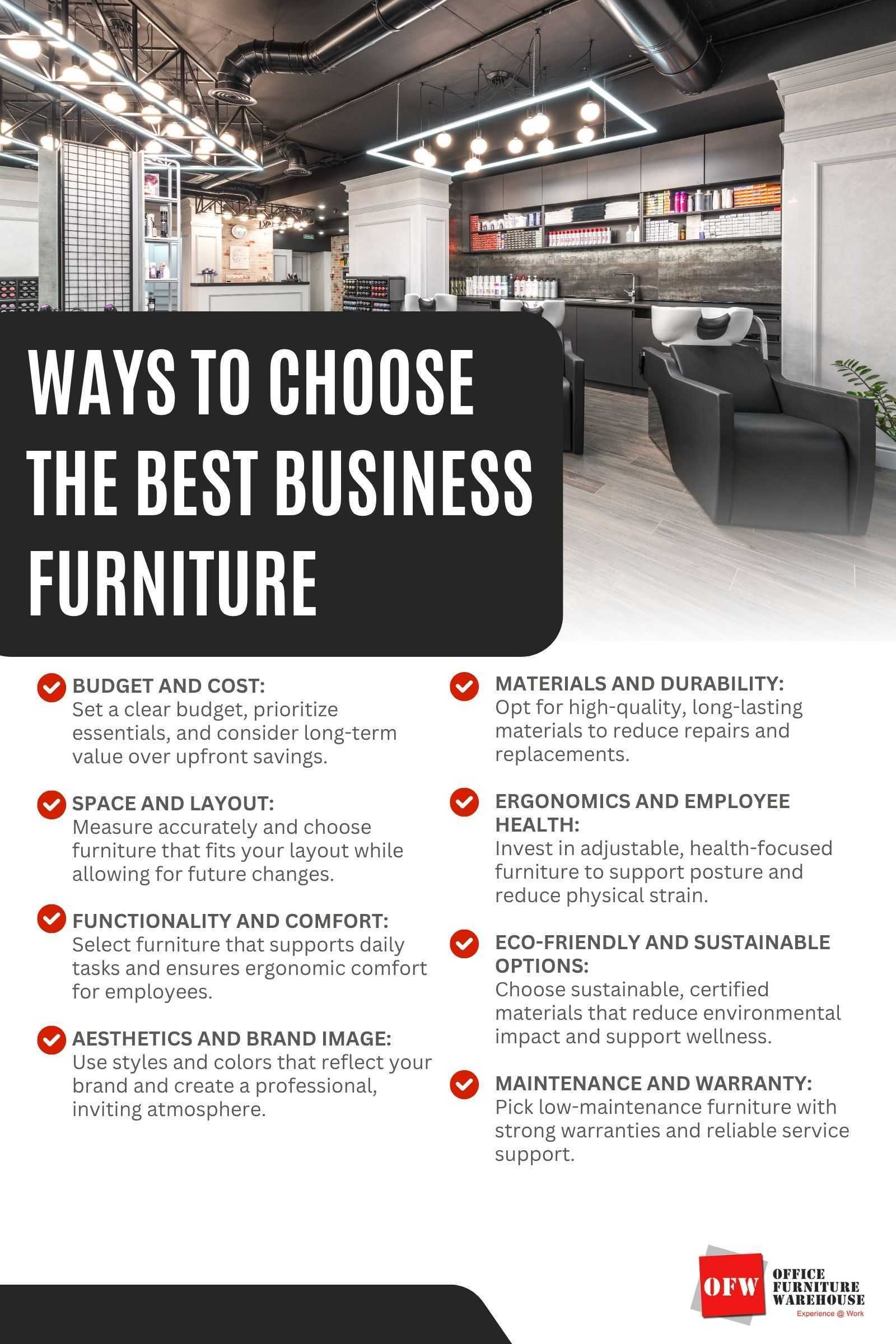
Establish a clear budget before beginning your search for business furniture. Prioritize essential items such as ergonomic chairs and adjustable desks that contribute directly to employee comfort and productivity. Compare prices and quality from multiple suppliers to ensure the best value. Consider the total cost of ownership, including durability and maintenance, to avoid frequent replacements. Explore financing or leasing options to manage upfront expenses while acquiring high-quality furniture.
Space and Layout
Accurately measure your office space to plan furniture placement that maximizes efficiency without overcrowding. Choose furniture sizes and shapes that fit the available area while allowing easy movement and collaboration. Consider the nature of your work environment—open layouts encourage teamwork, while private workstations support concentration and confidentiality. Design the layout with flexibility in mind to accommodate future growth or changes in workflow.
Functionality and Comfort
Select furniture designed to support the specific tasks employees perform daily. Adjustable desks, chairs with proper lumbar support, and accessible storage solutions contribute to an organized and efficient workspace. Comfort directly impacts employee focus and reduces fatigue, so prioritize features that promote good posture and allow movement throughout the day. Ensure that furniture supports both individual work and group activities as needed.
Aesthetics and Brand Image
Choose furniture styles, colors, and materials that align with your company’s brand identity and culture. Consistent design elements reinforce brand recognition and create a professional, welcoming atmosphere for clients and staff. Sleek, modern furniture suits technology or finance sectors, while creative industries benefit from bold, artistic designs. The right aesthetic enhances employee morale and leaves a positive impression on visitors.
Materials and Durability
Opt for furniture constructed from high-quality materials such as solid wood, sturdy metal frames, or sustainable bamboo. These materials withstand daily wear and tear, reducing the need for repairs or replacements. Avoid low-cost materials that degrade quickly or emit harmful chemicals, which affect indoor air quality. Durable furniture represents a long-term investment that supports workplace efficiency.
Ergonomics and Employee Health
Invest in ergonomic furniture designed to support employee health and well-being. Chairs with adjustable height, lumbar support, and armrests reduce strain on the back and neck. Understanding ergonomic office benefits helps you make informed decisions about workplace furniture. Sit-stand desks encourage movement and reduce sedentary behavior. Accessories like monitor stands and footrests help maintain proper posture. Providing adjustable options accommodates diverse body types and helps prevent musculoskeletal disorders.
Eco-Friendly and Sustainable Options
Select furniture made from sustainably sourced wood, recycled materials, or rapidly renewable resources such as bamboo. Look for certifications like FSC or PEFC to verify environmental responsibility. Choosing eco-friendly furniture supports your company’s commitment to sustainability and reduces the environmental footprint of your office. Sustainable choices also contribute to healthier indoor air quality and a positive corporate image.
Maintenance and Warranty
Choose furniture with surfaces that are easy to clean and resistant to stains or scratches to simplify daily maintenance. Durable finishes help preserve appearance and function over time. Review warranty terms carefully to protect your investment against manufacturing defects or damage. Reliable after-sales service ensures timely repairs, minimizes downtime, and extends the lifespan of your furniture.
What Are the Must-Have Business Furniture Pieces for Your Office?
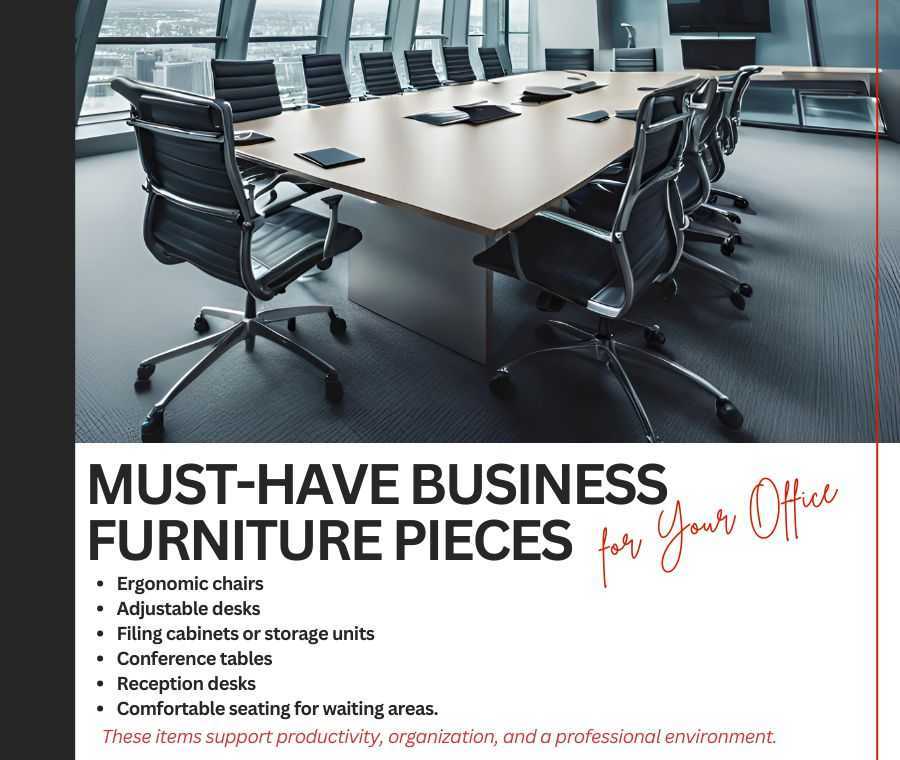
The must-have business furniture pieces for your office include ergonomic chairs, adjustable desks, filing cabinets or storage units, conference tables, reception desks, and comfortable seating for waiting areas. These items support productivity, organization, and a professional environment.
How Do You Distinguish What Office Furniture Is Needed?
To distinguish what office furniture is needed for your business office, conduct a thorough assessment of your workspace and operational requirements. Begin by analyzing the tasks performed daily, the number of employees, and the available office space. Consider whether individual workstations, collaborative areas, or private offices are predominant. This analysis will guide you in selecting the right furniture that enhances functionality and comfort, such as ergonomic chairs and desks for long working hours, or modular furniture for flexible office setups. Understanding your specific needs is key to finding the best office furniture solutions.
What Are The Factors To Consider In Selecting Office Furniture For Small Spaces?
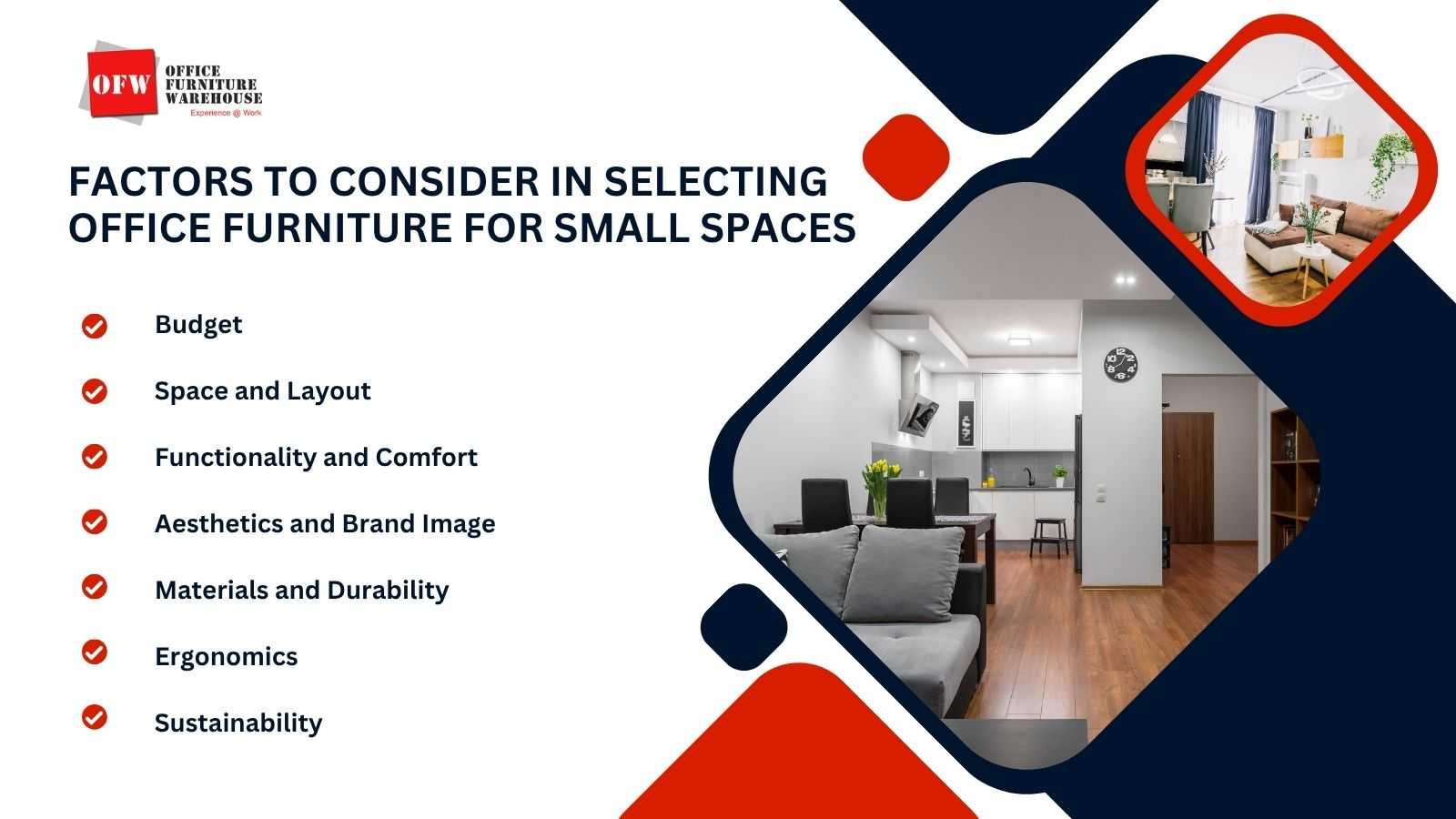
The factors to consider in selecting office furniture for small spaces include budget, space, functionality, and aesthetics. Budget is a crucial factor that dictates the quality and type of furnishings you acquire. The available space and layout determine the size and number of chairs and desks you need, ensuring a functional work environment – this is especially important when choosing office furniture for small spaces.
Functionality and comfort, particularly through ergonomic design, are paramount for employee productivity and health. When selecting office furniture for small spaces, aesthetics and brand image reflect your company’s identity while maximizing the visual appeal of compact areas. Materials and durability ensure longevity, while ergonomics and sustainability are also key factors for employee well-being and environmental responsibility. Office furniture for small spaces requires careful consideration of these factors to create an efficient and comfortable workspace.
What Are Some Tips for Finding the Perfect Office Furniture?
Some tips for finding the perfect office furniture include strategic planning and thoughtful consideration to enhance your work environment. Begin by clearly defining your budget and the specific needs of your office space. Prioritize ergonomic furniture like adjustable desks and ergonomic chairs to promote good posture and employee well-being. Look for high-quality materials to ensure durability and a professional aesthetic. Consider modular furniture options for flexibility and sustainability. Visit showrooms to help you visualize how chairs and desks fit into your office setup, ensuring you select furniture that truly meets your business’s requirements.
What Mistakes Should You Avoid When Buying Business Furniture?
When buying business furniture, the mistakes you should avoid include neglecting to consider your available office space and layout, leading to overcrowding or inefficient use of the area. Underestimating the importance of ergonomics results in uncomfortable chairs and desks that negatively impact employee productivity and health. Overlooking the durability and maintenance requirements of furnishings leads to premature wear and unexpected costs. Failing to align your office furniture’s aesthetics with your brand image creates an uninviting and unprofessional atmosphere.