


How to Choose the Right Hues for Your Office Space

Last Updated on August 18, 2025 by Bob Collins
To choose the right hues for your office space, understand color psychology’s impact on mood and productivity. Red energizes, blue calms, green harmonizes, and yellow lifts spirits. Purple sparks creativity, orange adds enthusiasm, while neutral tones like beige or gray provide a calming backdrop. Create color schemes with base, highlight, and shadow tiers, using warm colors in break rooms and neutrals in focus areas. Test color schemes in one room first, gather employee feedback, and consider long-term scalability. The most common office color is neutral tones, which you can match with office furniture for a cohesive look.
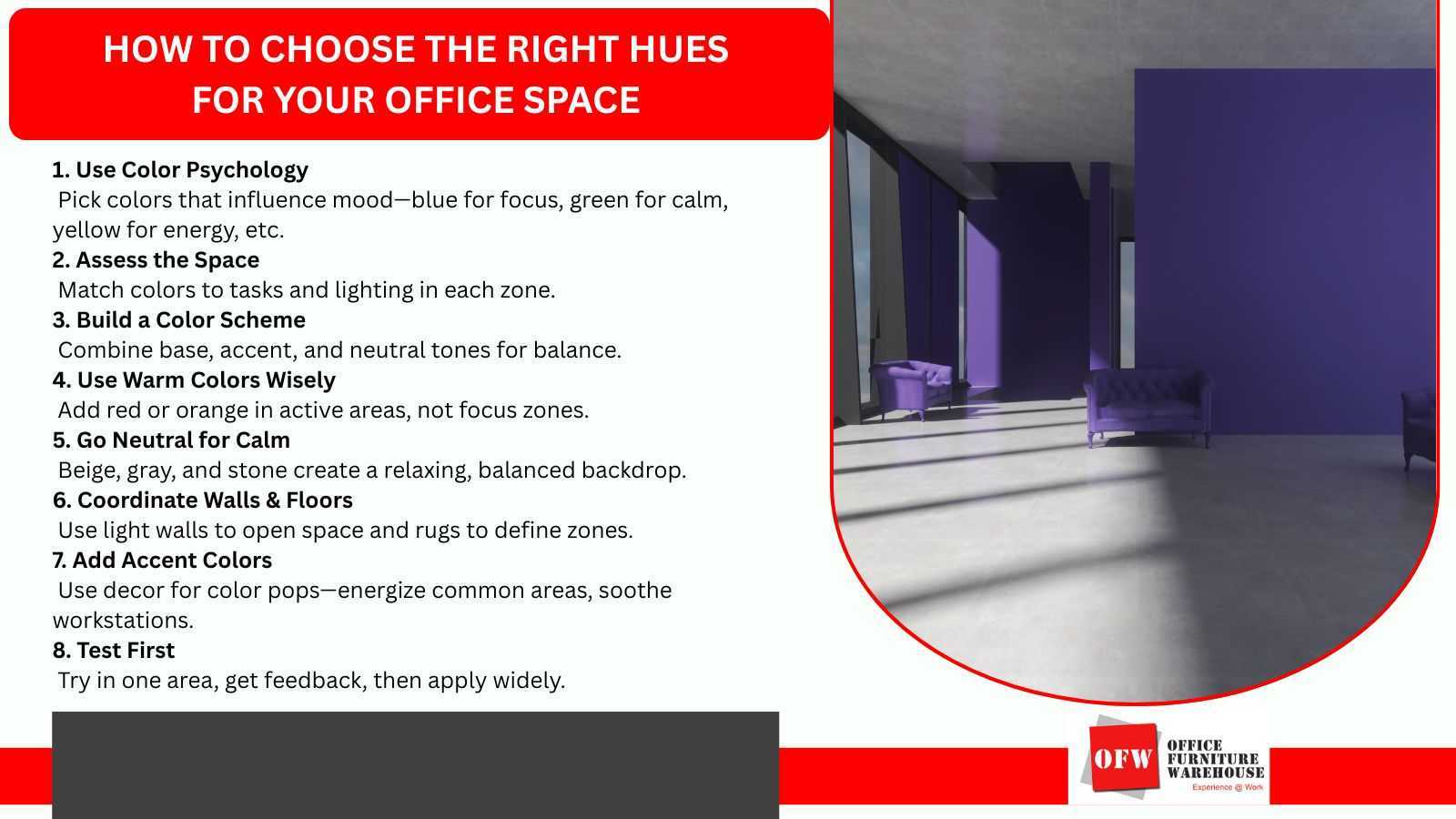
Here are the key steps to choose the right color hues for your office space:
Color Psychology and Effect on Mood and Productivity
Each color carries its own energy, influencing our mood and productivity in different ways. Here’s a closer look at the colors considered for office spaces and the vibes they generally offer:
- Red: This bold choice is energetic and stirs excitement and passion, but when overdone, it tips the scales towards stress. Using it as an accent is a striking and energizing choice.
- Blue: Blue hues promote calmness and trust, making it a common choice for corporate settings. It’s a friend to focus and productivity, giving a stable, reliable backdrop to a busy workday.
- Green: Green takes us a step closer to nature, offering a refreshing and harmonizing touch to the workspace. It’s the color of balance, encouraging relaxation and fostering creativity.
- Yellow: This sunshine hue is a mood-lifter, ushering in cheerfulness and sparking motivation. But remember, a little goes a long way to keep the vibe uplifting without tipping into anxiety.
- Purple: A touch of purple sprinkles a sense of luxury and fosters creativity, encouraging deep thinking and adding a touch of mystery to brainstorming spaces.
- Orange: This warm hue stands for enthusiasm and excitement, but using it too generously is overwhelming. Used wisely, it adds a burst of energy to the room.
- White: The choice of white gives a clean, open vibe, making space feel larger and encouraging clarity in thought processes.
- Black: While it stands for strength and sophistication, using black needs a careful approach to avoid a heavy, overpowering effect.
Assessing Your Space Requirements
Start with color psychology that links tasks to mood. Creative teams need vibrant colors that energize innovation, while analytical work requires calm tones that support concentration. Measure natural light patterns across each desk to determine how wall color appears throughout the day. Map workspace zones to place energizing office color near collaboration areas and neutral colors in focus-heavy sections.
Creating Strategic Color Schemes
Build an office color scheme by choosing the right color palette and grouping complementary hues into base, highlight, and shadow tiers. Choose the right base palette, then add secondary hues that enhance productivity without overstimulation. Balance bright accents with neutral colors like beige to create harmony. Document your office color scheme to ensure consistent application across paint, furniture, and accessories.
Using Warm Colors Effectively
Apply colors like red and orange strategically in break rooms and meeting spaces to boost energy levels and encourage collaboration. Limit warm tones in areas requiring sustained focus to prevent visual fatigue. Pair warm accents with cool neutrals to maintain workplace harmony and avoid creating a chaotic work environment that reduces productivity.
Neutral Color Strategies
Neutral colors such as beige, stone, and soft gray give the office interior a calm backdrop that supports relaxation between intense sprints. A neutral field lets accent items shine while bouncing daylight deeper into corridors for a brighter workplace. Layer textures through rugs and fabric panels to prevent monotony while maintaining the soothing qualities that support focused work.
Applying Color to Walls and Floors
Select wall colors that complement your lighting conditions and reduce glare on computer screens. Use lighter hues on perimeter walls to expand visual space, and add a darker accent wall to define presentation areas. Coordinate flooring with area rugs that repeat your accent colors to create visual flow and define functional zones within the workspace.
Adding Accent Colors
Introduce accent elements through desk accessories, storage units, and lighting fixtures to spark creative thinking. Strategic placement of vibrant colors in common areas energizes collaboration while softer accents near individual workstations soothe concentration. Rotate movable accent pieces seasonally to refresh the work environment without major renovation costs.
Testing Color Schemes
Implement your proposed color palette in one room first. Monitor employee feedback on mood, comfort, and productivity over two weeks. Adjust hue intensity based on lighting conditions and worker responses before expanding the scheme. This validation process ensures your final office color choices support both brand identity and workplace performance.
What Should You Consider For Long-term Color Strategy?
When considering a long-term color strategy, focus on scalability and flexibility to evolve with organizational growth and changing workplace needs. Plan for reconfigurations, seasonally adjusting your color palette to maintain freshness and employee engagement. Ensure colors maintain brand consistency while supporting productivity and comfort over time.
What Is The Color Theory In The Workplace?
The color theory in the workplace involves understanding how colors influence mood, behavior, and productivity. It emphasizes choosing hues that enhance energy, focus, creativity, or relaxation, depending on job function. Harmonizing colors through complementary or analogous palettes creates unity and balance, making the workspace visually appealing and functional.
How To Choose The Best Color For An Office Space?
To choose the best color for an office space, assess the type of work performed, natural lighting, and existing interior elements. Select hues that align with desired mood effects, such as calming blues for focus or energizing reds for collaboration zones. Balance bold colors with neutral tones to create a cohesive office color scheme that enhances overall productivity.
Which Color Is The Most Used Office Color?
The most used office color is neutral tones, especially shades of beige, gray, and white. These colors create a calm, professional atmosphere that enhances natural light and pairs easily with accent colors to support various workspace moods and functions. Neutral office colors serve as versatile backdrops adaptable across different office designs.
How To Find Office Furniture by Color?

To find the ideal office furniture by color, start by considering the overall theme and ambiance you want to create in your workspace. At Office Furniture Warehouse, we specialize in supplying furniture that matches your specific color scheme, ensuring that every piece enhances the aesthetic of your office. Whether you’re looking for vibrant hues or subtle tones, our comprehensive selection of office furniture by color helps you create a cohesive and inspiring work environment that reflects your brand identity and promotes productivity.