


How to Relocate an Office: Tips to Know

Last Updated on August 18, 2025 by Bob Collins
To successfully relocate an office, start planning at least three months in advance. Create a detailed timeline and budget, select a new space that accommodates future growth, and negotiate lease terms. Hire professional movers experienced with business equipment and develop a checklist for tasks like notifying employees and transferring IT. On move day, supervise to ensure all items arrive safely and set up the new office efficiently. After the move, evaluate the process to identify improvements. Costs for small to mid-sized companies in Florida typically range from $5,000 to $50,000, and the relocation process takes two to six months. Companies relocate to find better workspace, reduce operating expenses, and access modern infrastructure.
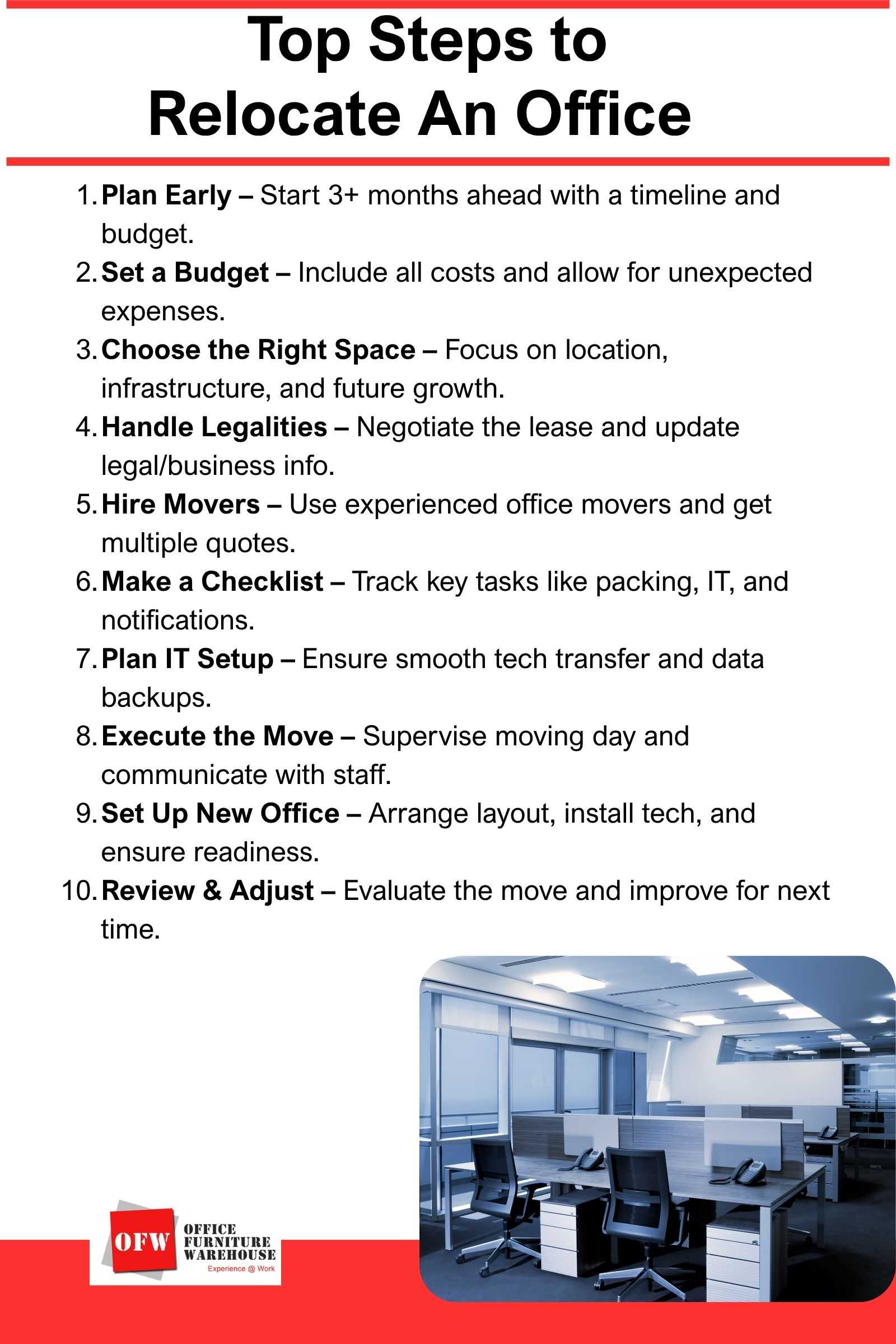
Here are the top steps to relocate an office:
Planning Your Office Move
Start planning your office relocation at least three months in advance to ensure smooth execution. Create a detailed timeline that breaks down tasks into manageable phases, including employee notification, space selection, vendor coordination, and setup activities. Establish a clear budget that accounts for moving services, lease deposits, renovations, IT infrastructure, equipment upgrades, and unexpected expenses that arise during the transition process.
Budgeting and Financial Considerations
Determine your total relocation budget by calculating all associated costs, including professional moving services, security deposits for the new space, technology setup, furniture purchases, renovation expenses, and temporary storage fees. Factor in potential revenue loss from downtime and employee productivity impacts during the transition period. Allocate additional funds for contingencies, as office moves typically encounter unforeseen expenses that exceed initial estimates.
Choosing the Right New Office Space
Evaluate potential office locations based on accessibility for employees and clients, proximity to transportation hubs, parking availability, local amenities, and the overall business environment. Consider factors like building infrastructure, security systems, utilities, internet connectivity, and expansion possibilities for future growth. Ensure the space aligns with your company culture and operational requirements while supporting long-term business objectives.
Lease Negotiations and Legal Requirements
Negotiate lease terms that provide flexibility and protection for your business, including rent rates, lease duration, maintenance responsibilities, improvement allowances, and early termination clauses. Research and comply with all legal obligations, including updating business licenses, permits, and insurance policies, and ensuring compliance with local zoning regulations. Update your business address with banks, vendors, government agencies, and professional service providers to maintain compliance and avoid disruptions.
Hiring Professional Moving Services
Research and select experienced commercial moving companies that specialize in office relocations and understand business equipment handling requirements. Obtain multiple quotes and verify insurance coverage, licensing, and references from previous corporate clients. Coordinate with moving teams to develop a detailed moving plan that minimizes downtime and protects sensitive equipment during transportation.
Creating Your Office Move Checklist
Develop a comprehensive checklist that includes notifying employees, clients, and vendors about the relocation timeline, coordinating IT infrastructure transfer, packing and labeling office equipment, arranging temporary storage if needed, and scheduling utility disconnection and connection services. Include tasks for updating marketing materials, website information, and business directory listings with your new address.
Technology and IT Infrastructure Planning
Coordinate with IT professionals to plan the transfer of phone systems, internet services, servers, and network infrastructure to minimize operational disruptions. Schedule the installation of new technology services at the new location before the move date and create backup systems for critical data. Test all technology systems before employees begin working in the new space to ensure seamless business operations.
Executing the Move
Supervise the moving process on relocation day by having designated team members oversee packing, loading, transportation, and unpacking activities. Maintain communication between moving crews and office staff to address issues quickly and keep the process on schedule. Conduct inventory checks to ensure all equipment and furniture arrive safely at the new location.
Setting Up Your New Office
Organize the new office layout according to your predetermined floor plan, focusing on creating productive work environments and efficient workflow patterns. Install necessary technology systems, arrange furniture placement, and establish common areas before employees begin working. Ensure proper signage, emergency procedures, and building access systems are functional for immediate use.
Post-Move Evaluation and Adjustment
Review the entire relocation process after completion to identify successful strategies and areas for improvement in future moves. Evaluate moving costs against the initial budget, assess employee feedback about the new space, and address any outstanding issues with building management or service providers. Use this experience to refine relocation procedures for potential future office moves.
What Are Some Tips For a Smooth Office Relocation?
Some tips for a smooth office relocation are to create a detailed plan that covers logistics, packing, and communication. Assigning tasks to team members keeps everyone organized and informed. Hiring professional services like Office Furniture Warehouse ensures the safe transportation of furniture and equipment. Involving your IT team minimizes downtime during the transition. Don’t forget to update your business address and notify clients and vendors, too.
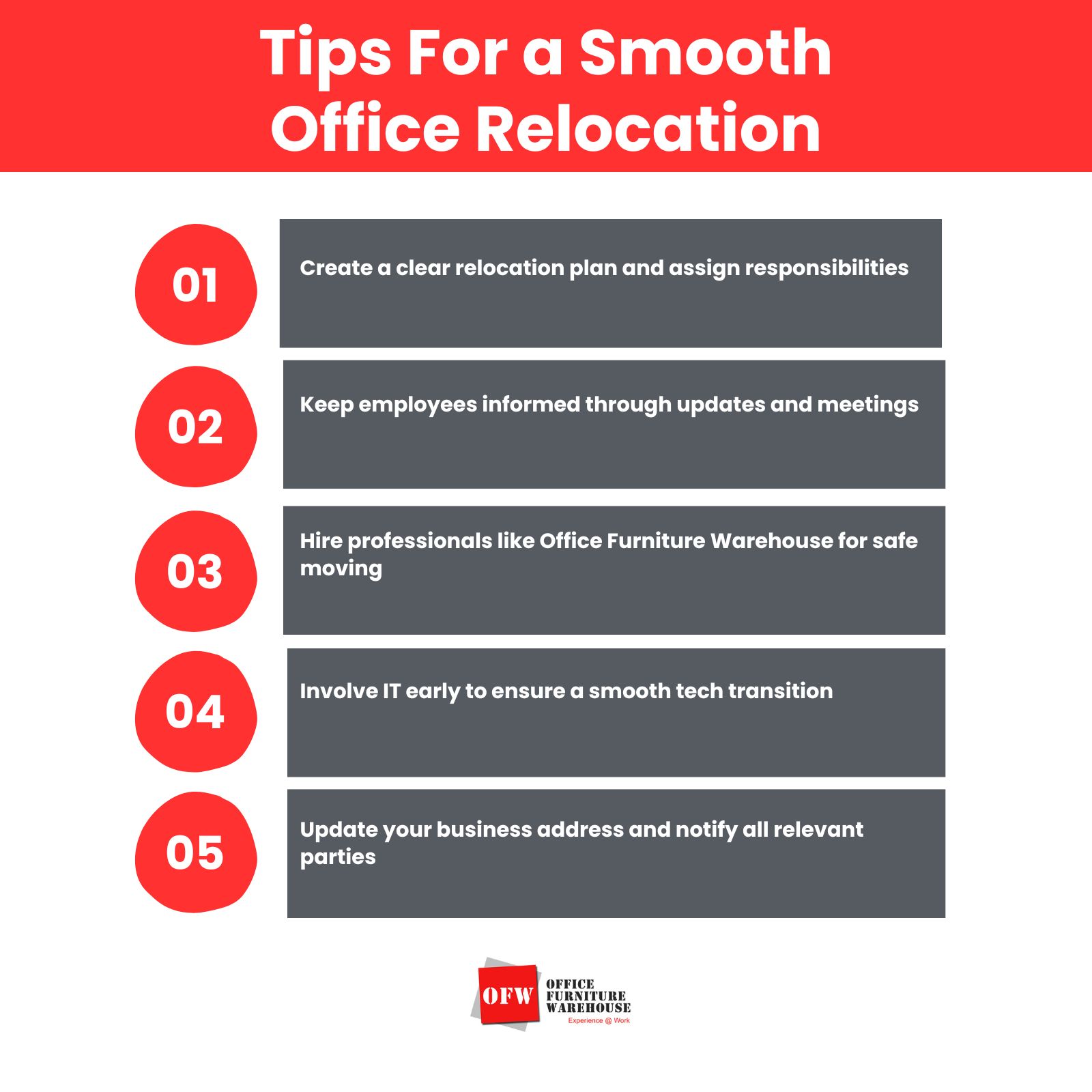
Here are the tips for office relocation in detail:
- Create a detailed relocation plan that outlines all the necessary steps, from logistics to packing, equipment setup, and communication channels. Assign responsibilities to team members to keep everyone organized and on track throughout the process.
- Provide regular office move instructions for employees, hold town hall meetings, and establish open channels for addressing concerns and questions. Keeping employees informed and involved will help alleviate anxiety and maintain morale.
- Hire office relocation services like Office Furniture Warehouse, a reliable company in South Florida, to handle the physical aspects of the move. They will also ensure efficient and safe transportation of furniture and equipment.
- Involve your IT team in the planning process to minimize downtime and ensure a smooth transition of internet and phone connections, network infrastructure, and data security.
- Update your business address and notify relevant parties, such as clients, vendors, service providers, and postal services.
What Does A Realistic Office Move Timeline Look Like?
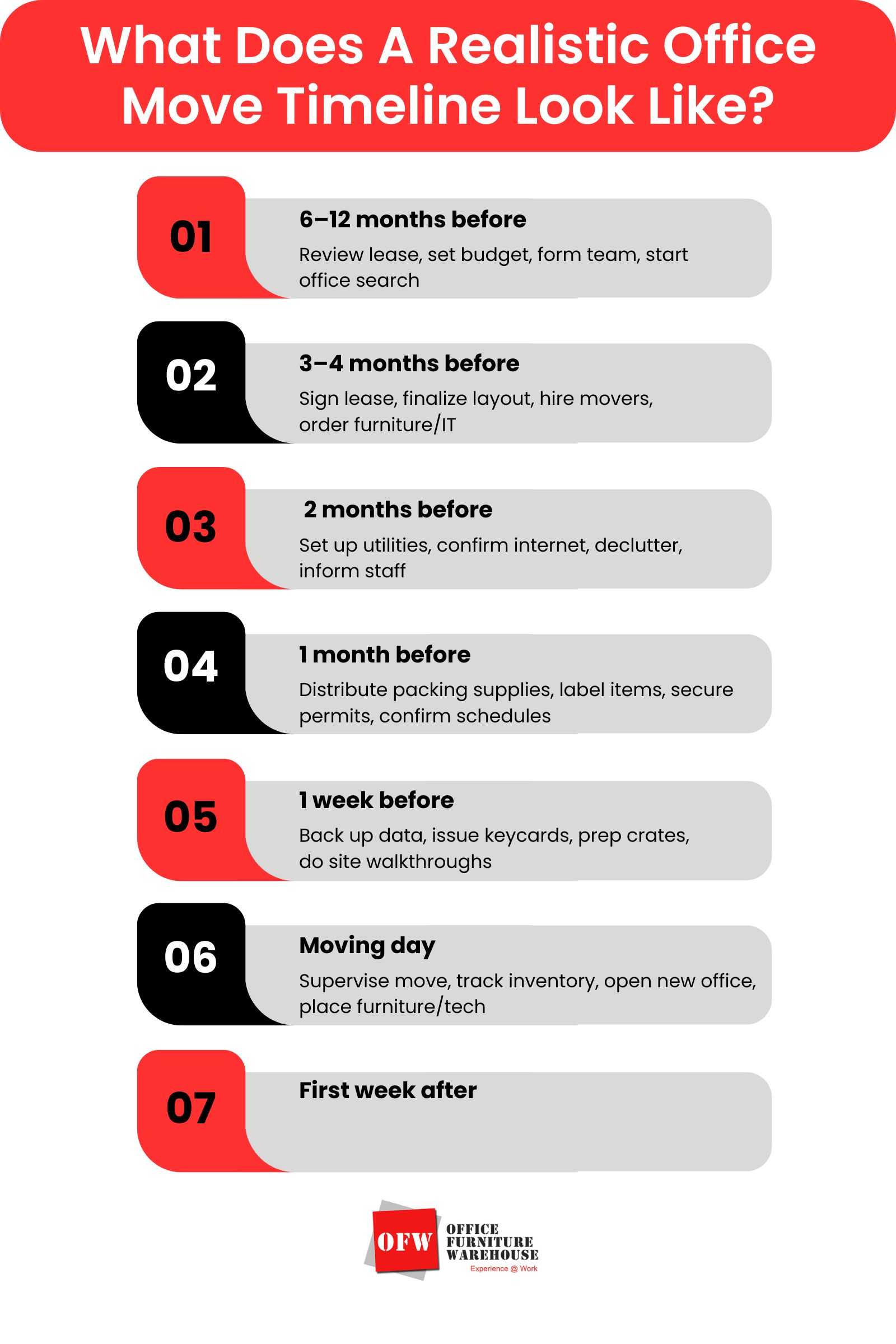
Here is what a realistic office move timeline looks like:
- 6–12 months before: Review current lease, set budget, assemble relocation team, begin search for new space, outline high-level schedule.
- 3–4 months before: Sign the new lease, finalize floor plan, hire movers and key vendors, order long-lead furniture and IT hardware.
- 2 months before: Arrange utility transfers, confirm internet installation, sort and dispose of excess furniture, and start detailed communications with staff.
- 1 month before: Distribute packing supplies, label assets, secure moving permits, publish moving-day procedures, and reconfirm vendor dates.
- 1 week before: Back up all data, issue new keycards, stage packed crates by department, and walk through both sites with movers.
- Moving day: Supervise loading, update live inventory lists, unlock new site early, and direct placement of furniture and tech gear.
- First week after: Test networks, troubleshoot workstations, update address with clients and regulators, and survey staff for final adjustments.
Why Relocate an Office?
Companies relocate their offices to gain workspace that matches headcount growth and supports collaboration. Moves also lower operating expenses by securing cheaper rents or energy-efficient buildings while placing the business in locations that heighten visibility and client access. New premises deliver modern infrastructure, ergonomic layouts, and stronger links to target markets, raising employee satisfaction, talent attraction, and long-term growth potential.
What is The Risk When Moving An Office?
The risks of moving office are that it carries hazards such as schedule overruns that disrupt operations, damage to furniture and technology, productivity dips while staff adjust, and data loss or breaches if devices or files go missing. Mitigate these through detailed timelines with buffers, professional movers who provide insured packing and secure transport, proactive employee communication that offers remote work options, and strict IT protocols including encrypted backups and controlled access during the move.
How Much Does It Cost To Relocate An Office In Florida?
The cost of relocating an office in Florida ranges between $5,000 and $50,000 for a small‐to‐midsize company, with large, multi-floor moves exceeding $100,000 when extensive IT setups, build-outs, or long-distance hauling add complexity.
How Long Does It Take To Relocate An Office In Florida?
It takes around two to six months to relocate a typical small or mid-size office in Florida, covering space search, lease signing, detailed planning, packing, transport, and full tech setup; large corporations that require complex fit-outs and lengthy legal steps should budget six to twelve months from kickoff to complete occupancy.
Why Should You Contact Office Furniture Warehouse in South Florida For Office Relocation?
You should contact Office Furniture Warehouse in South Florida for office relocation because we bring over 30 years of experience in transforming workspaces. Our knowledgeable team is ready to assist you with expert space planning, helping you create an efficient layout tailored to your needs. With access to over 250 leading brands, we ensure you have a wide variety of high-quality furniture options to choose from. We manage all logistics through our project management services, making your transition as smooth as possible. Plus, our professional installation team will efficiently set up your new office, allowing you to focus on what matters most: your business.