

How to Choose Office Furniture for Productivity
Last Updated on November 10, 2025 by Bob Collins
If you’re trying to get more done in your workspace, the right office furniture makes a huge difference. Whether you’re working from home or setting up a commercial space, aim for furniture that balances comfort, function, and space efficiency.
Working with limited space? Stick to lightweight, compact designs; they not only help you stay cool in the heat but also keep your space open, breathable, and productive.
What Office Furniture Helps Improve Productivity in Workspaces?
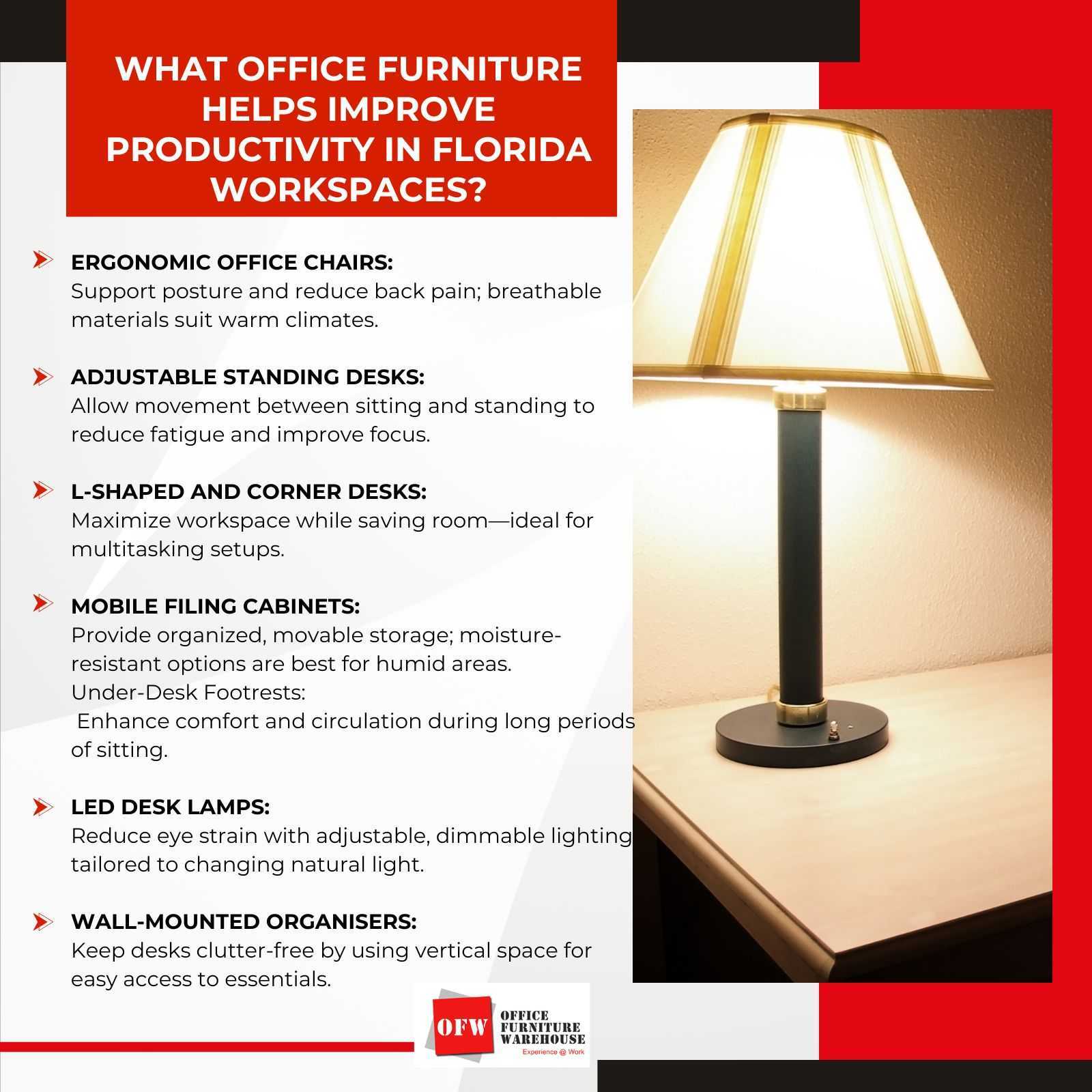
The best office furniture for productivity includes ergonomic chairs, adjustable desks, storage solutions, lighting aids, and space-saving layouts. These pieces support comfort, reduce strain, and help you work efficiently in warm, humid conditions.
Here are the top office furniture that improve productivity:
- Ergonomic Office Chairs: These chairs support spinal alignment and reduce back pain during long work sessions. Features like lumbar support and mesh backs make them ideal for heat.
- Adjustable Standing Desks: Sit-stand desks allow posture shifts throughout the day, reducing fatigue. Electric models are easy to adjust and suit shared workspaces.
- L-Shaped and Corner Desks: These provide a generous surface area without consuming floor space. They’re perfect for multitasking or using dual monitors.
- Mobile Filing Cabinets: Rolling storage keeps your work materials organized and accessible. Choose metal or moisture-resistant finishes for durability in the climate.
- Under-Desk Footrests: Footrests relieve pressure on legs and lower back. They also improve circulation, especially when seated for extended periods.
- LED Desk Lamps: Adjustable lighting supports longer concentration and reduces eye strain. Look for dimmable models to match natural light fluctuations.
- Wall-Mounted Organizers: These help declutter your desk by using vertical space. They keep important documents and tools within reach while maintaining a clean workspace.
What Types of Office Furniture Support Better Focus and Posture?
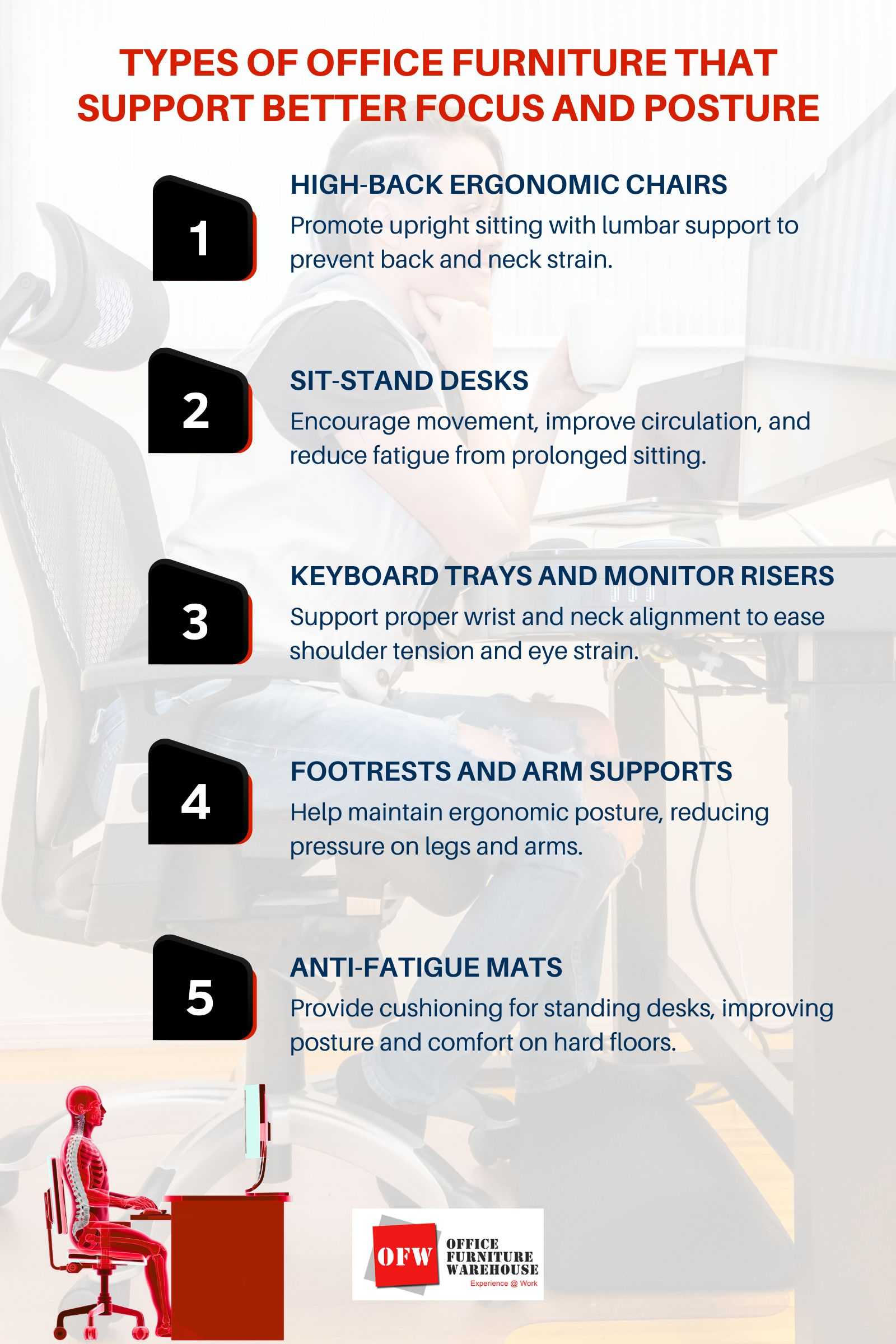
Furniture that supports focus and posture includes ergonomic seating, height-adjustable desks, and accessories designed to reduce strain. In homes and commercial offices, these options enhance work quality while promoting long-term health.
Here are the types of office furniture that improve focus and posture:
- High-Back Ergonomic Chairs: These chairs encourage upright posture and reduce slouching. Adjustable lumbar support helps prevent back and neck strain during extended use.
- Sit-Stand Desks: Alternating between sitting and standing improves blood flow and mental clarity. They also reduce the physical toll of staying in one position all day.
- Keyboard Trays and Monitor Risers: These accessories help maintain neutral wrist and neck positions. They reduce tension in the shoulders and prevent eye fatigue.
- Footrests and Arm Supports: These additions help maintain ergonomic angles in your legs and arms. They reduce pressure points and improve seated comfort over long hours.
- Anti-Fatigue Mats: Used with standing desks, these mats cushion the feet and promote better posture. They’re especially helpful in tiled workspaces that lack softness underfoot.
How Do You Choose Furniture for Small or Home Offices?
To choose furniture for small or home offices, focus on compact, multi-functional pieces that suit your space and Florida’s climate. Prioritize comfort, airflow, and easy maintenance to stay productive in limited or humid environments.
Here are tips for choosing the right furniture for small or home offices :
- Measure Your Space First: Always know your room dimensions before buying desks or chairs. This prevents overcrowding and ensures smooth movement around your workspace.
- Opt for Multi-Functional Furniture: Choose desks with built-in drawers or wall-mounted shelves to maximize utility. Folding tables and mobile cabinets also adapt to changing needs.
- Pick Light and Breathable Materials: Mesh-backed chairs and open-leg desks improve ventilation. These materials stay cooler in homes without strong central air.
- Use Vertical Storage: Tall shelving units and hanging organizers reduce floor clutter. They free up room while keeping your tools and documents accessible.
- Choose Light Colors and Reflective Surfaces: Bright-toned furniture makes small spaces feel larger and more open. Glossy finishes also bounce natural light around the room.
Why Is Ergonomic Office Furniture Worth the Investment?
Ergonomic office furniture is worth the investment because it improves health, prevents injury, and increases long-term productivity. For residents working remotely or managing on-site teams, these benefits outweigh the upfront cost.
Here are the reasons ergonomic furniture is a smart investment:
- Prevents Long-Term Injuries: Ergonomic chairs and desks help reduce repetitive strain injuries. They keep your body aligned and supported during long workdays.
- Boosts Daily Comfort: Adjustable settings allow personalized support for height, posture, and arm positioning. This comfort helps maintain focus and reduces physical distractions.
- Improves Work Output: With fewer aches and more physical ease, you can focus longer and think clearly. This leads to better task completion and fewer breaks.
- Reduces Healthcare Costs: Avoiding posture-related issues means fewer trips to the chiropractor or physical therapist. It also lowers the chance of workplace compensation claims in business settings.
- Increases Equipment Lifespan: Ergonomic furniture is designed to last, utilizing durable materials that withstand heavy use. In a humid climate, investing once saves you from frequent replacements.
Which Materials Work Best in Humid Office Environments?
The best materials for a humid office environment are mesh and nylon, combined with a powder-coated metal frame, engineered wood, tempered glass, and plastic storage. Look for breathable, rust-proof, and easy-to-clean options to keep your workspace functional year-round.
Here are the top material choices:
- Mesh and Nylon for Chairs: These materials promote airflow and resist mildew. They’re ideal for heat and help prevent sweaty backs during long work hours.
- Powder-Coated Metal Frames: Desks and shelves with powder-coated finishes resist rust and corrosion. They hold up well in coastal or high-humidity areas.
- Engineered Wood and Laminates: These are more stable than solid wood in moist climates. They resist swelling and are easy to wipe down without damage.
- Tempered Glass Surfaces: Glass desks and tables don’t absorb moisture and are easy to clean. Their reflective surface also brightens dim rooms.
- Plastic or PVC Storage: Lightweight and moisture-resistant, these materials are perfect for filing drawers, bins, and mobile organizers. They don’t warp or rot in humid offices.
What Are the Benefits of Ergonomic Office Chairs and Desks?
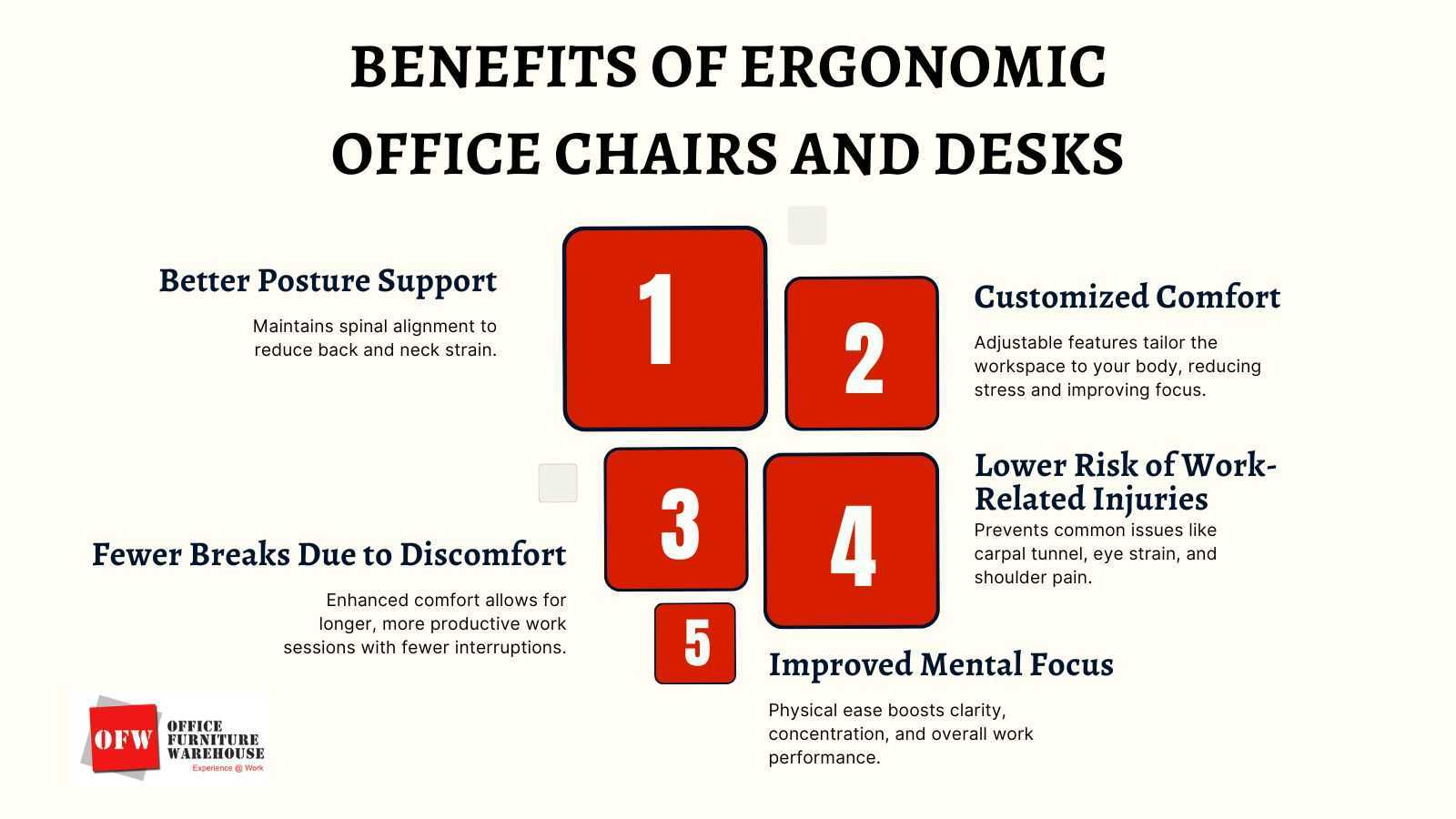
The benefits of Ergonomic office chairs and desks include promoting comfort, boosting productivity, and reducing the risk of chronic pain. In Florida’s remote and hybrid work settings, they help you stay efficient without sacrificing health.
Here are the key benefits:
- Better Posture Support: Ergonomic chairs maintain proper spinal alignment with lumbar support and adjustable features. This reduces back and neck strain during long hours of sitting.
- Customized Comfort: Desks with height adjustability and chairs with tilt, arm, and seat controls are designed to fit your body. This reduces physical stress and improves concentration.
- Fewer Breaks Due to Discomfort: With better body support, you stay seated and focused longer. This leads to a more productive workday and fewer disruptions.
- Lower Risk of Work-Related Injuries: Ergonomic designs help prevent issues such as carpal tunnel syndrome, eye strain, and shoulder stiffness. They support long-term wellness for daily computer users.
- Improved Mental Focus: Physical comfort reduces fatigue and irritability. This helps you think clearly and perform more effectively in meetings, calls, and focused work.
How Do Lighting and Accessories Affect Office Productivity?
Lighting and office accessories significantly impact office productivity by reducing eye strain, improving mood, maintaining a tidy workspace, enhancing efficiency, and personalizing the space. In Florida, striking a balance between natural light and functional extras helps maintain a productive and pleasant environment.
Here are the main benefits:
- Task Lighting Reduces Eye Strain: Adjustable desk lamps direct light exactly where you need it. This supports detail-oriented tasks and reduces squinting during late hours.
- Natural Light Improves Mood: Positioning your desk near a window boosts energy and mental clarity. It also reduces reliance on artificial lighting during sunny afternoons.
- Cable Management Keeps Workspaces Tidy: Organizers and clips prevent clutter from wires and chargers. A neat setup helps reduce distraction and supports mental clarity.
- Desk Accessories Increase Efficiency: Items such as document holders, monitor risers, and pen trays help save time and space. They help you stay organized without overloading your desk.
- Plants and Decor Personalize the Space: A few well-placed items make your workspace more enjoyable. Plants, in particular, improve air quality and reduce stress.
How Can You Maximize Space in a Small Office?
To maximize space in a small office, use vertical storage, compact furniture, and smart layouts tailored to room sizes. Prioritizing openness and function helps you stay organized, even in tight workspaces.
Here are effective space-saving strategies:
- Use Wall-Mounted Shelves: Floating shelves and pegboards free up floor space. They keep essentials within reach without adding bulk to the room.
- Choose Foldable or Rolling Furniture: Desks with wheels or folding features adapt to changing needs. These are ideal for multi-purpose rooms or small condos.
- Go Paperless Where Possible: Digital storage reduces the need for filing cabinets. This frees up square footage for furniture that supports comfort or movement.
- Keep Layout Open: Avoid bulky desks or oversized chairs that dominate the room. Stick to streamlined shapes that allow easy circulation and visual openness.
- Store Vertically, Not Outward: Use tall drawers, bookcases, or corner units to maximize vertical height. This keeps the floor clear while expanding your storage capacity.