


How Long Do Office Chairs Last?
Most office chairs last 7 to 10 years with regular daily use. Budget chairs often fail within 1 to 3 years, while premium ergonomic models reach 10 to 15 years or more. Actual lifespan depends on build quality, materials, and how many hours you sit each day.
Key Highlights
- A well-built office chair lasts 7 to 10 years, and high-end ergonomic chairs can last 12 to 15 years with proper care.
- Cheap chairs under $200 typically wear out in 1 to 3 years because of low-density foam and weak gas cylinders.
- Warranty length is a reliable lifespan signal, ranging from 30 days on budget models to 12 years or lifetime on premium brands.
- Common failure points include the gas cylinder, seat foam, and casters, and most of these parts are cheap to replace.
How Long Does an Office Chair Last on Average?
A quality office chair lasts 7 to 10 years under standard single-shift use of eight hours a day, five days a week. This range covers the frame, upholstery, and moving mechanisms working together. Lower-quality chairs fall well short of this benchmark.
Lifespan splits into three stages. Ergonomic support from foam and lumbar padding fades first, often within 2 to 4 years. Mechanical parts follow at 5 to 8 years. The frame and fabric appearance can hold for 7 to 10 years or longer.
This gap matters because a chair can look fine while its support has failed. Foam loses much of its resilience before any visible wear appears. That is why comfort, not appearance, should guide your replacement decision.
Office Chair Lifespan by Type and Price Tier
Price is the strongest predictor of how long an office chair lasts. Cheaper chairs use thinner foam, lower-grade gas cylinders, and plastic components that fail early. Higher tiers use steel frames, high-density foam, and rated multi-shift parts.
The table below compares expected lifespan and warranty across four common tiers. Use it to match a chair to your daily sitting hours before you buy.
| Price tier | Typical price | Expected lifespan | Typical warranty | Best for |
|---|---|---|---|---|
| Budget | $100 to $200 | 1 to 3 years | 0 to 1 year | Occasional or light home use |
| Mid-range | $300 to $600 | 5 to 7 years | 5 years | Daily home-office work |
| Premium ergonomic | $600 to $1,500+ | 10 to 15+ years | 12 years to lifetime | Full-time, 8+ hours daily |
| Commercial 24/7 | Varies | 7 to 10 years | 12 years, multi-shift | Call centers, shared desks |
Premium brands back these numbers with strong coverage. Herman Miller warrants most chairs for 12 years including parts, labor, and three-shift use. Steelcase offers a limited lifetime warranty for the normal expected life of the product, valid regardless of shift usage.
How Chair Material Affects Lifespan
The upholstery and cushioning wear at different rates. Choosing the right material for your climate and use pattern adds years to your chair. Here is how the common options compare.
Leather
Full-grain leather lasts 10 years or more, and up to 20 years with regular conditioning. Bonded leather is the exception, since it peels and cracks within 2 to 4 years. Avoid bonded leather for any chair you sit in daily.
Mesh
Quality mesh lasts 5 to 8 years before the weave loses tension and starts to sag. The failure point is usually the frame or tension, not the fabric itself. Commercial-grade mesh holds shape longer than thin consumer mesh.
Fabric
Woven fabric lasts around 8 years, and its durability tracks the double-rub abrasion rating. Higher ratings resist pilling and thinning. Fabric breathes well but stains more easily than leather or mesh.
Foam
Foam is the true weak link in most chairs. High-density molded foam keeps its shape for years, while cheap two-inch foam flattens within months of heavy use. Sagging foam is the top reason comfortable chairs feel worn out.
What Affects How Long an Office Chair Lasts?
Several factors decide whether your chair reaches the low or high end of its expected range. Understanding them helps you protect your investment from day one.
Build quality comes first. Steel and aluminum frames outlast plastic, and high-density foam outlasts budget padding. Frequency of use matters just as much, since sitting 8 to 10 hours a day accelerates wear on every moving part.
Home versus commercial use also plays a role. Home chairs are often lower quality but used less, while a full-time remote worker should treat a home chair like a corporate one. User weight, weight capacity, and maintenance habits round out the list.
7 Warning Signs Your Office Chair Needs Replacing
A failing chair sends clear signals long before it collapses. Watch for these seven signs and act before poor support affects your back and posture.
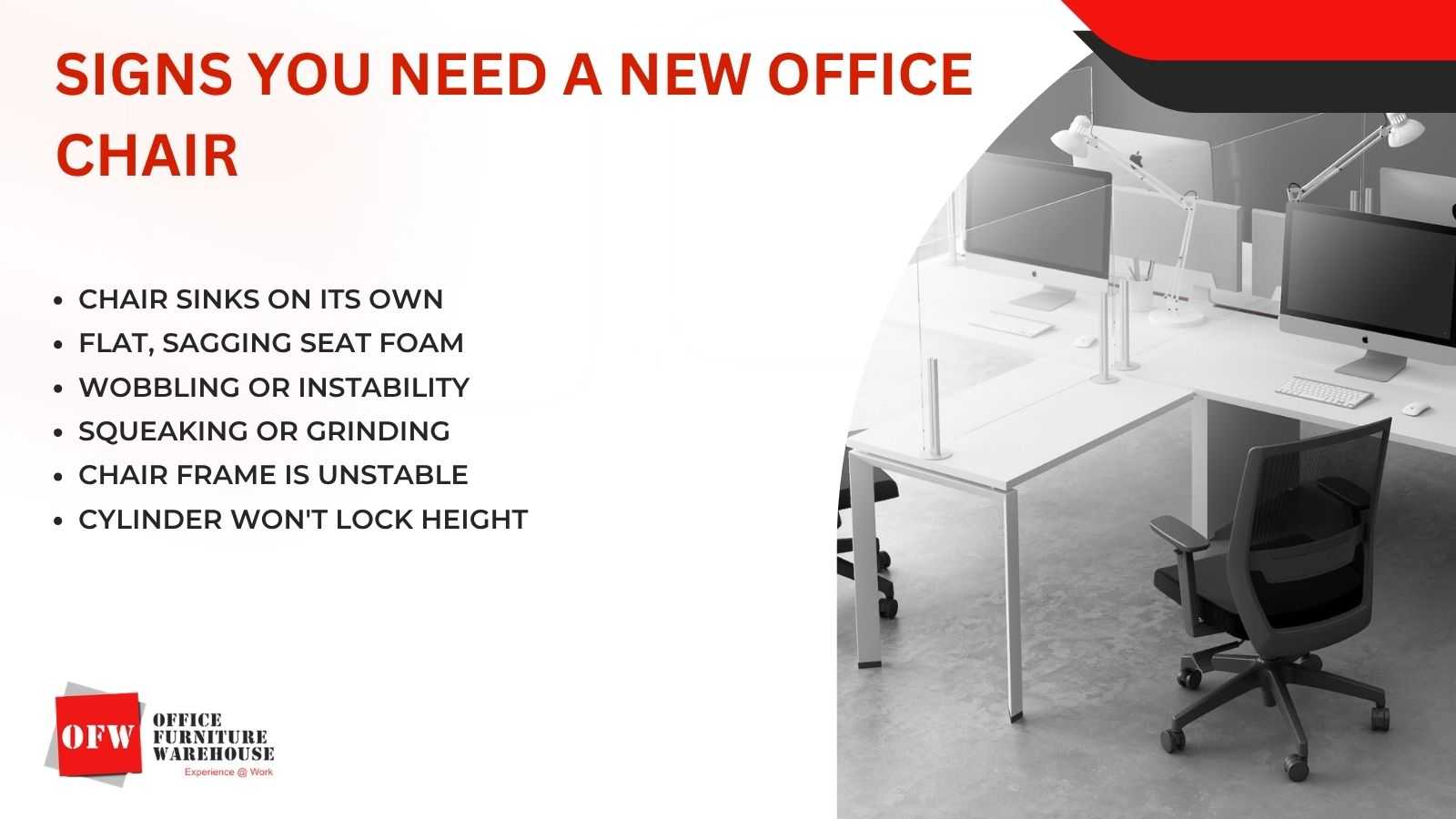
1. The Chair Sinks on Its Own
A slow sink means the gas cylinder has lost its nitrogen seal and can no longer hold your set height. This is one of the most common failures and one of the cheapest to fix.
2. The Seat Foam Feels Flat
Press the cushion with your hand. If the foam takes more than a second to rebound, it has lost its support and needs replacing.
3. The Chair Wobbles or Feels Unstable
Wobble points to a compromised base, loose welds, or worn joints. Structural instability is a safety issue and usually signals the end of the chair’s life.
4. The Casters Drag or Stick
Worn caster bearings make rolling difficult and strain your hips as you reposition. Dragging wheels can also scratch floors. Swapping the set is quick and inexpensive.
5. The Upholstery Is Torn or Cracked
Frayed fabric or cracked leather compromises both hygiene and comfort. On budget chairs this often marks the point of replacement rather than repair.
6. Mechanisms Squeak or Grind
Persistent squeaking and grinding mean internal parts are wearing out. Tightening bolts and lubricating joints helps, but recurring noise signals deeper wear.
7. You Feel New Back or Neck Pain
If you sit with recurring back, neck, or shoulder pain, the ergonomic support has failed even if the chair looks fine. This is the clearest sign it is time for a new one.
How to Make the Office Chair Last Longer
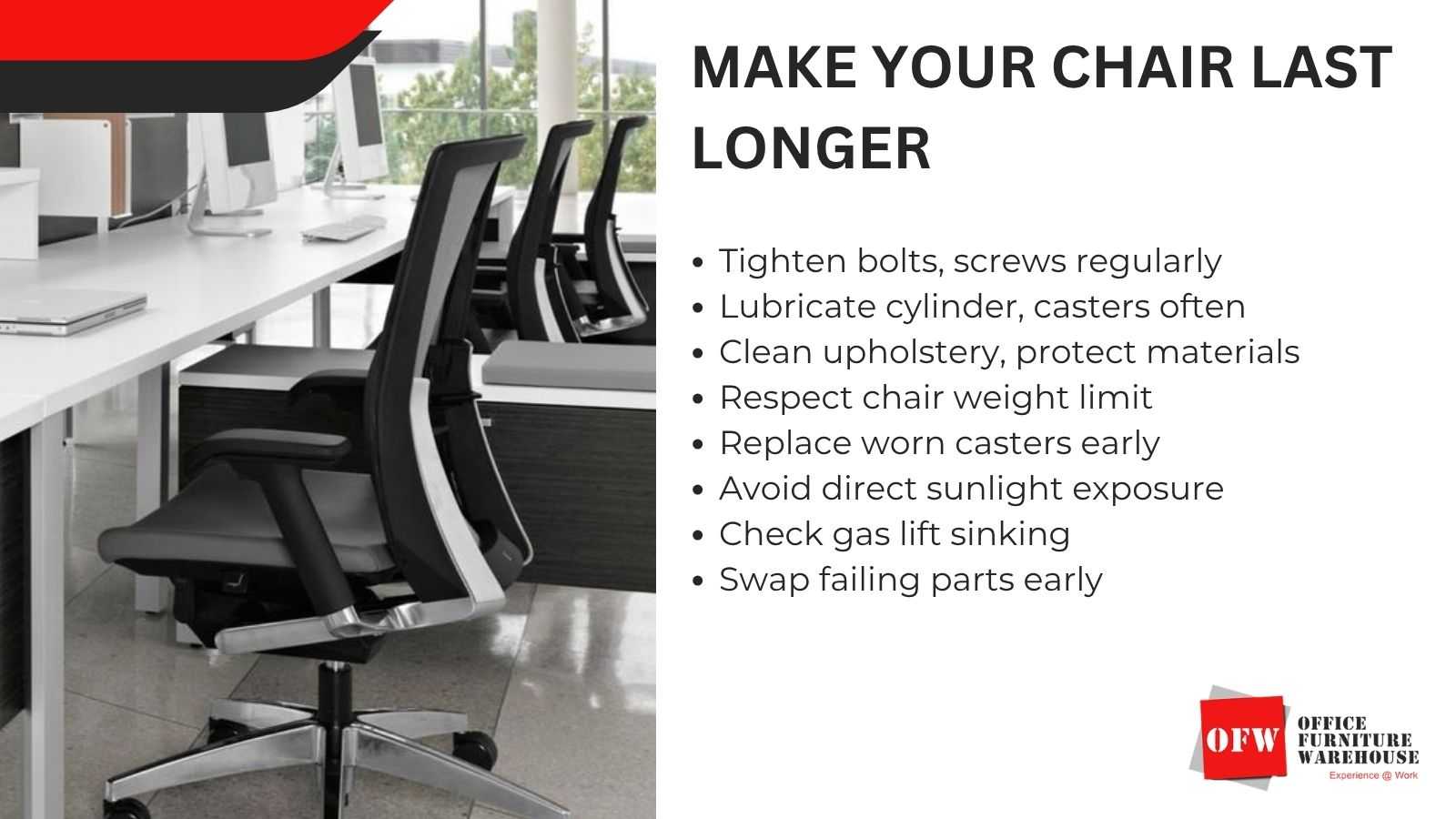
Simple maintenance can add years to any chair. A short routine keeps mechanisms smooth and foam supported for as long as possible.
- Tighten all bolts and screws every few months to prevent wobble and premature joint wear.
- Lubricate the gas cylinder, casters, and tilt mechanism to stop squeaking and grinding.
- Clean upholstery regularly, since dirt and oils break down fabric and leather over time.
- Respect the weight capacity, because overloading strains the base, cylinder, and frame.
- Replace worn casters early to protect both your floor and the chair base.
- Keeping your chair out of direct sunlight and away from heat also slows material breakdown.
Repair or Replace? The Cost Math
Many chairs fail because of one worn part, not the whole unit. Replacing that part is often far cheaper than buying new. The table below shows typical costs and whether each fix is worth doing.
| Component | Typical lifespan | Replacement cost | Worth repairing? |
|---|---|---|---|
| Gas cylinder | 5 to 10 years | $20 to $50 | Yes, quick DIY fix |
| Casters (set of 5) | 3 to 7 years | $15 to $25 | Yes, easy swap |
| Star base | Life of chair | $30 to $60 | Only on mid or high-end chairs |
| Seat foam | 2 to 4 years | Varies | Usually replace the chair |
| Mesh or upholstery | 5 to 8 years | Reupholster | Only on premium chairs |
A useful rule is the 40 to 50 percent test. If a single repair costs more than half the chair’s current value, replacing it makes more sense. If a sinking chair is the only issue, you can often fix it yourself with a new cylinder rather than fixing a sinking office chair through a costly service call.
Do Expensive Office Chairs Last Longer?
Expensive chairs usually last longer and cost less per year of use. The savings show clearly once you divide the price across the chair’s lifespan. Cheap chairs look like a bargain but rarely are.
Consider the math. A $130 chair replaced every two years costs around $650 over a decade. A $500 commercial chair built to last ten years costs less over the same period, while providing far better support the whole time.
A $400 chair lasting 8 years works out to about $50 a year. A $1,200 premium chair over 10 years costs roughly $120 a year, or about 33 cents a day. For anyone sitting six or more hours daily, a mid-to-premium chair is both the better value and the healthier choice.
Gaming Chair vs Office Chair: Which Lasts Longer?
Gaming chairs generally last 2 to 5 years, shorter than a comparable ergonomic office chair. Budget models with PU-leather covers often crack within 1 to 2 years, while premium gaming chairs reach 5 to 7 years.
The difference comes down to design priorities. Gaming chairs favor bold aesthetics and bucket-seat foam that compresses faster under daily use. A quality ergonomic office chair uses firmer, higher-density foam and rated mechanisms built for full workdays. For long hours, the office chair almost always outlasts the gaming chair.
Frequently Asked Questions
How often should you replace an office chair?
Replace a standard office chair every 7 to 10 years in a corporate setting, or every 5 to 8 years if you work full-time from home. Replace it sooner if you notice sinking, flat foam, wobble, or new back pain. Warning signs matter more than the calendar.
How long does a Herman Miller chair last?
A Herman Miller chair commonly lasts 12 to 15 years or more. The brand backs most chairs with a 12-year warranty that includes parts, labor, and three-shift use. With basic care, many owners keep these chairs well beyond the warranty period.
How long do cheap office chairs last?
Cheap office chairs under $200 typically last 1 to 3 years with daily use. They rely on low-density foam and low-grade gas cylinders that fail early. Over ten years, replacing cheap chairs repeatedly costs more than buying one quality chair upfront.