

How to Create A Welcoming Office Landscape
Last Updated on October 7, 2025 by Bob Collins
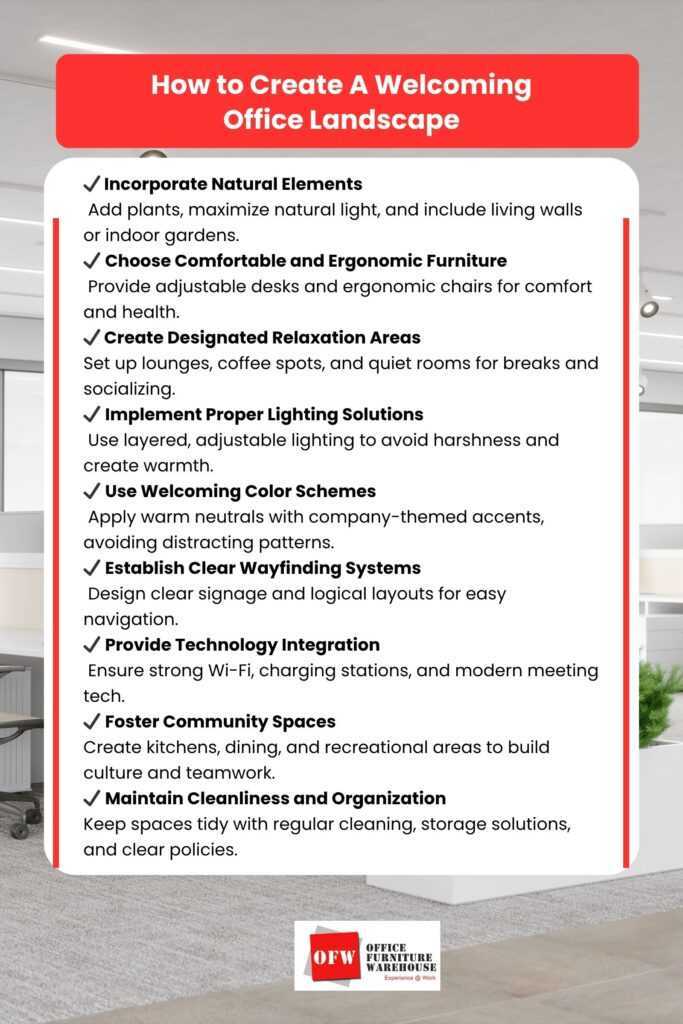
A Welcoming Office Landscape is created by open, flexible spaces, natural elements, comfortable, ergonomic furniture, and designated relaxation areas. Proper lighting solutions, welcoming color schemes, clear wayfinding systems, and technology integration contribute. Fostering community spaces and maintaining cleanliness and organization also creates a welcoming environment.
Here is how to create a welcoming office landscape:

Design Open and Flexible Spaces
Transform your office into an inviting environment by incorporating open floor plans that promote collaboration and communication. Remove unnecessary barriers between departments while maintaining designated quiet zones for focused work. Implement flexible furniture arrangements that allow teams to reconfigure spaces based on project needs and team sizes.
Incorporate Natural Elements
Integrate plants throughout the workspace to improve air quality and create a more organic atmosphere. Position large windows to maximize natural light exposure, which boosts employee mood and productivity. Add living walls or small garden areas where possible to bring nature indoors and provide visual relief from screen-heavy work environments.
Choose Comfortable and Ergonomic Furniture
Select furniture that prioritizes employee comfort and health. Install adjustable desks that accommodate both sitting and standing work positions. Provide ergonomic chairs with proper lumbar support and invest in quality seating for common areas that encourage informal interactions and relaxation.
Create Designated Relaxation Areas
Establish dedicated spaces where employees feel comfortable taking breaks and socializing. Design comfortable lounge areas with soft seating, coffee stations, and recreational activities. Include quiet meditation or nap rooms where staff members recharge during busy workdays.
Implement Proper Lighting Solutions
Layer different lighting types throughout the office to create warmth and functionality. Combine ambient lighting with task-specific illumination and accent lights that highlight architectural features. Avoid harsh fluorescent lighting that creates an unwelcoming atmosphere and instead opt for LED systems with adjustable brightness levels.
Use Welcoming Color Schemes
Apply color psychology to create positive emotional responses in your workspace. Choose warm, neutral tones as base colors while incorporating accent colors that reflect your company culture. Avoid overwhelming patterns or overly bright colors that distract from work activities.
Establish Clear Wayfinding Systems
Design intuitive navigation throughout your office space with clear signage and logical layouts. Use consistent visual elements that help visitors and new employees find their destinations easily. Create landmark areas or focal points that serve as reference points for navigation.
Provide Technology Integration
Install reliable wireless networks and charging stations throughout common areas. Ensure meeting rooms have modern presentation equipment and video conferencing capabilities. Create tech-friendly environments where employees seamlessly transition between different work modes and locations.
Foster Community Spaces
Develop areas that encourage team building and company culture. Design kitchen and dining spaces that accommodate group meals and celebrations. Include game rooms, libraries, or hobby areas that reflect employee interests and promote work-life integration.
Maintain Cleanliness and Organization
Implement regular cleaning schedules and provide adequate storage solutions throughout the office. Keep common areas clutter-free and well-maintained to create positive first impressions. Establish clear policies for shared spaces that ensure consistency in appearance and functionality.
Office Workstations
Nothing makes employees feel more welcome and relaxed than allowing them to customize their office workstations. When workers are allowed to bring in photos of family members, their own decorative accessories or organizational tools, they will feel encouraged to express themselves and will feel more comfortable at work.
Encourage staff members to decorate their office cubicles or desks. As a result, motivation increases as the office environment becomes more positive.
What Are The 7 Principles Of Landscape Design With Examples?
The 7 principles of landscape design include unity, balance, and emphasis. These principles are used to create a beautiful and functional outdoor space by guiding the placement and selection of all design elements.
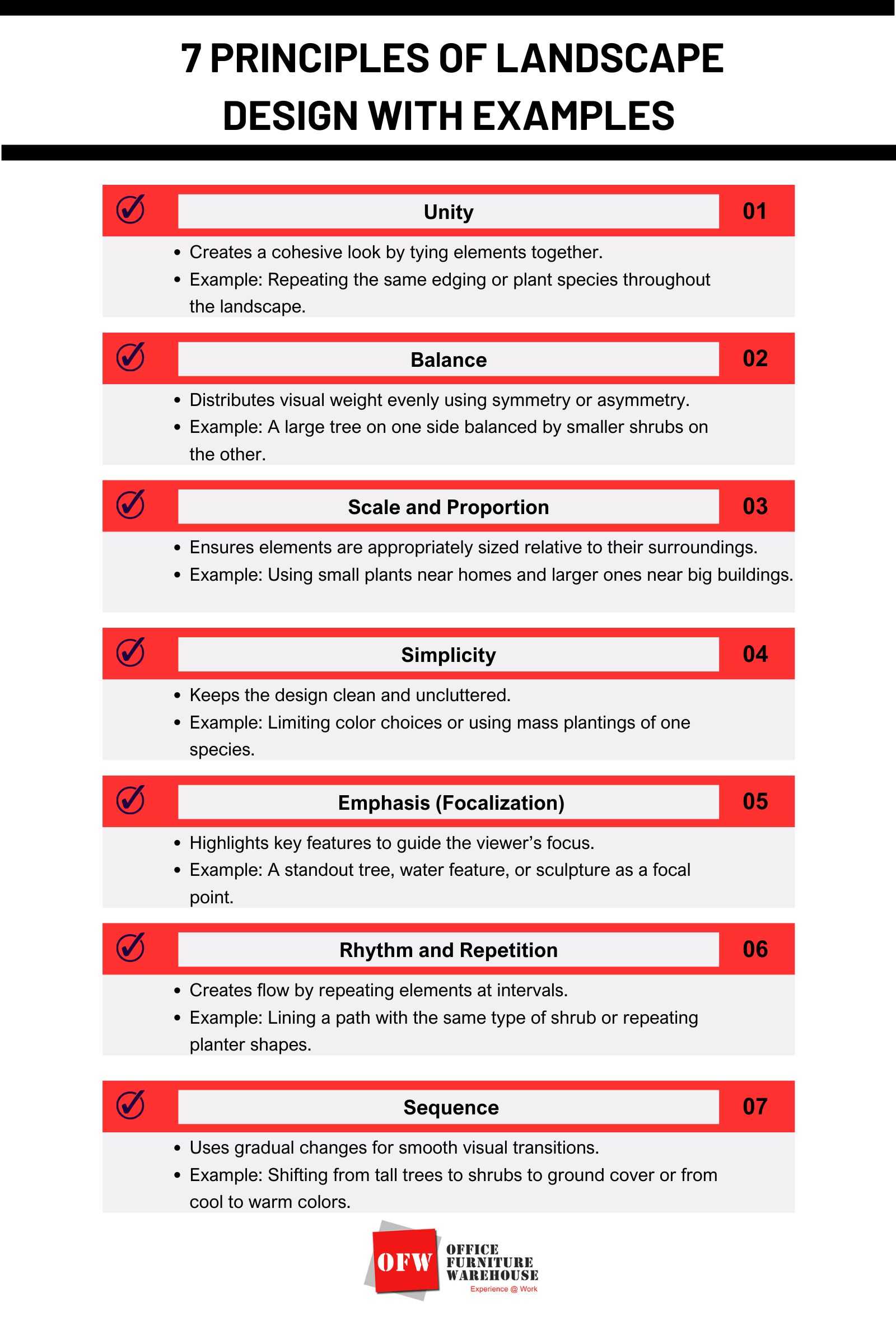
Here are the principles of landscape design in detail:
- Unity: Unity creates a sense of oneness and harmony throughout the landscape design. This principle ties all elements together to form a cohesive appearance. Example: Using the same type of edging material (like weathering steel) throughout different garden areas, or repeating specific plant species across the landscape to create visual consistency.
- Balance: Balance refers to the equal distribution of visual weight in a landscape. This principle creates stability and visual appeal through either symmetrical or asymmetrical arrangements. Example: Placing a large tree on one side balanced by several smaller shrubs on the other side, or creating mirror-image plantings on both sides of a walkway.
- Scale and Proportion: Scale ensures that design elements feel appropriate in relation to their surroundings and the fixed structures. This principle considers the size relationship between all landscape features. Example: Using appropriately sized plants near buildings – avoiding massive trees next to small homes or tiny shrubs beside large commercial buildings.
- Simplicity: Simplicity keeps the design clean and uncluttered while maintaining visual interest. This principle prevents the landscape from becoming chaotic or overwhelming. Example: Choosing a limited color palette for flowers and foliage, or using mass plantings of the same species rather than scattered individual plants.
- Emphasis (Focalization): Emphasis creates focal points that draw the viewer’s attention to specific areas or features. This principle establishes visual hierarchy within the landscape. Example: Positioning a striking specimen tree, water feature, or decorative sculpture as a central focal point that guides the eye through the space.
- Rhythm and Repetition: Rhythm creates movement and flow through the repeated use of design elements at regular intervals. This principle adds visual interest while maintaining unity. Example: Planting rows of the same flowering shrubs along a pathway, or repeating circular planters throughout a patio area.
- Sequence: Sequence involves smooth transitions and gradual changes in elements like size, color, and texture. This principle creates flow and movement throughout the landscape. Example: Transitioning from tall trees to medium shrubs to low ground cover, or gradually shifting from cool colors to warm colors across a garden bed.
What Are Some Easy-to-build office landscaping ideas?
Some easy-to-build office landscaping ideas include adding desk plants like succulents and snake plants, using mobile planters on wheels for flexibility, and hanging plants from ceiling fixtures to save floor space. These solutions enhance workspaces without major construction or significant investment, providing immediate visual impact and employee benefits.
How Does Office Landscape Space Planning Help The Work Environment?
Office landscape space planning creates natural zones and improves workflow by utilizing plants as visual screens that define spaces without blocking light or movement. By positioning greenery to form informal meeting areas, it encourages collaboration among employees. Additionally, the use of foliage provides acoustic barriers that reduce noise pollution while also improving air quality through natural filtration systems. This thoughtful placement establishes calming environments that lower stress levels and boost concentration. Overall, effective office space planning enhances both functionality and employee well-being while maintaining the flexibility needed in modern work environments.
Why Does Office Landscaping Matter?
Office landscaping matters because it delivers measurable benefits such as increased productivity through improved air quality and reduced stress. It enhances the professional image that creates positive first impressions for clients and visitors, lowers operational costs through natural cooling and humidity control, decreases employee absenteeism due to better indoor environmental quality, and strengthens corporate culture by demonstrating a commitment to employee well-being and environmental responsibility. These natural elements transform sterile office spaces into healthier, more attractive environments that support both business goals and human needs.