

How To Furnish A Government Office
Last Updated on July 17, 2025 by Bob Collins
To successfully furnish a government office, meticulous planning, adherence to regulations, and a focus on utility and professionalism are essential. Key steps include assessing the space, planning the layout, selecting appropriate furniture, procuring through approved channels, and coordinating delivery. Considerations encompass functionality, durability, accessibility, technology integration, security, and aesthetic balance.
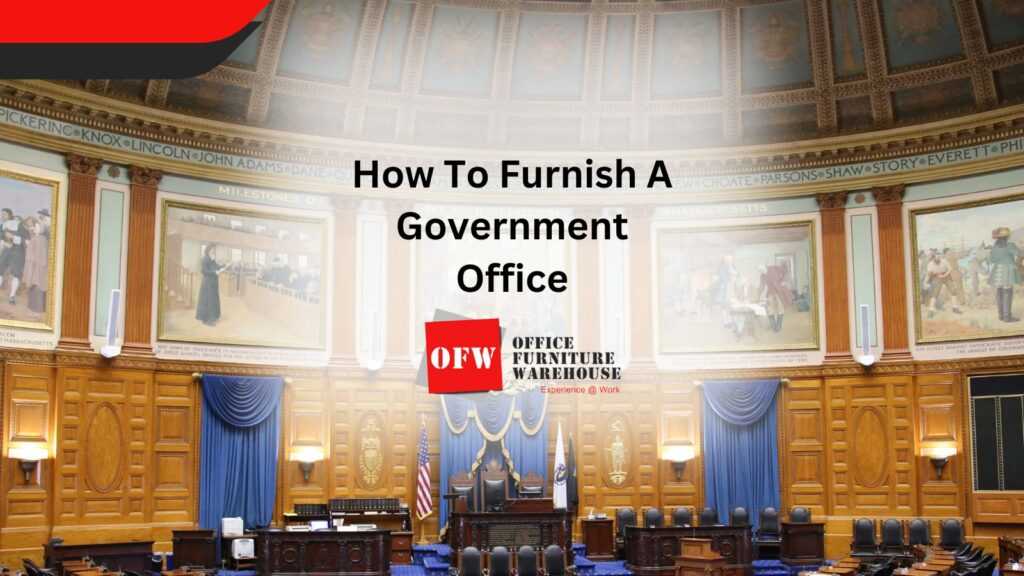
According to The Miami Herald, the 25,000-square-foot building is new and LEED-certified. The facility will house executive and administrative offices and serve as a hub for all town departments. Miami Lakes officials chose to furnish the multipurpose rooms with stadium-style seating and bolted-down chairs, the paper reported.
“I wanted a building that was going to be the people’s building and serve the needs of the community,” Mayor Michael Pizzi told the Herald. “I want [residents] to say, ‘This is a beautiful building – it looks great, and it’s going to serve our needs.’”
When furnishing a public office or executive suite, the business furniture should be tasteful and serve the needs of those who will occupy the space. Hiring the help of a professional office layout designer can help design the space so it meets safety codes and professional standards.
What Are the Key Steps to Furnish a Government Office in Florida?
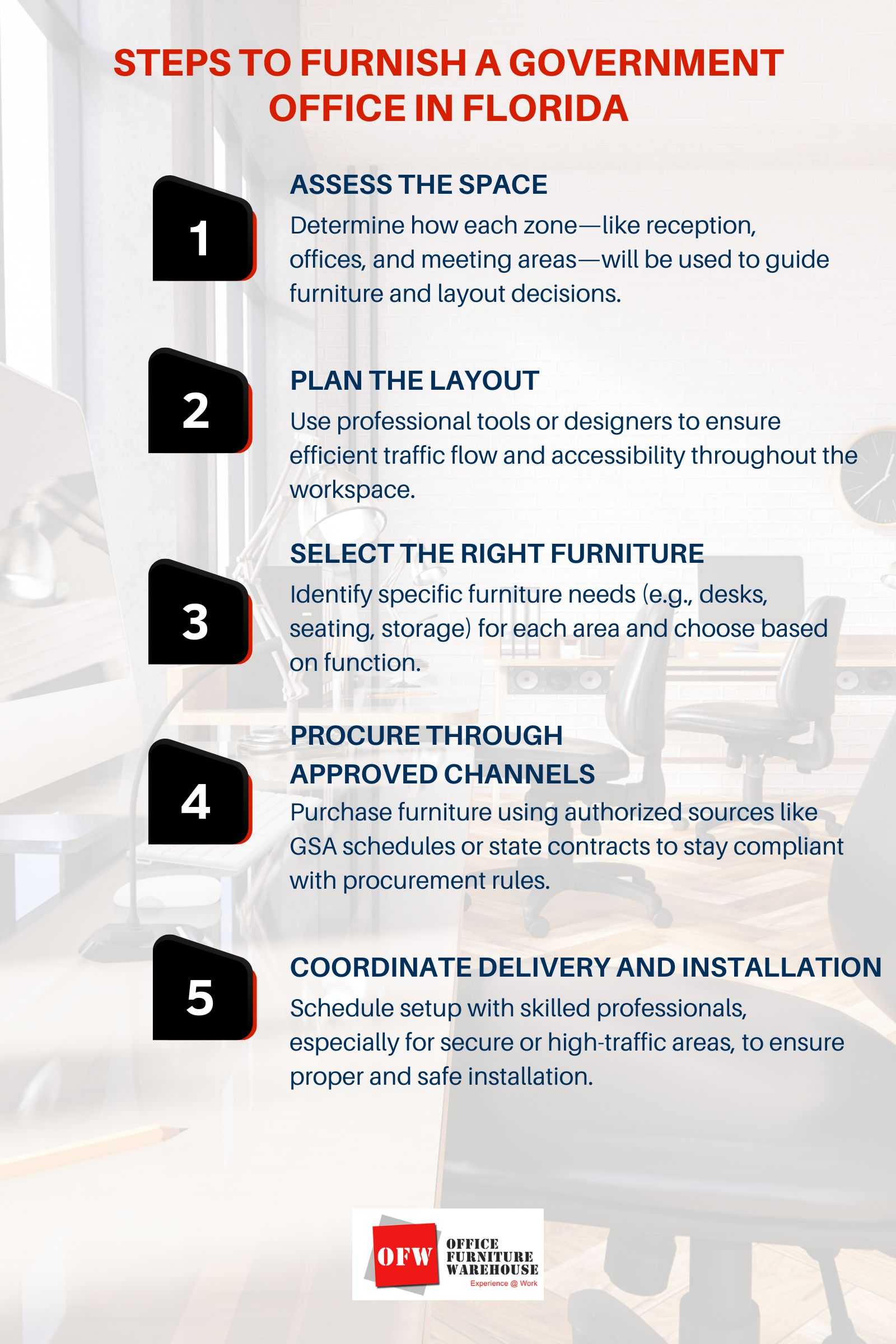
The key steps to furnish a government office in Florida are conducting a thorough space evaluation, developing strategic layout plans, choosing appropriate furniture categories, utilizing compliant procurement methods, and managing professional installation services. These essential phases ensure that your government workspace meets both functional requirements and regulatory standards while optimizing employee productivity and public service delivery.
Here are the key steps to furnish a government office in Florida:
- Assess the Space: Evaluate how each area will function—reception, workstations, executive offices, conference rooms, and public-facing zones.
- Plan the Layout: Use professional office space planning services or specialized software to optimize traffic flow, accessibility, and workstation placement.
- Select the Right Furniture: Categorize needs such as seating, desks, storage, and conference units. Match each to its use case.
- Procure Through Approved Channels: Use GSA schedules, state contracts, or cooperative purchasing programs for compliant procurement.
- Coordinate Delivery and Installation: Ensure furniture is delivered and installed by trained professionals with experience in secure or high-traffic environments.
Each of these steps supports the development of a professional, compliant, and efficient office environment.
What Are the Factors To Consider When Furnishing A Government Office?
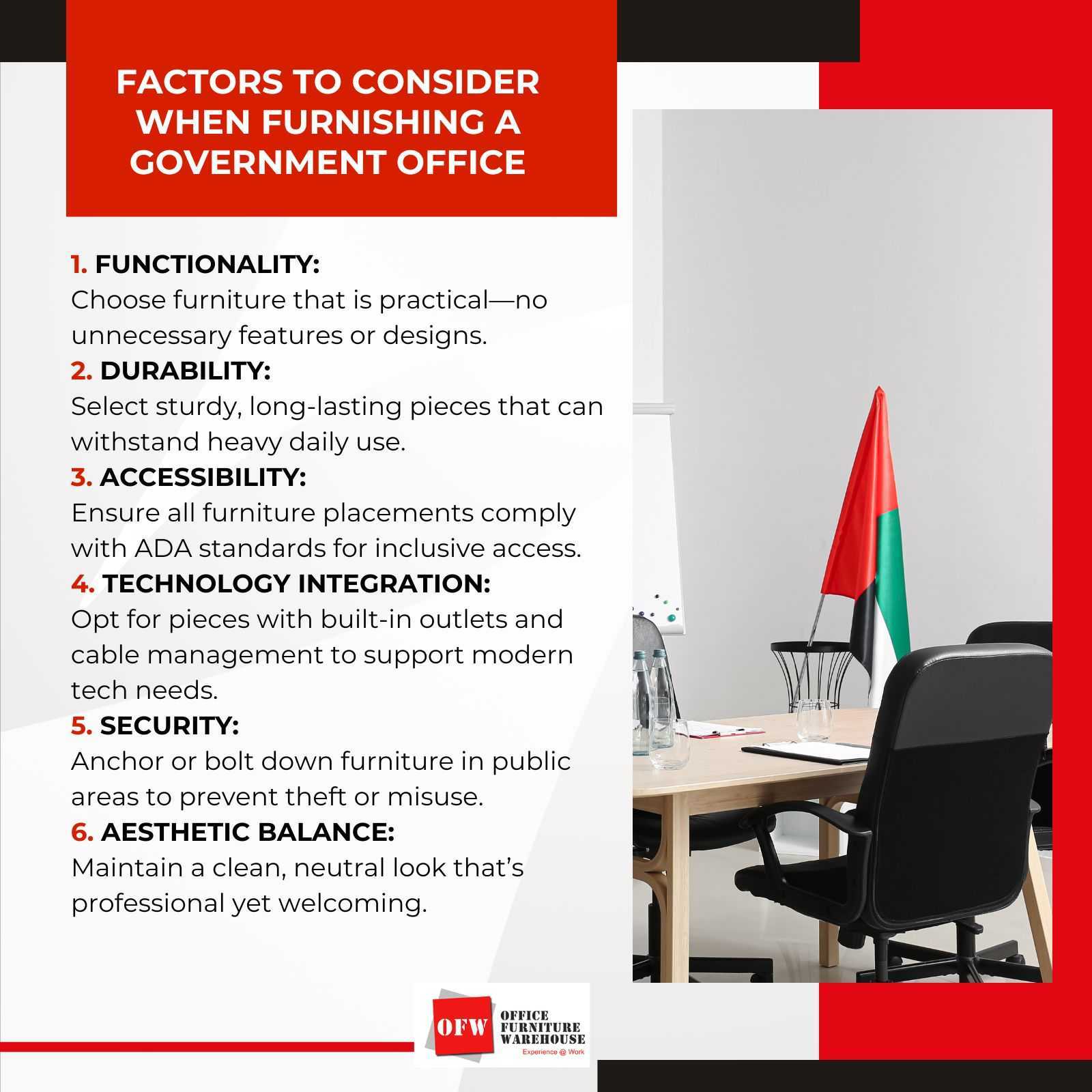
The factors to consider when furnishing a government office include operational efficiency, longevity, universal access, technological compatibility, safety protocols, and professional presentation. These elements work together to create spaces that serve both staff and citizens effectively.
Here are the common factors to consider when furnishing a government office:
- Functionality: Every item must serve its purpose without excessive features or designs.
- Durability: Public office furniture must handle frequent use and last long without constant repair.
- Accessibility: Follow ADA guidelines to ensure spaces are inclusive and navigable.
- Technology Integration: Choose desks and conference tables with built-in cable management and power access.
- Security: Use bolted seating or anchored furniture in public areas for added safety.
- Aesthetic Balance: Keep the style formal and neutral to project authority while staying welcoming.
These factors shape a workspace that serves both staff and visitors reliably.
What Are Some Tips For Furnishing A Government Office?
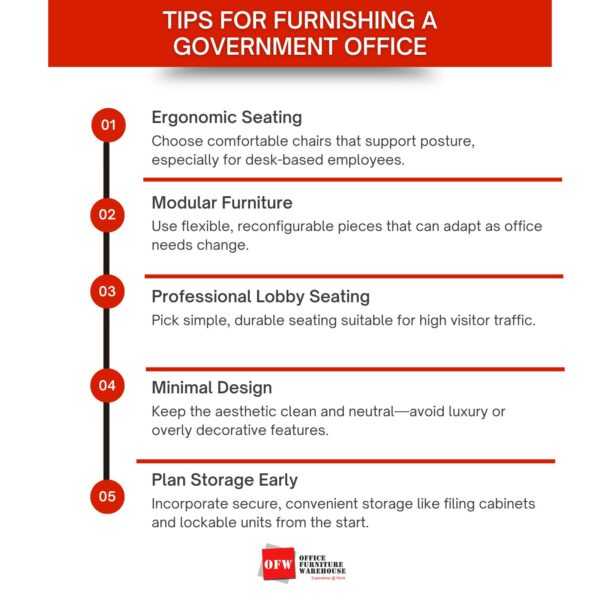
Some tips for furnishing a government office include prioritizing ergonomic seating for employee well-being, selecting adaptable modular furniture systems, maintaining professional lobby aesthetics, embracing simplistic design approaches, and planning comprehensive storage solutions. These considerations help create functional workspaces that serve both staff and public visitors effectively while staying within budget constraints.
Here are some practical tips to ensure a successful furnishing project:
- Invest in Ergonomic Seating: Prioritize employee comfort, especially for those in administrative roles.
- Use Modular Furniture: Choose flexible furniture that adapts to evolving layouts and future growth.
- Keep Lobby Furniture Professional: Select understated, comfortable seating that suits high-traffic use.
- Avoid Overdesigning: Keep things simple and neutral. Government offices don’t need luxury touches.
- Think About Storage Early: Plan for secure and accessible filing systems and cabinetry.
What Budget Factors Influence Government Office Furnishing?
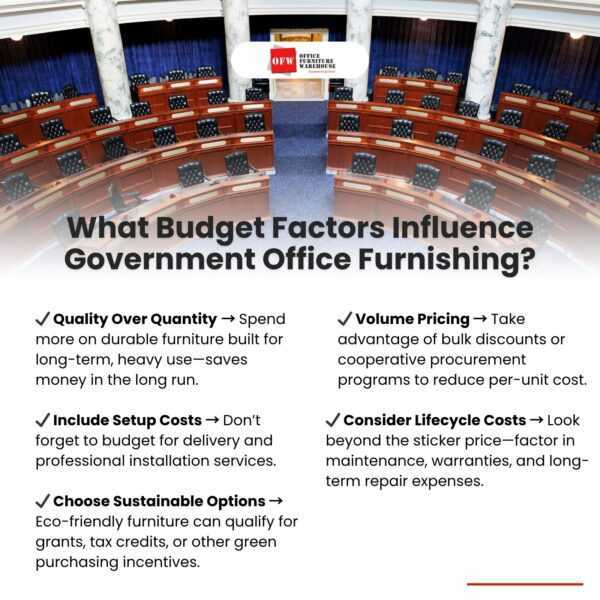
Budget factors influencing Government Office Furnishing include durability versus affordability trade-offs, bulk purchasing opportunities, installation and delivery expenses, long-term maintenance costs, and sustainable furniture options that qualify for grants.
Here are the budget considerations that influence both short- and long-term value:
- Quality vs. Quantity: Invest in durable, high-use furniture rather than cheaper items that wear quickly.
- Volume Pricing: Leverage bulk pricing or cooperative purchasing options.
- Setup and Delivery: Include installation and transport in the budgeting process.
- Lifecycle Cost: Consider warranties, ease of maintenance, and repair costs over time.
- Sustainability Options: Select eco-friendly items that may qualify for additional grants or incentives.
Being strategic about budget planning avoids overspending while ensuring quality and compliance.
What Compliance Standards Must Be Met?
Compliance standards that must be met include local, state, and federal regulations for every furnishing decision. ADA Standards require ensuring clearance widths, surface heights, and seating configurations support accessibility. Fire Safety Codes mandate that all fabrics and finishes must meet fire-resistance standards for public facilities. Environmental Certifications involve choosing products with BIFMA, LEED, or Greenguard certifications. Security Requirements include installing tamper-resistant or bolted furniture where necessary in public zones. Meeting these compliance standards protects the agency from liability and ensures usability for every occupant.
What Are The Essential Items Needed To Furnish A Government Office?
Essential items needed to furnish a Government Office include executive and administrative workstations, ergonomic seating solutions, conference furniture with integrated technology, reception area furnishings, comfortable waiting room options, comprehensive storage systems, modular workspace configurations, and presentation equipment for meetings.
For specialized professional environments, such as legal practices, consider exploring our comprehensive law firm office furniture guide for tailored solutions that meet industry-specific needs.
What Should Be Considered When Furnishing A Public Office Or Executive Suite?
When furnishing a public office or executive suite, key factors to consider include tasteful design, functionality, safety compliance, and professional standards. The business furniture should be tasteful and serve the needs of those who will occupy the space. Hiring the help of a professional office layout designer will ensure that the space meets safety codes and professional standards. For conference areas, selecting the right table shape, such as U-shaped, boat-shaped, cylinder, traditional, rectangular, and square, is important, choosing shapes that are traditional but contemporary. Investing in conference tables with parts that hold power modules for data and access to operate computers and other presentation equipment makes the meeting space more conducive.
Choosing reliable, high-quality work chairs for the conference room helps meetings run more efficiently. In communal spaces like lounges and lobby areas, furniture should be simple but comfortable, avoiding opulence. Comfortable and attractive seating and tables that are the right height serve the needs of the space effectively. As the lobby is the first space visitors see, timeless and sophisticated furnishings work better than overly ornate and over-the-top designs.
Want to create a comfortable, collaborative work environment? Visit the Office Furniture Warehouse website to complete your office landscape.