

Standing Desk vs. Traditional Desk: Which is Better?
Standing desk vs. traditional desk, this isn’t just a furniture choice anymore. It’s a decision that impacts your health, focus, and daily comfort. With most professionals spending hours at their desks, poor ergonomics is taking a toll, causing back pain, sluggishness, and long-term posture issues.
Traditional desks have served us for decades, but they promote a sedentary routine linked to fatigue and chronic health risks. The standing desk is a modern solution designed to keep you moving, alert, and more engaged throughout the day. As the demand for healthier, more flexible workspaces grows, so does the interest in alternatives that support both well-being and productivity. This shift in how we view workspaces has made the comparison more relevant than ever. Whether you’re outfitting a home office or redesigning your corporate setup, understanding the pros and cons of each desk type is key to creating a workspace that works for you.
What’s the Difference Between Standing and Traditional Desks?
The difference between standing and traditional desks lies mainly in their design, adjustability, and purpose. Traditional desks are fixed-height and designed for seated work, offering a stable and familiar setup, but one that encourages long periods of inactivity.

In contrast, standing desks are built to support both sitting and standing positions, with height-adjustable features that promote movement throughout the day. Some models require manual adjustment, while others offer electric mechanisms for seamless transitions between heights. These modern desks are intentionally designed with health in mind, aiming to reduce the risks associated with prolonged sitting, such as poor posture, back pain, and decreased circulation. Whether manually operated or powered, standing desks reflect a growing shift toward ergonomically conscious, wellness-focused work environments that adapt to individual needs.
What Makes Traditional Desks a Staple in Offices?
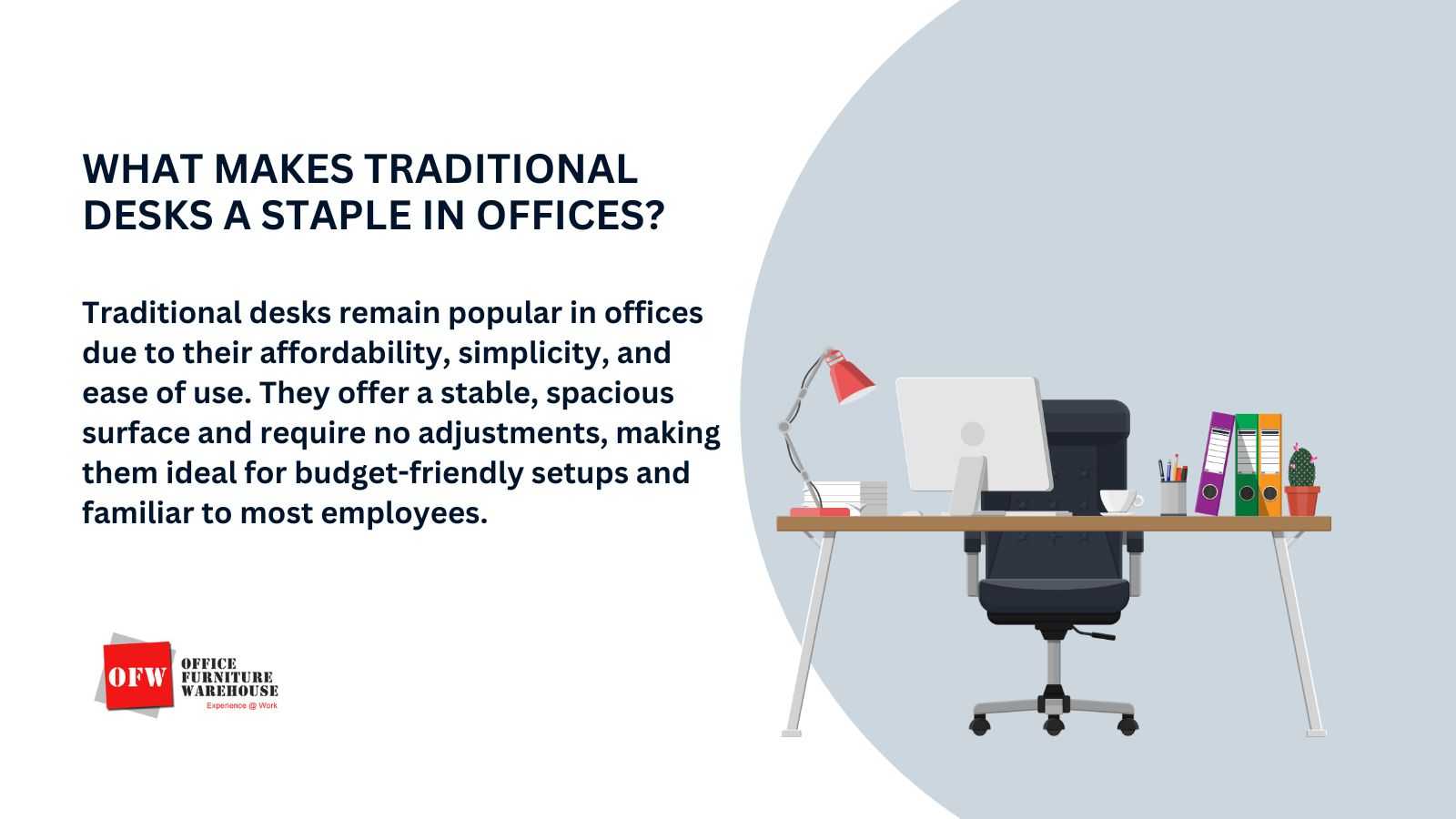
Traditional desks are a staple in offices because they offer a reliable, cost-effective, and familiar solution for everyday work needs. Their simple, fixed-height design makes them easy to set up and use without requiring adjustments or technical features. They are more affordable than adjustable or standing models, making them ideal for equipping large office spaces on a budget. Additionally, traditional desks provide strong stability and a spacious surface for computers, documents, and office essentials. Their long-standing presence in the workplace also means most employees are comfortable using them, reducing the need for adaptation or training.
Are Standing Desks Better for Your Health?
Yes, standing desks are better for your health when used properly. They encourage better spinal alignment and reduce pressure on the lower back by limiting long periods of sitting. Alternating between sitting and standing helps improve posture, boost circulation, and reduce muscle stiffness. When paired with good ergonomic habits, standing desks can support long-term comfort and physical well-being.
Can Traditional Desks Cause Health Issues?
Yes, traditional desks can cause health issues when used for prolonged sitting without breaks. Extended periods of inactivity are linked to obesity, poor circulation, and posture-related discomfort such as back and neck pain. Without movement, muscles can stiffen, and spinal alignment may suffer, leading to long-term physical strain.
Which Desk Boosts Productivity More?
Standing desks boost productivity more for many users, especially when combined with the flexibility to alternate between sitting and standing. By encouraging movement and better posture, they help reduce fatigue, increase energy levels, and improve focus throughout the day. Unlike traditional desks, which can lead to sluggishness due to prolonged sitting, standing desks promote alertness and a more engaged work mindset. However, the office furniture for productivity often depends on personal preference and proper ergonomic setup; some may find a well-organized traditional desk just as effective when paired with regular movement breaks.
Are Standing Desks More Expensive?
Yes, standing desks are more expensive than traditional desks. Motorized models with electric height adjustment add to the upfront cost, and accessories like anti-fatigue mats or monitor arms can increase the total investment. However, many users consider them a long-term value for their health benefits, improved comfort, and productivity support.
Do Traditional Desks Save More Space?
Yes, traditional desks save more space due to their compact and straightforward design. They take up less room and are easier to fit into small home offices or tight workspaces. Their affordability and no-setup nature make them a practical choice for minimal, efficient setups without the need for extra accessories or adjustment mechanisms.
How Should You Decide Based on Your Workstyle and Health Needs?
You should decide between a standing and traditional desk depending on your work style, health needs, and workspace. If you spend long hours at your desk and experience discomfort from prolonged sitting, a standing desk may offer better support for your posture and energy levels, especially if you can alternate between sitting and standing. Those with back issues or a desire for more movement during the day may benefit most. On the other hand, if your work is more stationary, your budget is limited, or you have a smaller space, a traditional desk is the more practical option. Consider your daily tasks, how often you need to shift positions, and whether your space allows for ergonomic accessories. Ultimately, the best choice is the one that aligns with your routine while promoting comfort and long-term health.
How long should you stand at a standing desk?
You should stand for 30 to 60 minutes at a time at a standing desk before switching positions. Alternating between sitting and standing throughout the day helps prevent fatigue and supports better circulation and posture. Prolonged standing without breaks can lead to discomfort in the legs, feet, or lower back, so it’s best to shift positions regularly. Using a timer or reminder can help you build a healthy routine that balances movement and rest.
Do standing desks help you lose weight?
Yes, standing desks can help you burn off a few more calories than sitting, but they are not a substitute for regular exercise. The increase in calorie burn is modest, and their main benefit lies in reducing sedentary time and encouraging more movement throughout the day. For meaningful weight loss, standing should be combined with physical activity and a healthy lifestyle.