

Cubicle Workstations: Types, Key Factors, Customization, Benefits and How to Choose
Last Updated on October 20, 2025 by Bob Collins
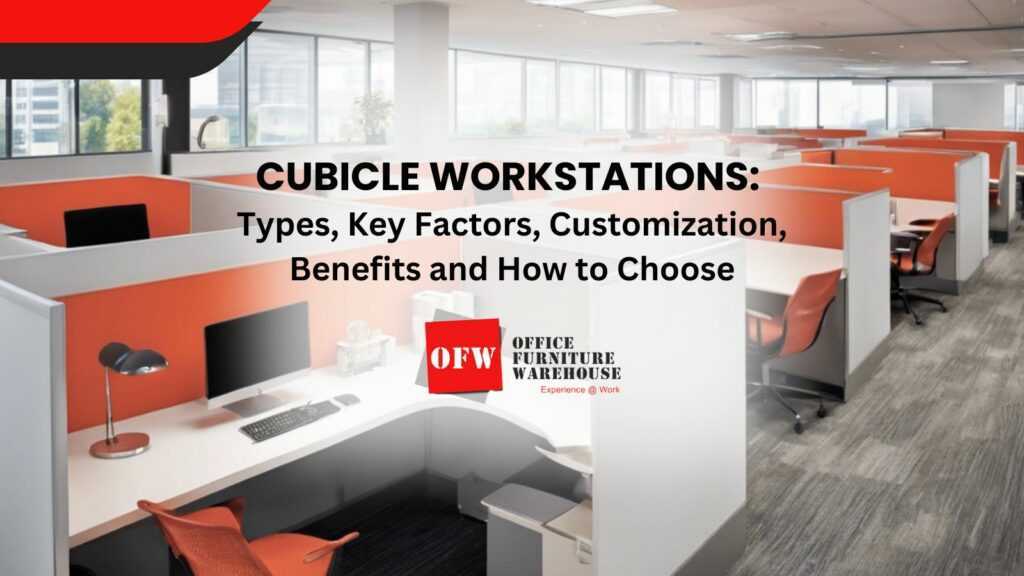
A cubicle workstation is a modular office arrangement that provides individual workspaces within a larger open-plan environment. These workstations feature partitions to offer some degree of privacy while incorporating various office furniture elements such as desks and chairs.
The types of Cubicle workstations include Open Cubicle Workstations, High-Wall Cubicle Workstations, Low-Wall Cubicle Workstations, Circular Cubicle Workstations, L-Shaped Cubicle Workstations, Professional / Standard Cubicle Workstations, Call Center Cubicle Workstations, and Modular Cubicle Workstations.
The key factors to consider when designing cubicle workstations include space availability, the number of employees, office layout, and the nature of work being performed. Other important considerations include the choice of chairs, desks, and storage options, ensuring that the design meets both functional and aesthetic requirements.
The cubicle workstation customization options include selecting materials and finishes, adding power outlets and cable management, integrating storage units, and choosing colors and textures that match the company’s branding.
The benefits of using cubicle workstations include increased productivity, improved organization, better space utilization, privacy, and enhanced employee focus through semi-private workspaces.
Choosing the right cubicle workstation for an office involves considering the company’s work culture, the office’s layout, the type of work being done, and the needs of the employees. Ensure the furniture is durable, ergonomic, and adaptable to future growth.
What is a Cubicle Workstation?

A cubicle workstation is a semi-enclosed workspace designed to provide individual work areas within an open office layout. It consists of office cubicles that partition the space, a cubicle desk for task-related work, and other office furniture such as storage units and chairs.
Common materials used in cubicle workstations include metal frames, laminate or wood for desks, and fabric or glass panels for partitions. These materials are chosen for their durability, ease of maintenance, and professional appearance.
By creating defined personal workspaces, cubicle workstations help employees focus on their tasks with fewer distractions, promoting productivity. The structured office layout also encourages organization and efficiency while maintaining enough openness for easy communication when needed.
What’s the Average Cost of a Cubicle Workstation?
The average cost of a cubicle workstation ranges from $900 to $2,500, depending on various factors. For basic, low-end cubicle desks, which include minimal partitions and standard office furniture, prices generally fall between $900 and $1,500.
High-end workstations with advanced features such as ergonomic designs, custom finishes, and integrated power outlets cost anywhere from $1,500 to $2,500 or more.
Several factors influence the price of cubicle workstations. New cubicles tend to be more expensive, starting at around $1,000, while used cubicles are purchased for as low as $500. Additionally, the quality and materials used, such as premium wood finishes or high-quality fabric for office cubicles, will increase the price.
Customization, including built-in storage, desks with specialized configurations, and upgraded chairs, also impacts the overall cost. Lastly, the number of units purchased influences pricing, with bulk orders receiving discounts.
What are the Types of Cubicle Workstations?
The different types of cubicle workstations are open cubicles, high-wall cubicles, low-wall cubicles, circular cubicles, l-shaped, and professional cubicle workstations. They are designed to meet various office needs and preferences. These workstations vary in design to accommodate different levels of privacy, space utilization, and functionality.
The most common types of cubicle workstations are:
- Open Cubicle Workstations
- High-Wall Cubicle Workstations
- Low-Wall Cubicle Workstations
- Circular Cubicle Workstations
- L-Shaped Cubicle Workstations
- Professional / Standard Cubicle Workstations
- Call Center Cubicle Workstations
- Modular Cubicle Workstations
Open Cubicle Workstations
An open cubicle workstation is a semi-enclosed workspace within an office that typically consists of low partitions or dividers, providing a degree of personal space while maintaining an open environment. These partitions are panel-mounted, which integrates seamlessly into modular office designs.
The features of open cubicle workstations generally include low-height partitions, cubicle desks, and office chairs. They also come with basic storage solutions and occasionally include integrated power outlets.
In terms of design and placement, open cubicle workstations are crafted to maximize space and create a sense of openness within an office layout. They are strategically placed in open-plan environments to encourage easy interaction and communication among employees.
Open cubicles promote collaboration by allowing direct visibility and accessibility between team members, which facilitates quick exchanges and teamwork.
The cost for open cubicle workstations ranges from $900 to $1,500, making them a cost-effective choice for many businesses.
What sets open cubicles apart from other types is their emphasis on openness and easy communication, which contrasts with the more enclosed and private nature of high-wall or low-wall workstations.
The pros of open cubicle workstation are:
- It enhances communication and teamwork.
- It is cost-effective compared to high-wall options.
- Its flexible design allows easy reconfiguration.
The cons of open cubicle workstations are:
- It has limited privacy due to low partitions.
- It is noisy in high-density environments.
- It is less suitable for tasks requiring high concentration.
High-Wall Cubicle Workstations
A high-wall cubicle workstation is a type of office workstation designed with tall partition walls, typically ranging from 5 to 6 feet in height, that create a semi-private or fully enclosed workspace for the user. These workstations are panel-mounted, ensuring a stable and secure setup.
Features of high-wall cubicle workstations include tall partitions, cubicle desks, office chairs, and additional storage options, along with integrated power outlets. These features contribute to a more contained work area.
In terms of design and placement, high-wall cubicles are designed to offer maximum privacy and minimize distractions. They are placed in layouts where individual focus and confidentiality are prioritized, such as in roles requiring intensive concentration.
High-wall cubicles enhance privacy and reduce interruptions, thus promoting concentrated work by isolating employees from external noise and visual distractions.
The cost for high-wall cubicle workstations generally ranges from $1,500 to $2,500, reflecting their advanced privacy features and construction quality.
What sets high-wall cubicles apart is their ability to offer a significant level of privacy and a quiet environment, making them suitable for tasks requiring deep focus.
The pros of high-wall cubicle workstations include:
- Provides excellent privacy and concentration.
- Reduces noise and visual distractions.
- Suitable for roles requiring confidential work.
The cons of high-wall cubicle workstations include:
- It is more expensive than lower partition options.
- Limits ease of communication and collaboration.
- It feels isolating in open office settings.
Low-Wall Cubicle Workstations
A low-wall cubicle workstation is a type of office partition that features shorter walls, typically ranging from 42 to 54 inches in height, creating a semi-private workspace for employees. These workstations are generally panel-mounted, providing a modular and flexible office solution.
Features of low-wall cubicle workstations include shorter partitions, cubicle desks, office chairs, and optional storage solutions. They include integrated power outlets as well.
In design and placement, low-wall cubicles are created to balance privacy with accessibility. They are commonly used in office layouts that require some degree of separation but still value open communication.
Low-wall cubicles promote collaboration by maintaining visibility between employees while providing enough separation to reduce distractions.
The cost for low-wall cubicle workstations ranges from $1,200 to $1,800, placing them in a mid-range price bracket compared to other types.
What distinguishes low-wall cubicles is their ability to offer a compromise between privacy and openness, making them versatile for various office environments.
Pros of low-wall cubicles include:
- It balances privacy with communication.
- It is flexible and adaptable to changing needs.
- It is less expensive than high-wall cubicles.
Cons of low-wall cubicles include:
- It provides less privacy than high-wall options.
- It is noisy in a high-density environment.
- It is less effective for highly confidential work.
Circular Cubicle Workstations
A circular cubicle workstation is a type of office workspace designed with curved or semi-circular walls that enclose a worker’s station in a circular or rounded layout. These are independent, allowing for flexible placement within an office layout.
Features of circular cubicle workstations include curved partitions, cubicle desks, and office chairs. The design incorporates additional elements, such as collaborative tables or shared resources in the center.
In design and placement, circular cubicles are arranged to encourage teamwork and interaction and placed in central areas of the office to promote engagement and collaboration among team members.
Circular cubicles foster collaboration by creating a layout that encourages face-to-face interaction and teamwork, making it easy for employees to engage with one another.
The cost of circular cubicle workstations generally ranges from $1,500 to $2,000, reflecting their unique design and collaborative features.
What sets circular cubicles apart is their distinctive design that promotes interaction and teamwork, which is different from more traditional, linear cubicle setups.
Pros of circular cubicle workstations include:
- It enhances teamwork and communication.
- Its unique design fosters a collaborative environment.
- Flexible placement within office layouts.
Cons of circular cubicle workstation include:
- It is less suitable for tasks requiring privacy.
- It is more expensive due to custom design.
- It is limited in terms of individual workspaces.
L-Shaped Cubicle Workstations
An L-shaped cubicle workstation is a type of office furniture configuration designed to maximize space and provide an efficient working area. It features two connected desk surfaces arranged in an “L” shape, typically forming a right angle. These are freestanding, allowing for flexible positioning within an office.
Features of L-shaped cubicle workstations include a corner desk configuration, office chairs, and additional storage solutions. The design supports an efficient use of corner spaces and provides ample surface area.
In design and placement, L-shaped cubicles are ideal for maximizing space in office corners and creating a personal workspace that is both functional and accessible. They are placed in offices where space optimization is important.
L-shaped cubicles promote collaboration by allowing for easy access to colleagues and the sharing of materials while providing a defined personal workspace.
The cost of L-shaped cubicle workstations generally ranges from $1,200 to $1,800, depending on the materials and features included.
What distinguishes L-shaped cubicles is their ability to efficiently use corner space and provide a larger, dedicated workspace, setting them apart from more traditional rectangular configurations.
Pros of l-shaped cubicle workstation are:
- It maximizes the use of corner space.
- It provides ample surface area for work.
- It is flexible and is easily adapted to various layouts.
Cons of an l-shaped cubicle workstation are:
- It requires sufficient corner space for placement.
- It is not ideal for very small offices.
- It is less suitable for highly collaborative environments.
Professional / Standard Cubicle Workstations
A Professional or Standard Cubicle Workstation is a semi-enclosed, modular workspace commonly found in office environments, designed to provide individual employees with a personal area for work while also promoting a balance between privacy and collaboration. These are panel-mounted, providing a stable and modular office arrangement.
Features of standard cubicle workstations include basic partitions, cubicle desks, office chairs, and sometimes integrated storage solutions. The design focuses on functionality and adaptability.
In design and placement, standard cubicles are versatile and are configured to fit various office layouts. They are commonly used in office environments that require straightforward, efficient workspaces.
Standard cubicles promote collaboration by offering modular designs that are adjusted as needed, allowing for flexible team arrangements and workspace configurations.
The cost of professional or standard cubicle workstations generally ranges from $1,000 to $1,500, making them a cost-effective solution for many offices.
What sets standard cubicles apart is their straightforward design and adaptability, making them suitable for a wide range of office environments.
Pros of professional cubicle workstation are:
- They are versatile and adaptable to various office layouts.
- They are cost-effective and widely available.
- They provide essential features for a functional workspace.
Cons of professional cubicle workstation are:
- Its basic design may need more advanced features.
- It has less customization compared to high-end options.
- It doesn’t provide as much privacy or specialization.
Call Center Cubicle Workstations
A Call Center Cubicle Workstation is a compact, semi-enclosed workspace designed specifically for employees in a call center environment to carry out tasks such as answering phone calls, providing customer support, and processing information. These workstations are typically separated by partition panels that create individual spaces within an open office layout, offering a degree of privacy and noise reduction while maintaining visibility and communication with colleagues. These are panel-mounted for stability and durability.
Features of call center cubicle workstations include compact, efficient designs with built-in telecommunication equipment spaces, cubicle desks, office chairs, and sometimes additional storage solutions. They are designed to support high volumes of calls and data entry.
In design and placement, call center cubicles are arranged to maximize space and allow for quick access to necessary tools and equipment. They are placed in clusters to facilitate team coordination and efficiency.
Call center cubicles enhance collaboration by allowing employees to work closely together while still providing individual workspaces supporting high-volume, collaborative tasks.
The cost of call center cubicle workstations ranges from $1,200 to $1,800, reflecting their specialized design and functionality.
What distinguishes call center cubicles is their focus on efficiency and space optimization for high-density work environments, which sets them apart from more general-purpose workstations.
Pros of call center cubicles are:
- It is optimized for high-density work environments.
- It supports efficient telecommunication and data entry.
- It facilitates team coordination and collaboration.
Cons of call center cubicles:
- It lacks privacy due to the compact layout.
- It is less suitable for tasks requiring extensive individual space.
- It is noisy in high-density settings.
Modular Cubicle Workstations
Modular Cubicle Workstations are a type of office furniture system designed to create flexible and customizable work environments. These workstations consist of individual cubicles or work areas that can be configured and reconfigured to suit various needs and preferences. These workstations are panel-mounted, providing a stable structure that is adjusted and rearranged as required.
The features of modular cubicle workstations include adjustable partitions, cubicle desks, office chairs, and customizable storage solutions. This adaptability makes them suitable for various office environments and evolving workspace requirements.
In terms of design and placement, modular cubicles are designed to be highly versatile, allowing for different configurations to fit various office layouts. They are ideal for businesses that anticipate changes in team size or office functions, as they are easily reconfigured to meet new needs.
Modular cubicles promote collaboration by providing a flexible workspace that is adjusted to support different team arrangements and interaction levels. This adaptability helps facilitate dynamic teamwork and efficient use of space.
The cost of modular cubicle workstations ranges from $1,500 to $2,500, reflecting their advanced customization options and flexibility.
What sets modular cubicles apart is their ability to be easily reconfigured and customized to suit changing office layouts and team structures, offering a high degree of flexibility compared to other types of workstations.
Pros of modular cubicles include:
- It is highly flexible and adaptable to changing needs.
- It supports dynamic team arrangements and configurations.
- It is customized to fit various office layouts.
Cons of modular cubicles include:
- It is more expensive due to customization features.
- It requires additional time and effort to reconfigure.
- It is not always suitable for offices with static, unchanging layouts.
What are the Key Factors to Consider When Designing Cubicle Workstations?

The key factors to consider when designing cubicle workstations are functionality, space utilization, privacy, flexibility, and aesthetics. These elements ensure that the workstations meet the needs of both employees and the organization while enhancing overall productivity and comfort.
The key factors to consider when designing cubicle workstations include;
- Functionality: Ensuring that workstations are equipped with necessary features like desks, chairs, and storage solutions that support the employees’ daily tasks and activities.
- Space Utilization: Designing workstations to make the best use of available office space, optimizing layout to balance individual work areas with common spaces.
- Privacy: Incorporating elements such as partitions or high walls to provide adequate privacy and minimize distractions, tailored to the nature of work and office environment.
- Flexibility: Allowing for modular or adjustable components that are easily reconfigured to accommodate changing team sizes and office layouts.
- Aesthetics: Choosing design elements, colors, and materials that align with the company’s brand and create a pleasant and motivating work environment.
What are the Standard Dimensions of a Cubicle Workstation?
The standard dimensions of a cubicle workstation range from 6 feet by 6 feet to 8 feet by 8 feet, with a height of approximately 5 feet to 6 feet for partitions.
These dimensions are designed to provide sufficient space for a desk, chair, and basic storage while also accommodating the need for privacy and ease of movement within the workstation.
The size varies depending on the specific requirements of the office layout and the type of cubicle, with some larger or smaller configurations available to suit different needs.
What Privacy Options are Available for Cubicle Workstations?
Privacy options available for cubicle workstations include high partitions, acoustic panels, and privacy screens. High partitions provide significant visual and auditory privacy by creating taller barriers around work areas, effectively shielding employees from distractions and maintaining confidentiality.
Acoustic panels enhance privacy by reducing noise transmission between cubicles, which is crucial for minimizing disturbances in open-plan offices. Privacy screens are added to existing workstations to offer additional separation and focus without completely enclosing the space. Each option is customized to fit the specific needs of the office environment, balancing privacy with openness as required.
What are the ADA Requirements for Cubicle Workstations?
The ADA requirements for cubicle workstations mandate that workspaces must be accessible to individuals with disabilities. These requirements include ensuring adequate, clear floor space, adjustable work surfaces, accessible paths, reachable controls, and sufficient maneuvering space.
ADA requirements for cubicle workstations include:
- Clear Floor Space: Cubicle workstations must provide a clear floor area of at least 30 inches by 48 inches to accommodate wheelchair users. This space must be unobstructed to allow easy access and movement.
- Adjustable Work Surfaces: Desks and work surfaces are to be height-adjustable or designed to be at an appropriate level for individuals using wheelchairs. This allows people with different mobility needs to make comfortable and effective use of the workstation.
- Accessible Paths: Workstations must have accessible paths of travel, ensuring that pathways are wide enough and free from barriers to allow smooth movement throughout the workspace.
- Reachable Controls: Controls, such as lighting, electrical outlets, and other workstation features, must be within reach ranges that accommodate individuals using wheelchairs or with limited reach. This means controls are to be accessible from a seated position.
- Maneuvering Space: There must be sufficient maneuvering space around furniture to allow individuals to navigate and turn comfortably. This includes ensuring that there is enough space for wheelchairs to move around and adjust positions.
What are the Latest Trends in Cubicle Workstation Design?
The latest trends in cubicle workstation design focus on enhancing flexibility, promoting employee well-being, and integrating technology. These trends include the use of modular and adaptable layouts, the incorporation of biophilic design elements, and advanced technology integration.
The following are the latest trends in cubicle workstation design:
- Modular and Adaptable Layouts: Modern cubicle designs increasingly feature modular components that are easily reconfigured to accommodate changing team sizes and office layouts. This flexibility allows organizations to adapt quickly to new working arrangements or evolving needs.
- Biophilic Design Elements: There is a growing emphasis on incorporating biophilic design principles, such as natural lighting, indoor plants, and natural materials, to create a more pleasant and health-conscious work environment. These elements are known to reduce stress and improve overall employee satisfaction.
- Advanced Technology Integration: Workstations are now being designed with integrated technology solutions, including built-in charging stations, smart lighting, and ergonomic equipment. This trend reflects the need for seamless technology use and improved productivity within the workspace.
What Customization Options Are Available for Cubicle Workstations?
The main customization options available for cubicle workstations include adjustable partitions, modular components, ergonomic furniture, storage solutions, and aesthetic choices. These options allow for personalized and functional work environments tailored to specific needs and preferences.
The customization options available for cubicle workstations include:
- Adjustable Partitions: These are partitions that one can move from one position to another. Partitions are customized in height and configuration to provide varying levels of privacy and openness, catering to different workspace requirements and personal preferences.
- Modular Components: These components allow for versatile arrangements and quick adjustments to meet evolving needs. Modular elements, such as desks, panels, and shelves, are easily reconfigured to accommodate changing office layouts or team sizes, offering flexibility in workspace design.
- Ergonomic Furniture: Ergonomic furniture is designed to fit the user’s body and work habits, improving overall health and productivity. Customizable ergonomic chairs and adjustable desks are incorporated to enhance comfort and support, promoting better posture and reducing strain during long work hours.
- Storage Solutions: Storage solutions help keep the workspace organized and efficient, making it easier to access and manage essential documents and supplies. Workstations are outfitted with various storage options, including file cabinets, overhead bins, and drawer units, tailored to fit the specific organizational needs and space constraints.
- Aesthetic Choices: Aesthetic choices contribute to a pleasant work atmosphere and can enhance employee satisfaction and motivation. Customization extends to aesthetic elements such as colors, materials, and finishes, allowing the workspace to reflect the company’s brand and create a visually appealing environment.
What are the Benefits of Using Cubicle Workstations in an Office?
The main benefits of using cubicle workstations include improved space utilization, enhanced privacy, increased flexibility, cost efficiency, and better organization. These advantages contribute to a more effective and adaptable office environment.
Below are the benefits of using cubicle workstations in an office:
- Improved Space Utilization: Cubicles maximize the use of available office space by creating individual work areas within a defined layout, allowing more employees to work comfortably in a given area.
- Enhanced Privacy: With partitions and high walls, cubicles offer varying levels of privacy, which helps reduce distractions and allows employees to focus better on their tasks.
- Increased Flexibility: Cubicle systems are easily reconfigured to accommodate changes in team size or office layout, providing a flexible workspace that adapts to evolving needs.
- Cost Efficiency: Cubicles are more cost-effective compared to other office layouts because they use space efficiently and are less expensive to install and maintain.
- Better Organization: Workstations include built-in storage solutions and designated work areas, helping employees stay organized and manage their work more effectively.
How to Choose the Right Cubicle Workstations for Your Office

To choose the right cubicle workstations for your office, do the following:
- Assess Office Layout: Evaluate the office space to determine how cubicles will fit within the available area. Consider traffic flow, accessibility, and how cubicles will integrate with other office furniture and amenities.
- Determine Space Requirements: Identify the size of cubicles needed based on the number of employees and their specific needs. Ensure that the dimensions provide enough room for desks, chairs, and essential work equipment.
- Consider Privacy Needs: Decide on the level of privacy required for your employees. Choose cubicles with high partitions or acoustic panels for more privacy or lower partitions for a more open, collaborative environment.
- Evaluate Flexibility and Expandability: Opt for modular cubicle systems that are easily reconfigured or expanded as your business needs evolve. This allows you to adapt the workspace to changing team sizes and office layouts.
- Choose Ergonomic Furniture: Select ergonomic chairs and adjustable desks to promote comfort and reduce strain. This helps ensure that employees work efficiently and comfortably throughout their workday.
- Incorporate Storage Solutions: Ensure that cubicles include appropriate storage options such as file cabinets, shelves, and overhead bins. This helps maintain an organized workspace and minimizes clutter.
- Match Aesthetics with Brand: Choose cubicles that reflect your company’s branding through design, color, and finish. This creates a cohesive and professional look that aligns with your organization’s image.
How Do Cubicle Workstations Compare to Open Office Layouts?
The table below compares cubicle workstations to open office layouts across various factors:
| Factor | Cubicle Workstations | Open Office Layouts |
| Privacy | Offers varying levels of privacy with partitions and panels | Minimal privacy, with open spaces and fewer barriers |
| Noise Levels | Acoustic panels reduce noise transmission | Generally, higher noise levels due to a lack of partitions |
| Space Utilization | Maximizes use of space with defined work areas | It is less efficient in space use due to an open layout |
| Flexibility | Modular systems are reconfigured easily | Less flexible, with more permanent layouts |
| Collaboration | It is less conducive to spontaneous collaboration | Encourages more informal and spontaneous interactions |
| Cost | Generally cost-effective with standardized setups | Potentially higher initial costs due to design and setup |
| Employee satisfaction | It enhances satisfaction with personal space and organization | It varies, with some employees thriving in open environments and others finding it distracting |
Where to Buy Office Cubicles?
To buy office cubicles, consider us as a top option due to our extensive selection and competitive pricing. Office Furniture Warehouse offers a wide range of cubicle designs, customization options, and high-quality office furniture to meet various needs and budgets.
Their user-friendly website allows for easy navigation and comparison of products, and they provide detailed product descriptions and customer reviews to aid in decision-making. Additionally, their customer service is well-regarded for assisting with purchases and ensuring customer satisfaction, making it a reliable choice for acquiring office cubicles.