

What Is a Desk Hutch? Definition, Types, Benefits & Uses
Last Updated on June 22, 2026 by Bob Collins
A desk hutch is an upper storage unit that sits on top of a desk to add vertical shelving, cabinets, and cubbies above the work surface. It expands storage without expanding floor space, which makes it a popular fix for home offices, dorm rooms, and tight workstations. This guide breaks down what a desk hutch looks like, what it includes, the main types you can buy, and when it makes sense to add one to your workspace.
Key Highlights
- A desk hutch is a vertical storage unit mounted or placed on top of a desk to hold books, files, and supplies.
- Most hutches combine open shelves, closed cabinets, and small cubbies in one frame.
- Desk hutches work best in small offices, study nooks, and rooms with limited floor area.
- Common types include attached hutches, removable hutches, bookcase hutches, and corner L-shape hutches.
What Is a Desk Hutch?
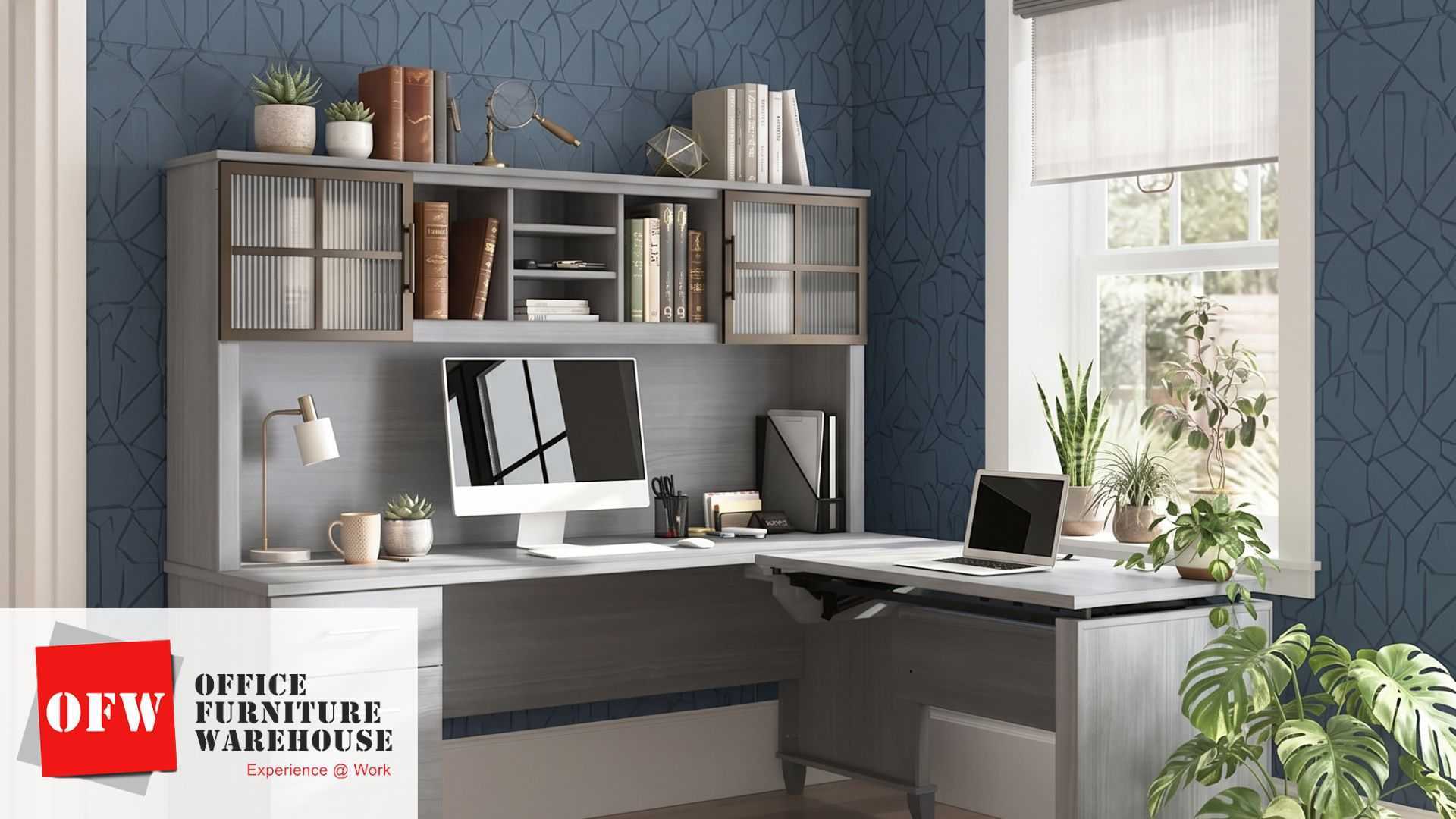
A desk hutch is a furniture attachment that adds vertical storage above a desk surface. It usually features shelves, small cabinets, cubbies, and sometimes a pinboard or task light. The unit either bolts to the desk or rests freely on top of it. The purpose is simple.
A hutch lifts paperwork, books, and accessories off the desktop and stacks them upward. This frees the working surface and turns wasted wall space into usable storage. The design follows the same logic used in office storage solutions that prioritize vertical layout over wide footprints.
A standard desk hutch ranges from 24 to 48 inches tall and matches the desk width below it. Materials include laminate, solid wood, MDF, and metal, depending on price point and style.
What Are the Main Types of Desk Hutches?
Desk hutches come in several formats. The right type depends on your desk shape, room size, and storage needs.
- Attached hutch. Bolts directly to the desk and ships as part of a matched set. It is the most stable option and common on executive desks.
- Removable hutch. Rests on top of the desk without hardware. You can lift it off when you want a flat surface or move it to another desk.
- Bookcase hutch. Taller and deeper, with full-height shelves. Acts as a small bookcase mounted to the desk back.
- Corner or L-shape hutch. Follows the angle of an L-shape desk and wraps around the corner. Useful in rooms where the desk sits in a corner.
- Credenza hutch. Sits on a credenza behind the main desk rather than directly on it.
- Modular hutch. Ships in separate pieces that you can rearrange. Good for changing layouts over time.
What Are the Benefits of Adding a Desk Hutch?
A desk hutch solves three problems at once. It adds storage, organizes clutter, and uses vertical space that would otherwise sit empty.
- More storage in less floor space: A hutch doubles your storage capacity without taking up extra room. This is the main reason hutches are popular in furniture setups for small office spaces.
- Better desk organization: Moving supplies off the desktop and into cubbies or shelves keeps the work surface clear. A clear surface improves focus and reduces visual clutter.
- Defined zones: Shelves let you separate active work items from reference materials. Cabinets hide things you do not need to see daily.
- Display value: Open shelves give you a spot for plants, framed photos, or awards. The hutch becomes part of the room’s style rather than just a storage box.
- Cable management: Many hutches include built-in ports or channels that hide monitor and laptop cables.
When Should You Use a Desk Hutch?
A desk hutch makes sense in a few specific situations. It is not the right fit for every workspace.Use a hutch when your desk sits against a wall and you have at least 60 inches of vertical clearance. Use one when paper, books, and supplies pile up on the desktop. Use one when you share a small office and need defined personal storage zones.
Skip a hutch when your desk floats in the center of a room, when ceilings are low, or when you prefer an open, minimalist look. Standing desks usually do not work with a hutch either, since the desktop moves up and down.
How Do You Choose the Right Desk Hutch?
Match the hutch to the desk first. Width, depth, and finish should align so the two pieces look like one unit. Measure the desk before you shop, and confirm the hutch ships with the right mounting hardware. Next, think about storage type. If you store mostly books and binders, pick open shelves. If you store supplies or files you want hidden, pick closed cabinets. If you want both, pick a mixed hutch.
Check the depth. A hutch deeper than 14 inches eats into your usable desk area. A hutch shallower than 10 inches limits what you can store. Most home offices land between 11 and 13 inches. Finally, plan for lighting. A hutch can block overhead light and cast shadows on the desktop. Look for models with a built-in task light or leave room for a clip-on lamp.
How tall is a typical desk hutch?
A typical desk hutch stands 30 to 48 inches tall, measured from the desk surface to the top of the unit. Combined with a 30-inch desk, the total height usually falls between 60 and 78 inches. Always check ceiling clearance before buying.
Can you add a hutch to any desk?
You can add a removable hutch to most flat-top desks if the desktop is sturdy and at least 24 inches deep. Attached hutches need matching mounting holes, so they only fit desks designed for them. Avoid placing hutches on glass-top or height-adjustable desks.
Are desk hutches still in style?
Yes. Desk hutches remain popular in home offices, dorms, and small workspaces because they solve a real storage problem. Modern hutches use cleaner lines and lighter finishes than older styles.
What is the difference between a desk hutch and a bookcase?
A desk hutch attaches to or sits on a desk and shares its width. A bookcase stands alone on the floor, holds heavier loads, and works as a separate piece. Hutches are designed for desk accessories. Bookcases are built for book volume.